

What happens when the scientific story you’re given seems to leave no room for God?
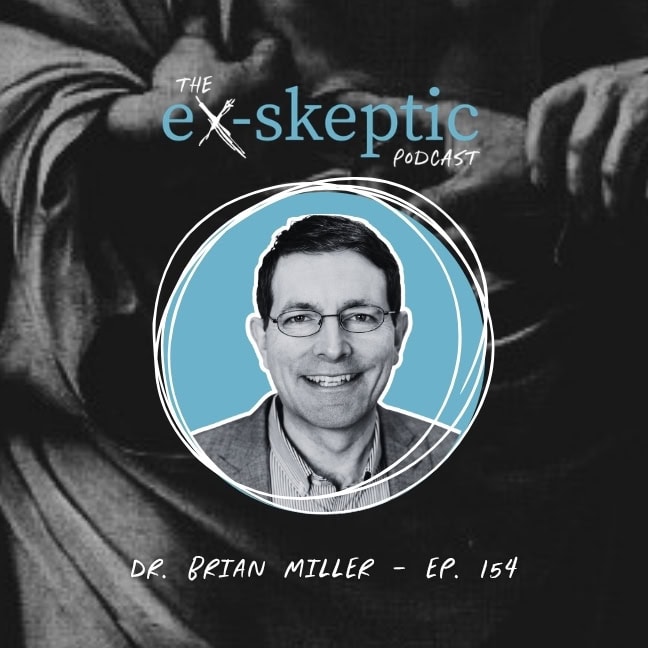
Dr. Brian Miller grew up with a belief in God, but everything changed when he entered MIT and later pursued a PhD in physics at Duke University. Surrounded by a scientific culture that viewed God as unnecessary and influenced by thinkers like Richard Dawkins, Brian gradually embraced a materialistic view of reality.
But the deeper he explored science, the more questions emerged.
Could naturalism explain meaning, consciousness, or the origin of life? Why did the universe appear so finely tuned? And what if the story he had accepted about science and faith was itself incomplete?
🎙️ Love the show? Support the mission and explore eX-skeptic merch here: https://ex-skeptic-shop.fourthwall.com/
Want to support this channel? Tax-deductible donations available here: https://givebutter.com/CB6WoH
Guest Bio:
Dr. Brian Miller is a physicist who studied physics and engineering at MIT and earned his PhD in complex systems physics from Duke University. He serves as a researcher with the Discovery Institute, where his work focuses on intelligent design, the origin of life, and the evidence for purpose and engineering in biology.
Dr. Miller was also a lead technical consultant for Stephen Meyer’s bestselling book The Return of the God Hypothesis. Passionate about helping people think deeply about faith and science, he speaks and writes on topics including cosmology, biology, philosophy, and the historical reliability of Christianity.
Resources Mentioned:
eX-skeptic Guides: https://exskeptic.org/bookstore/
Brian’s Resources:
• Book: The God Hypothesis, Stephen Meyer (Brian Miller, lead technical consultant)
• Book: God’s Not Dead, Rice Broocks (Brian Miller, technical consultant)
Brian’s Recommended Resources:
• Website: https://intelligentdesign.org/
• Website: Discovery Institute: www.discovery.org
• Website: Reasons to Believe, Hugh Ross: www.reasons.org
• David Snoke: www.christianscientific.org
• Craig Blomberg: https://theopedia.com/craig-blomberg
• Jonathan McLatchie: www.jonathanmclatchie.com
• Talk about Doubts: www.talkaboutdoubts.com
• Lydia McGrew: www.lydiamcgrew.com
• William Lane Craig: www.reasonablefaith.org
• Rice Broocks, SALT training: https://www.thegodtest.org
Chapters
0:00 – Can Science Lead You to God?
02:19 – Brian Miller’s Journey Through MIT and Duke
03:24 – Growing Up Christian and Beginning to Doubt
06:15 – Questioning Christianity at MIT
10:34 – Evidence That Challenged His Skepticism
14:06 – Challenging Materialism and the Assumptions Behind Science
19:09 – Is There Evidence of Design in Nature?
23:12 – How Our Environment Shapes What We Believe
30:47 – Where Naturalism Struggles to Explain Reality
36:24 – Why Changing Your Worldview Takes Time
40:51 – Can Life Have Meaning Without God?
45:58 – How Christianity Changed Brian’s View of Life
51:25 – Next Steps to Belief in God
56:15 – How Christians Can Talk with Skeptics
59:14 – Keep Exploring
Connect with eX-skeptic:
Website: https://exskeptic.org/
Facebook: http://www.facebook.com/exskeptic
Instagram: http://www.instagram.com/exskeptic
Twitter: http://x.com/exskeptic
YouTube: https://www.youtube.com/@exskeptic
Email info: info@exskeptic.org
EX-skeptic Transcript
Ep. 154
September 24, 2026
Can Science Lead You to God?
BRIAN MILLER: I remember being very discouraged because I said, well, if God doesn’t exist and I’m a scientist, I just can’t believe this blindly, then what’s the point of life if I’m just going to die? Then what does it matter if I’m happy or sad or kind or cruel? If our sun will explode and all life will go extinct? And these are very dark thoughts as a freshman in college. But that’s where I was.
And I remember just looking at the ceiling in my freshman dorm and I said, well, God, I don’t know if you exist, but you really have to prove it to me because I can’t do this blindly. I mean, I don’t know if that’s against the rules, but I just have to know it’s true. You have to show it to me.
And I said, God, if you really prove to me what’s true, I will serve you with all my heart, I will. I will dedicate my life to serving your purposes. And that really started a journey.
JANA HARMON: Hello and welcome to eX-skeptic, where we explore unlikely stories of believe I’m your host, Jana Harmon, and on this podcast, we hear from former skeptics and atheists who reconsidered Christianity and why.
What happens when the story you’ve always believed about God is replaced by a different one? A story that claims to explain everything without him?
My guest today is Doctor Brian Miller, a physicist trained at MIT, and Duke, who grew up with a belief in God but began to question it as he immersed himself in the world of science. Surrounded by respected professors and a scientific community that saw God as unnecessary.
Brian found himself drawn into a new way of seeing reality, one where everything could be explained by natural processes alone. And for a time, it made sense. But it also raised deeper questions. He couldn’t ignore questions not just about science, but about meaning, truth, and whether that story of reality was actually enough.
So, what did it take to change his mind and reconsider God? In this conversation, we explore the powerful pull of a scientific worldview. The questions that begin to surface when you follow it honestly, and what happens when those questions lead to somewhere unexpected? I hope you’ll listen in.
Brian Miller’s Journey Through MIT and Duke
JANA HARMON: But welcome to X skeptic Doctor Miller. It’s so great to have you with me today.
BRIAN MILLER: Thank you. It’s a pleasure to be here.
JANA HARMON: I’d love for the listeners to know a bit about who you are, the kind of credentialing and education that you have, where you work, the kind of work that you’re involved with, and so that that they can understand the gravitas that’s coming to the table.
BRIAN MILLER: Certainly. So, I studied physics with a minor in engineering at MIT, and then I went to Duke University for a PhD in complex systems physics. And then I worked in the private sector for several years. And then over the last decade, I’ve worked at the Discovery Institute, and the Discovery Institute is one of the central locations of research into the evidence for design in nature.
So, I have an expertise in topics such as the origin of life. I presented that to world leaders in the field. I have expertise in things like the rarity of proteins and the application of engineering to biology. And I was also a lead technical consultant for Stephen Meyer for his book, The Return of the God Hypothesis.
Growing Up Christian and Beginning to Doubt
JANA HARMON: Hmm. That’s impressive. I must say, uh, I appreciate you taking time to be on here today and tell your amazing story. Uh, it is one of in in which you really questioned the Christian worldview and especially how science and faith are related. And I can’t wait to get into all of those issues and thoughts and in particular in relationship to your story.
So, let’s start with your childhood. Let’s go back into your story and bring us into your family life, your family home, and give us our paint as a picture of what that that looked like in terms of your own childhood beliefs, your family’s beliefs, what was going around you, culturally speaking, and where you landed with regard to belief in God and Christianity?
BRIAN MILLER: Yeah, certainly. So, for me, I grew up in Clearwater, Florida, and it was a retirement community, and my father was in the military his entire life. And my mother had studied chemistry and had worked in the industry in chemistry for a while, then became a schoolteacher. And I grew up, moved down to Florida when I was about four years old.
So, I was born in Michigan, and kind of all I remember is snow up to my waist. And we were raised. I was raised as a Christian. So, my family was Christian and they weren’t overly fervent about it, but they took it seriously. And, uh, I remember, uh, growing up in high school and thought that kind of everyone believed Christianity was sort of a cultural backdrop.
I remember I was pretty shocked the first time I met someone that was an atheist. I just was deeply confused talking to them. I just couldn’t imagine that. But it was just something that was that was just something I accepted because that’s what I was brought up with. And then what happened was I read through the New Testament my senior year of high school, and then suddenly everything connected.
It just I saw the grandeur of the Christian story, and I, I said, wow, I want to dedicate my life to this. And what was really striking was that as soon as I deeply believed the faith was true; I started to have doubts for the first time in my life. It was it was a remarkable experience because I said to myself, “If I’m going to base my entire life on this. I really have to know it’s true.”
So, it really mattered to me. And I remember right from the beginning just being challenged with questions like, how do I know that Jesus really rose from the dead? How do I know that the Bible is accurate? How can I trust this? And that really is kind of what set the course of my life was really seeking out those answers to those questions.
Is the Christian faith actually true?
Questioning Christianity at MIT
JANA HARMON: Do you mind if I interrupt there for a moment and really ask you, how did you pursue the answers to those questions as a high schooler? Those are big questions.
BRIAN MILLER: Well, what happened is I really wrestled with those questions after I had graduated from high school. So, I had a very you know, I had a fairly calm life, except my father died when I was when I was 12. So that was sort of a very disruptive experience.
Uh, but I really only started to question it after I finished high school, and I had been accepted to MIT, and I was pretty excited because, you know, I could probably get a good job after going to MIT. My life was set. But then I asked myself, what’s the difference? What does it matter if I’m just going to die? So that’s when, at the same point, I had really thought about eternity and what is the purpose of my life is the same point where I had read through the New Testament so diligently and at the same point where I really started to question it in a very deep way.
So, I got to MIT, and what happened was I read I took a class on the Bible from a secular perspective, and the professor was not. He had no agenda to attack people’s faith. He just was presenting his perspective as an agnostic. And he raised all these questions with the book of Genesis, with the Old Testament, with the New Testament.
And at the same time, I had read this book called The Blind Watchmaker by Richard Dawkins. And as many of your listeners probably aware. Richard Dawkins is considered a patron saint of atheism, so he has written many books about why Christianity and religion in general is not true, and how when you look at nature, you really see just blind, pitiless indifference.
Everything is just an accident of nature. And I remember thinking at that point that, well, also, one other thing I realized in retrospect is I became really suspicious about the truth of the faith because many of the people I knew who were Christian, would go to church on Sunday, they would be very fervent, but then they would live out their life as if God didn’t exist.
They would go about their career. They would go about their study of history or philosophy or science or engineering from the perspective of being an atheist. And that made me very suspicious that the Christian faith probably wasn’t true if it had no practical relevance to life. So, I became convinced for a while that, well, probably God didn’t exist.
Um, and I felt like there was sort of these two types of people in the world. One was people that were objective and honestly pursued the truth, the scientists versus people of faith that were a little bit more driven by feelings. They were more into wish fulfillment. They didn’t really look at the evidence carefully.
I remember being very discouraged because I said, well, if God doesn’t exist and I’m a scientist, so I just can’t believe this blindly, then what’s the point of life if I’m just going to die? Then what does it matter if I’m happy or sad or kind or cruel? If our sun will explode and all life will go extinct?
And these are very dark thoughts as a freshman in college. But that’s where I was. And I remember just looking at the ceiling in my freshman dorm and I said, well, God, I don’t know if you exist, but you really have to prove it to me because I can’t do this blindly. I mean, I don’t know if that’s against the rules, but I just have to know it’s true.
You have to show it to me. And I said, God, if you really prove to me what’s true, I will serve you with all my heart, I will. I will dedicate my life to For serving your purposes. And that really started a journey. And a lot of that journey was intellectual. I read people like Hugh Ross, who’d written books about faith and science.
I found this book called Eternity in Their Hearts. It talked about how if you look at cultures and you go far enough back; there’s the same story. Basically, they talk about how they knew this God, but then their culture turned from God, and then they went in a very bad direction. Talked about there being this catastrophe in the past where were a pair was saved through miraculous means, and these stories were around the world.
Also, I had read this book called um, Evolution Theory in Crisis by Michael Denton, and he was one of the early people who would be later be part of what’s called the intelligent design community. And he made this strong case that when you look at life, we’re not just an accident, as Richard Dawkins would say, but it looks like we’re designed it looks like there’s purpose behind life.
Evidence That Challenged His Skepticism
He wasn’t a particularly religious person, but he was simply talking about how the evidence had gripped him, which I was really struck by, and also what happened during my years as I met Christians who had really fully given their life to God, and I had seen people healed of sickness in Jesus name.
I had seen God intervene in people’s lives in very extraordinary ways. And even myself, I had real encounters with God that are a little more subjective and difficult to describe, but I sort of felt his presence both in sort of a physiological sense. Kind of like putting your finger into an electric socket is the best way to put it.
Also, in a sense of God’s love and kindness and seeing his intervention in my life in really remarkable ways, and through this process of both this intellectual journey, I came to recognize that science. This is a famous quote that a little science often takes people away from God, but a lot of science will bring them back.
And also, I really recognized in retrospect how God supernaturally brought my life into connection with the right people. I met a man named Craig Keener, and Craig Keener was a New Testament, is a New Testament scholar. He was doing his PhD work at Duke, and he helped me through a lot of the questions about how can I know the Bible is actually historically reliable?
Later on in life, he really explored the truth of the faith, and he would study ancient manuscripts, like he would study like a Roman historians and Roman philosophers in their original language. And he spent like 60 hours a week doing this for ten years. So, he became like a foremost scholar on the historical cultural context of the New Testament.
He personally helped me through my questions of how do I know the Bible is actually reliable? And it was this combination of this intellectual journey with encountering God that really brought me back to faith in a very powerful way, and that’s what really inspired me to dedicate my life to helping people understand why the Christian faith is actually true.
That’s sort of a summary of my experience.
JANA HARMON: Yeah, that that is a beautiful summary of the experience. And there’s so many parts and pieces in there I’d like to draw out just a little bit. I’m going back. It’s easy, I think, for a scientist, particularly pursuing science in a very, um, serious way like you did at MIT, obviously, and Duke, that there is a culture there.
Uh, there is a set of presumptions there in studying science that are often, um, antithetical to belief in God. There are presumptions that belief in God is our faith in God is blind, uh, and that that serious minded scientists don’t believe in in God. Now I, uh, there may be people listening who may be unfamiliar with, uh, methodological naturalism or the way in which people go about viewing or studying science in a purely naturalistic way that is apart from God, can you?
For those who aren’t familiar with that, talk about a lot of the presumptions that many in the secular sciences make about what is real, what is worth studying, why they might perhaps not believe in God, or kind of cut God out of even a potential explanation.
Challenging Materialism and the Assumptions Behind Science
BRIAN MILLER: Yeah, certainly. And what happens is, in the scientific community and actually Western culture at large, they’ve embraced a philosophy called materialism. And I imagine that people on your, on your podcast know very well that when I say materialism, I don’t mean like Madonna Material Girl, that they like bling and cars and nice clothes, but this idea that all that really exists is matter and energy, time and chance, so that everything we see in the world is simply a product of natural processes.
Um, there is no there is no higher power. If God exists, he’s distant and involved in the world. And that leads to a methodology. So. So scientists often will approach the world from what’s called methodological naturalism. So, their philosophy of naturalism affects their methodology. So, they say we’re going to look at something, and we’ll assume it’s just the product of blind undirected processes and interpret the data through that lens.
So, and that bleeds over into their view of religion, their view of society. And they look at people who are, believe in God, people that are Christians in particular as being very naive. They say you’re appealing to God of the gaps because if you assume everything in the world is simply a product of random processes, chance, time and natural laws, then any argument that there is intervention.
Any argument that there is a higher power at work is seen as denying science. So, they would look at, let’s say, the order and design of life and say, you can’t say that’s designed. It doesn’t matter what you see, it doesn’t matter how strong the evidence of design appears to be, you have to assume it simply through this blind, undirected process. It’s just a chance, a just chance. It’s a product of an accident, essentially.
If you look at the historical evidence for the resurrection, then you can’t argue that Jesus really rose from the dead, because that’s outside the rules of science. You have to assume that whatever happened is explainable through a truly natural process.
And again, I think an analogy I really like to use is that of the matrix, because if you’ve seen the matrix back in the I think it was the 90s, and it’s a story of how these very bright scientists created these robots, and the robots eventually took over the world. And what they did was they enslaved Humanity can plug these electrodes in their brain that projected this false reality.
It projected that they were in the 20th century. In a world when in fact they were in this dystopian future, being controlled by robots and pods. And what happens is, when you grow up in Western culture, often all of the images you see, all the messages received is that of a world where God doesn’t exist. You don’t hear stories of miracles on CNN or NBC news.
You don’t in your history book, the historians that write the books. They assume there is no creator. So, what happens is people. I have a false reality projected over their minds, where they think that that reality is just that there is no God, or God doesn’t intervene. And then they feel that people that question that reality are just in denial of reality.
But what I learned through my studies is two things. One is this idea of materialism is not recent. It goes back to the ancient Greeks. So, people have been debating this issue of whether the world is blind chance or a product designed for two and a half millennia. And two, if you really study, what you find is that there’s enormous evidence of God transforming lives.
The true world is a world where God is very real. He is very active, and many people encounter him in very powerful ways. And then when you look at science, the more you dig, uh, the more you look at the, the primary literature, the more you realize that the more we know about the laws of physics. They seem designed for life.
The more you know about biology. It looks like human engineering. The same principles, the same patterns, except it’s done at a much higher level because it’s produced by a much greater mind. The more you study about our planet, our solar system, our moon, our, even or even, uh, Jupiter and Saturn that all these things about our local environment, uh, appear designed to allow for life and even to allow for human technology.
So again, I had, in a sense, be pulled out of the false reality and into the true reality. And then everything made so much more sense of everything I saw around me.
JANA HARMON: Yeah, I think it’s not uncommon, is it, that young men go off to college and they’re Christians and they have a belief in God, and then they encounter this, I guess you could call it a false reality or a false narrative. And there are authorities like Richard Dawkins and those who are professors, like you say, in university, who have bought into that materialistic view of reality, and they’re teaching that view of reality.
How was it presented to you and how did you deal with it?
Is There Evidence of Design in Nature?
BRIAN MILLER: Great question. What happened was, and this is what people don’t really understand, is a lot of our perception of reality is shaped by the environment around us. It’s these messages that we hear from TV or from professors, or from the news that shape our reality in ways that it’s a very subconscious experience.
So, for me, what happened was I just stepped into this reality where everyone let me use an analogy. I think this will be very helpful. It’d be kind of like if you are a actor actress and you’re trained to play the role of Jean Valjean in Les Misérables or Corset and Les Misérables or Fontaine, and you’re dressed in this costume, you’ve memorized the script and you go to the stage, the play production, and suddenly you don’t see Les Misérables, but you see Phantom of the Opera.
So, everyone is dressed in different clothes. They’re there repeating a different script, and suddenly you feel out of place. You feel that there’s something others a cognitive dissonance taking place, and someone says, hey, you should really change your clothes. You should read the script and act out this new drama.
And that’s kind of what it’s like for people who are Christian, because you go to Sunday school and you’re taught about the scriptural narrative, the biblical worldview, the story of everything. Put people put in those terms. But suddenly you go into college like I went to MIT and all the professors are assuming a very different reality.
They assume there is no God. They assume that everything is just natural processes. So all of the cues around you are saying that the script that you were taught isn’t true, and then suddenly you sense that this faith just doesn’t make sense. There’s something both there. You have like the overt messages like a Richard Dawkins or an occasional professor that says belief in religion is superstition, but more often it’s just these, these subtle messages.
So, what I experienced is I needed to hear people talk about the alternative story. I need to recognize how I had been trapped in a false reality. In fact, one of the most powerful seminars they went to was by a guy named Richard Pratt. And Richard Pratt was a professor at Reformed Theological Seminary; he talked about postmodernity and worldview.
And I suddenly realized that that we don’t come into the world as blank slates. We’re not just objective about reality, but our minds are shaped with hidden assumptions, and operating system we don’t even know exists. And we have to examine those assumptions. We have to think critically about what we believe, and then look at the world through different lenses, different sets of assumptions, in order to assess which framework, which grid, makes the most sense of reality.
So, I had to recognize I had these secular lenses on these secular assumptions. Take off the false set of glasses, put on the true glasses. So, understanding the Christian faith and in its fullness the Christian narrative, the Christian assumptions. And when I did that, I recognized it’s like taking glasses off that that have the wrong prescription and putting glasses on with the right prescription.
Everything made sense to me, but that was a long process. It’s a process. It took me several years, and I think in God’s grace, he connected me with the right people at the right time to give me the right information, to help bring me out of my, uh, my skepticism, step into the Christian narrative and understand how it just makes sense of the world.
And then also, I was able to see my life in a different way. Like I went through a lot of challenges and at times I almost gave up on God. But now, uh, now that I’m, I’m in my 50s, I can see in the past how God intervened in really remarkable ways and how I wouldn’t be here today doing what I’m called to do if it weren’t for so many things that had to go right in the past. There’s sort of a fine tuning to my life that took place to bring me where I am today, and that’s what really is, is my story.
How Our Environment Shapes What We Believe
JANA HARMON: Yes. I’m so glad that you went through that process. Is it? I think it is a difficult process, right. Especially when you are surrounded by, uh, everyone else saying, no, it’s this way, not your way. You are. You’re the superstitious one. But in your working out of trying to see reality in a different way in the, I’ve heard it said this way, that naturalism in a sense, or materialism is a bit claustrophobic.
That is that there are a lot of limitations to that, that view that when you ask every question, whether it’s about science or the world or cosmology, or that you bump into these limitations that don’t sufficiently answer the question at hand, like how? Why is there something rather than nothing?
Or, or how did we get the fine tuning or how did we get the origin? You know, to the origin of life or the apparent information in the cell or those kinds of things that, in a purely naturalistic worldview, are very difficult to answer. When you were in that in the matrix. Again, to use your analogy, in that, that more secularized view of reality.
Were you experiencing some of those touch points? It’s like, okay, they’re giving me some answers here, but they don’t seem sufficient or, um, for, for the explanation, that there needs to be a better explanation for what we’re seeing and experiencing and observing in the natural world, even.
BRIAN MILLER: Yeah. And what happened was it was sort of a gradual process over years. But what probably for me, what was most obvious right off the bat is in a materialist framework, it leads to despair, hopelessness and meaninglessness. Because I’m thinking, what’s the point of life? I mean, it’s like people are living this charade.
It’s like people on the Titanic playing checkers. Like, what’s the point? If the ship is going down. So, I realize that just nothing mattered. Because eventually the sun will explode and then our earth would be vaporized. And even if we colonize space, we’d run out of free energy. And then there would just be dead, lifeless matter in space.
And so that was the big one. But then when you dig more deeply, what I found is those walls you describe are everywhere. So, if you look at, let me use an analogy I think would be helpful. I imagine that people find this crash spaceship in area 51, and then you have two groups of researchers that are hired to study the spaceship, and one assumes that the spaceship occurred through blind, undirected processes, just natural processes, chemistry, physics.
The other assumes it’s produced by an engineer of mind, aliens. Well, how would the first group go about studying spacecraft? Well, they think this all happened through natural processes. So, I’m going to look at how volcanoes could melt metal. And this molten metal could flow down a volcano and maybe go into these crevices of rocks that had the shapes of screws and bolts and spaceship parts.
And then what would happen is tornadoes and hurricanes would take all these spaceship parts produced and then move them to some open field and then arrange everything into a rocket ship. And while you ask, how far would they get with that research project? And they wouldn’t get very far. They find that it’s incredibly improbable for pure metal to flow into a crevice.
It just happens to be the shape of a screw or a bolt or some material that’s useful, or some object that’s useful for space propulsion. And it would be hopeless. Well, the people that are engineers would think, well, if it’s designed by a higher intelligence. Let’s see if it looks like. Patterns that we designed.
Is there things like feedback loops. Is there things like aerodynamic shapes. And they find that there is that that this engineering framework would make enormous progress to understanding the spaceship. So, biology it’s really obvious that what you find is this idea that life is an accident has consistently led to the wrong predictions.
So, people think, well, that means that most things in life should be suboptimal, poorly designed, like a Rube Goldberg machine where you put different objects together that don’t really weren’t designed to work together. But they, you can put them together in some bizarre contraption to wipe your, your face or to turn on the TV.
Uh, but that’s the opposite of what we actually see. So, people that look at life from the perspective of an engineer, they see, oh yeah. Yeah, we see this top down design where you see how everything is designed with everything else in mind. You see the same feedback loops. We use the same engineering patterns like four of our languages.
Yeah, you see error correction. You see signal processing. So, this is one of the most obvious places where the materialistic worldview has slowed scientific progress. But then you can look at cosmology like what’s amazing is if you really understand nature, you have to understand how all the laws of physics seem to have been designed in such a way, not just to allow for life, but to allow for scientific investigation.
Because if you would take the constants of physics, like the strength of gravity, and you turn it by just a little bit up or down, we wouldn’t have life in the universe, we wouldn’t have. We can have certainly not civilizations. Um, or if you look at our planet, what’s amazing about our planet is everything seems designed not just for life, but how to do experiments.
So, you look at the oxygen or in our atmosphere. It’s not just the perfect level for us to breathe. If it were higher, it would sort of cause our body to decompose like a rotten apple. core. If it was lower, we wouldn’t have enough energy to do manual labor. But also, the oxygen is just perfect for fire. So, if we had too much oxygen, what would happen is fire would burn down all our forest.
But if we had too little, we couldn’t. We couldn’t use fire technology. So again, when you have this design framework, what happens is so many aspects of nature that people miss that they misinterpret if they assume it’s all an accident suddenly makes sense in a design framework. And this is also very true in the study of the Bible.
So, if you look at the New Testament, people assume, well, miracles don’t happen, so pretty much this is all made up. It’s just mythology. They were just maybe they were just sort of creating these stories to give them more power later on as the church developed. But that makes absolutely no sense of the data, no sense whatsoever.
Because you ask, well, why is it that the Bible portrays the leaders of the church as being a bit dense, being a bit filled with doubt? That doesn’t make any sense if it’s just propaganda. But if you look at it from the perspective that you have real eyewitnesses that are telling what they actually saw, it fits exactly what you’d expect.
The differences are exactly what you’d expect from independent eyewitnesses. A similarity is what you’d expect from witnesses telling the truth. The fact that you have the disciples that were running for dear life that were afraid, and then suddenly they’re proclaiming that Jesus rose from the dead shortly thereafter, and living a very challenging life being thrown in prison and being beaten only makes sense if the Christian story is true.
So again, these are sort of these, these tensions people have to deal with in history and science and biology. Uh, that don’t make sense in this materialistic world. It would make perfect sense if the Christian faith is actually true. Those are just kind of examples.
Where Naturalism Struggles to Explain Reality
JANA HARMON: Yeah, those are wonderful examples. And in your case, you say that it took several years um, to it does take several. It can take a very long process to change your mind, to change your view, to change your worldview. Um, and I suppose this is a question maybe, maybe more philosophical or spiritual. And that is, on this end of things, everything seems so clear to you. Even though you had embraced the Blind Watchmaker thesis for a moment, at some point you had become open to the possibility of another explanation. I guess that’s what I’m trying to get to.
Is that why you why were you able to see and make a journey forward, and others are still stuck in the matrix?
BRIAN MILLER: Great question. That’s a really fantastic question. I, I let me kind of, uh, take a step back and I definitely haven’t seen everything isn’t perfectly clear to me. There is unanswered questions, there’s tensions. But here’s the difference. When you have, let’s say, a magnifying glass and you use that magnifying glass to see the small print on your medicine bottle.
What happens is that magnifying glass, what’s in the center is very clear. What’s in the center makes a lot of sense. But in the periphery, there’s sort of fuzziness, there’s uncertainty. So, when I look at the Christian faith, the center claims of the faith are very clear. The evidence of the resurrection, the evidence of design, the evidence that God is part of my life, answers prayers is very, very clear.
But on the periphery, the secondary issues, there’s still complexity because God is way beyond us. We’re in the fallen world. He’s only given us a limited amount of information in many ways. So, there’s uncertainty.
Like how do you answer exactly what are Neanderthals? What are they? Are they just humans that are a bit different? When were they around? When was Adam and Eve? You know, there’s hard questions that different people wrestle with.
There’s questions about stories in the Old Testament that would certainly chafe against modern sensibilities, I can’t fully explain why it is the way it is. So that’s key. But again, when you look at the world through a different lens, through the material lens, or from a different philosophy or religious system, it’s not just the periphery that’s fuzzy, it’s the center that’s fuzzy.
Like there’s inconsistency everywhere. So, what I find is that my faith gives me clarity of reality, but there’s unanswered questions and that’s fine. And I think that’s deliberate. Why is it there’s so many denominations? Well, part of it is that part of it is that God is beyond our comprehension.
And people are, in all sincerity, trying to explain God of the best way they can. Yet God is is so beyond us that we won’t get everything right. We can’t fit everything into a simple puzzle. So for me, I realize what I want to do is, is look at theology that seems to make the most sense of reality that’s done by people who develop it in prayer and humility.
But then there’s also this issue of the will, because what you find is that the separation between us and God is not entirely intellectual, but it’s the matter of our will, a matter of our desire, a matter of our sense of authority. So, for many people, the reason they can’t see the truth is because they don’t want to see the truth.
There is a sense that I’ll believe in God, but only if it’s a God that is consistent with my political philosophy, with my social sensibilities, with my agenda. And if that’s the person’s attitude, again, it’s they’re not considering a God that’s real, but they’re only considering gods that are comfortable.
And for others, there’s a sense that if we encounter the true God, because the more you start to encounter the true God, the more the reality of our brokenness, the reality of how much we are not in conformity to God’s will we have to deal with. So, there’s the barrier of humility, where you have to say, okay, I’m willing to honestly let God speak to the brokenness in my heart, my failings, my inconsistencies, my hypocrisy.
And it’s in that because Jesus said, if you want to come to me, you have to come as, as, not as a theologian, not as a scientist, but as a child. There has to be that humility, because the reason humanity is separated from God is because of pride. It’s because humanity said, we don’t need God. We’re going to live our own life.
So, the way back to God is the is the way of the cross. A God who came to earth in humility, in servanthood, to teach us what it meant to be human. A God who said, you can’t change yourself. You can’t deal with this moral separation because you violated my laws to such an enormous extent that you can’t be in my presence.
So, Jesus himself, the very image of God on earth had to pay the penalty for our sin. He had to die on the cross. He had to defeat the evil within our hearts and the evil in the world through dying and rising from the dead. And that’s a message that’s offensive to people who are self-reliant. It’s an offensive message to people who want to be in control of their life entirely.
And that’s part of the challenge. So, what I find is people who are humble are the people that want to know the truth, people that that are willing to be honest about the brokenness in their heart. They’re the ones who consistently find God, but the prideful have much greater difficulties.
Why Changing Your Worldview Takes Time
JANA HARMON: That’s so true. It reminds me of Thomas Nagel and minded cosmos, where he says, I don’t want there to be a god. Yes. Right.
BRIAN MILLER: Yes.
JANA HARMON: One thing that you’re bringing out in your story, which I really, really love, you’re talking about evidence and design and the things that we can explore and learn and try to make sense of. But you’re also talking about making sense of your own life, not only of your own longings, but your own brokenness.
Um, and that you mentioned earlier, one of the things that helped turn you and one of the very important things that helped turn you, is that the limitations of the naturalistic worldview with regard to our own sense of value, purpose, and meaning, and the things that make life truly life and flourish, flourishing.
For those who aren’t familiar with the limitations of the box of naturalism with regard to ourselves and our own person. Can you talk for a moment about what that looks like? You mentioned, you know, words like despairing. Um, why is that? What does naturalism or a life or a godless view bring someone in terms of our own personal longings and needs like that?
BRIAN MILLER: Well, what happens is. And this, I think, is why people in Western culture are so addicted to things like entertainment or drugs or sex or, uh, career is because people need to keep themselves busy to dumb down as an anesthetic against the existential despair, where if the materialist view of reality is true, then life is pointless because it doesn’t matter what my experiences are, it doesn’t matter how I help others or hurt others because I will die.
All my memories will be lost. Everyone I touch there will die and their memories will be lost. The human race will go extinct. All life will end. So, there’s a sense of purposelessness, a sense of hopelessness. But also, if we’re just a product of blind, undirected processes, we are. We can’t trust our intuitions. We can’t trust our minds. Because why would our minds evolve in such a way to understand philosophy, or quantum mechanics, or general relativity or logic. We are only the selective. Quote unquote. Selective pressures are only there to shape us, to eat better, to have more sex, to reproduce more, to defend ourselves. That’s about it.
And in fact, it’s really funny. I remember I was at a conference; it was an evolutionary conference with leaders in the field. And, and there was this person who was a professor who said, well, I think the human brain evolved to deceive us so that we can’t trust our intuition and that helps us to survive.
And I said, well, if that’s the case, how do you trust that your theory is true? And then suddenly this light came on where he had this very sickly expression on his face, said, yeah, my, my, my view of reality doesn’t really it’s not self-consistent. Um, and there’s also this recognition that we really don’t have free will because, because if you, if we really are just these biological machines driven by chemistry and physics, everything’s kind of predetermined.
Uh, we just are. We’re kind of this behaviorist, uh, model of reality where we just do the way we’re shaped by society. And the really is no free will. There is no purpose. Uh, so, in fact, some people say that even our sense of self-awareness is an illusion. It’s just kind of an after effect of undirected chemistry and physics.
So, it leads to this very despairing view of reality. And that has implications for politics and medicine and psychology and economics. It’s very profound.
JANA HARMON: You obviously made your way back to your Christian faith, and you embraced Christ as Lord to heal the brokenness in your life, to atone for the sin of your life. And you humbled yourself. You know, you speak of pride. We all have to humble ourselves before the God of the universe. But there are a lot, there’s a lot that’s given to us in that if we lose our lives, we actually find it.
What does life in Christ look like for you? Um, in terms of not only making sense of reality external to ourselves, but making sense of our own lives?
Can Life Have Meaning Without God?
BRIAN MILLER: Yeah. And I think it’s helpful to take a step back and look at the Christian story. So, the Christian story is this idea that we are created to be in relationship with God. We’re creating to have an eternal purpose. We’re created to really, uh, be to do science in such a way that helps each other, to explore the world, to understand reality.
We’re created to have security. We’re creative, have intimate relationships with each other, with God, with our with a sense of wholeness, with ourselves, and a sense of wholeness in our connection to creation. And what happens? That’s how we’re created. But then people have the choice of saying, okay, I’ll trust you, God, or I’ll become God myself and decide for myself what’s right and what’s wrong, what’s true and what’s false.
It’s kind of like your typical freshman in college. It’s like, yeah, you know, I just grew up with this religious way, but I’m going to decide my own fate. I’m going to choose my own morality. I’m going to decide my own truth. It’s kind of the way it goes. The people go about it. But the challenge is it’s kind of like if you have a car and instead of putting gasoline in the tank, you put kerosene or you put your gas in the radiator.
What happens is the car breaks down because it’s not designed to have kerosene in the same way. We recognize these longings in our souls and we don’t, people that don’t have God, they have to fill it with other things. So, I need security. So, I will become so successful and have so much money that people can’t hurt me.
But what happens? It’s well, they never have enough. They’re never really secure. It becomes an addiction. They step on people’s lives to, to advance or I need intimacy. So, I’ll give my body and myself to this other individual. But when I fully expose myself, I’m not fully accepted. They betray me.
There’s this. This woundedness that takes place, which results in suspicion and cynicism. There’s a sense that our relationships are never quite what they’re meant to be. So, what I realized is a lot of the faith is not just this external ideas. It’s not just a grandiose philosophy, but it’s about how I live my life.
And I realized that the Christian story is stepping out of the false story, the false narrative, this idea that I’m in control of my life, that I need to project a certain reality of who I am to be accepted, and the true narrative that it’s a life of brokenness, that I let God show me the lies I’ve experienced.
I let God show me the wounds in my past that have resulted in pains that I still deal with. And so, God helped me to see how I’ve been deceived, see what has happened to me that’s affected me. And then change it. Renovate it to take what’s brokenness and turn it into glory. To take betrayals or lies or false hopes, and to turn it into redemptive purposes. To help transform the lives of others.
That’s part of what that processes looks like. Ask myself, what are the idols in my life? What do I look to for security, or for comfort, or for purpose or meaning or value? That is something that’s not necessarily bad, but I put too much value on it. So, it is something that’s not fulfilling. And I say, okay, that’s an idol, but let’s turn to God and let him speak the truth of who I am, the truth of my final destiny, which is eternity with him and a restored creation. Uh, how do I deal with unforgiveness like people that have hurt me? When you forgive people, what it does is it acknowledges your own sin.
Because Jesus said that he gave a parable of someone who owed a master vast amounts of money, but the servant wasn’t willing to forgive someone who owed him just a small amount of money, and that showed that they denied the goodness and the forgiveness of the other master. In the same way when we don’t forgive others, we’re not acknowledging our own sins, the ways we violated God’s law, and the incredible grace and mercy and forgiveness that God has given us. But when we do forgive others, when we serve others, we love others. It’s like a flow of God’s goodness comes through us and we experience it even that much more. We acknowledge this true story even that much more.
Uh, so this is part of what it means to live out the Christian story, our lives, allowing God to reveal truths and idols and evil in our heart, allowing him to deal with the woundedness in our soul, and then allowing us to become the people that God has created us to be.
And then you find what I found is God takes my gifts and he’s superpowers them to have much more of an impact than I could possibly imagine in the sciences. God has shown me things where I’ve had insights that have been, have been concepts that others haven’t seen. Uh, there have been concepts that have helped others to advance science that weren’t from my own brilliance, but they were partly from God, using my natural abilities, but giving me insights and revelations to expand their impact.
That’s kind of what the Christian story is for me.
How Christianity Changed Brian’s View of Life
JANA HARMON: Yes. And it’s beautiful that that transformed life, that is full and deep and meaningful and God centered, but God fueled. It sounds like you’re really able to accomplish so much more. The narrative that you can’t believe in God in science is really the false narrative of it in, in your view.
And, um, I know that there is this this, uh, misunderstanding especially, I think, going into college and, and those who are pursuing the track of science and are, are confused about that. Can you just give a word for that young man or that young woman who may be Stem? And there are. They’re really motivated by the sciences, but they’re just confused about the relationship of science and belief in God.
BRIAN MILLER: Yeah. And what happens is you have, again, I like the matrix analogy, a false story in society. Like there’s actually historians who argued that there was this historical conflict between faith and science, and a lot of the history they came up with was completely fictitious, because if you actually look at the, um, the founders of modern science, people like Galileo and Newton, Kepler and Boyle, what you find is consistently they had a very robust faith, and it was their faith that helped to do science.
Because it is science. You have to believe that the universe has order to it, and you actually have to believe that we have the ability to understand that order. And if we’re creating God’s image, then it makes sense that he gave us the ability to understand the order that he created. Also, there has to be humility.
So, a lot of the you see some of the Greek philosophers, they really looked at their philosophical frameworks in a way that was overly trusting. And what happens in a Christian framework is we know that we’re fallen, so we know we can’t fully trust our rationality. And that leads to experimentation that leads to verification.
So, it was sort of the assumptions of the Christian narrative that really created the fertile soil out of which modern science could flourish. And what happens is people start to question that we are created by God. They think we are just an axis in nature. You’re finding people starting to question the foundations of science.
Like you see postmodernity starting to invade every field, from history to politics to even the sciences, where you’re starting to question if there is rationality. You’re starting to get these ideas of power communities, and it’s all about power that every community just tries to. There really is no ability to have conversations across divides because there’s no objective truth, there’s no standards.
So, we just have to decide what our agenda is and use language as a way to manipulate each other. That’s sort of like a Stanley fish. Our idea of power communities. So, this is the problem. And also, I encourage scientists to understand what the philosophical assumptions are that they’re being trained in.
Because what happens? And there’s a famous quote, it’s by Richard Levantine. He is he was a Harvard biologist. And in the in a review of one of Carl Sagan’s books, I believe he talked about how the institutions of science don’t prevent us from considering design. But it’s our apriori commitment, our faith commitment that everything is a natural product that forces us to assume it’s a natural process.
And he says that scientists are willing to accept any theory, no matter how counterintuitive, no matter how mystifying to the uninitiated. That’s actually what he that’s the language he used because we are, we quote, cannot allow a divine foot in the door. So, when people go to like a secular institution and sadly, even some Christian institutions these days, they’re not just trained about facts and figures, not just trained in methodologies, they’re trained in a philosophical framework.
They’re given a sort of secular catechism. They say that, well, if you think you see design, that means you’re just you’re just a narrow minded fundamentalist, only narrow minded fundamentalists believe in design. Repeat after me: “There is no evidence of design.” Repeat. It’s kind of the way it works.
And it’s like there’s a social pressure that results in what I would describe as a culturally induced psychosis, because God designed us with the ability to detect design. Even children can’t even a child, a child is going to go look at a butterfly and realize that that was produced by a higher power. But then when you go through this social conditioning and it’s not just in the science education, it’s kind of everywhere.
Like everywhere you read, it’s like, oh yeah, chance processes did this and chance processes did that. And we’re just sort of here through this survival of the fittest and struggle for domination. And you’re socially conditioned to suppress the evidence of design and to accept these secular narratives as if they were truth, when in fact, they’re just storytelling.
So, it’s important to understand the assumptions that you’re being given and look at it from a different perspective. And so, people going into the sciences, there’s a lot of great there’s a lot of great authors out there. In fact, Discovery Institute, we have intelligent design that’s intelligentdesign.org, where we have lots of materials for people of different levels. We have a network of scientists that work with us that are really becoming leaders in their field because they’re bringing these design principles into their fields.
And there’s other many other fantastic ministries out there that help to train Christians and how to see the world from a way that makes sense. In law, in business, in medicine, there’s like the Christian Medical and Dental Association. So, it’s out there.
Next Steps to Belief in God
JANA HARMON: If someone’s listening and they’re going, oh, you know, Brian is brilliant. He, Doctor Miller, he has done due diligence in his work. He has it took a while to come out of the matrix, but he did and for good reason. And now he has a better sense of reality and obviously achieving at very high levels in the sciences.
Uh, would, would what would you suggest for someone like that to open their mind to the possibility of something beyond a naturalistic framework? Would it be to go to just, you know, discovery and take a look at the resources? Would it be to, to view, you know, to talk with more people like yourselves that have made that journey?
Would it be to open the Bible and, just, you know, look at the center point of Scripture and the resurrection and the grounding for that. What do you suggest for someone who is a bit on the fence, but they’re hearing you and listening to you and wondering what their next step should be.
BRIAN MILLER: That’s a great question. And for me, the step that made all the difference in the world is go to God. You say, God, I don’t know if you exist, but if you do, I will humble myself. I will follow whatever’s true. Help me to know the truth and help me in this journey. And I’ll serve you with all my heart. Uh. Jesus said very clearly, those who knock the door will be opened.
Those who seek will find. But it has to be done with a pure heart, and it has to be done within the recognition that God is God. And we have to change all of us. The Christian faith is offensive to everyone, every culture. It’s an equal opportunity offender conservative, liberal, western, eastern. It makes no difference.
So, you have to recognize that you’re not God. You have to be willing to allow truths that that that make you uncomfortable to change you. Also, what you find is some of the major psychological barriers are unforgiveness that often people will project their understanding of their parents, their father, onto God, and they have to learn to forgive, to release.
They have to learn to forgive people that hurt them. They have to look at the wounds and their past and allow them to be healed. Because the barrier from many, many people is not intellectual, it’s much more emotional. That’s the challenge. So, what I would encourage you to do is find Christians say, God, help me to find Christians who are living the life of the life out well that are whole, that are healed.
And let me experience the Christian community in a powerful way, and that can help bring a restoration of the soul. Um, if intelligentdesign.org is a great site with lots of science issues, there’s other ministries. If you’re more on the old Earth perspective, you get places like Reasons to Believe. David Snoke has books.
Also, if you are thinking about the New Testament, there’s great books out there about the reliability of New Testament. There’s like Craig Blumberg, there’s you can go to JonathanMcClatchy.org um, he has lots of resources. Lydia McGrew has great resources on the Bible, if that’s if that’s where you want to go.
Philosophically, there’s people like William Lane Craig that have thought through that very deeply. There’s so many there’s I mean, the amount of resources at your fingertips today is unimaginable compared to where I was like in the 80s and 90s. There’s just no comparison.
I mean, and also, again, I mentioned Jonathan McClatchy, who’s a colleague, and there’s a ministry he has called talk about doubts. So, if you go to talk about doubts, uh, then what he does is you can sign up and he’ll actually find an expert in the field. So, if let’s say you’re wrestling with Old Testament, they’ll find an Old Testament expert that can help you understand the challenges, or New Testament or philosophy or science or whatever it is.
That’s a service to you also. And if he gets a thousand hits in the next week, I deeply apologize. Jonathan McClatchy but that’s the place that you can go if you really want to seek after the truth.
JANA HARMON: Yeah. That’s fantastic. I’ve highly recommended. Talk about Doubts in the past. So many wonderful, wonderful, brilliant thinkers there and people of God. And last lastly. And you, you really. I love the way that you’ve brought in that there are different objections to God, different obstacles to God.
Some are intellectual, they may use science, but they may be something much deeper, something emotional. Their view of their father, their whatever circumstances they may have brought up. Been brought up in that may prevent someone from opening the box or moving out. You know, being willing to move out of the matrix, really.
How Christians Can Talk With Skeptics
Um, do you have any advice for us as Christians in the way that we can help encourage others to take a view or an openness towards God?
BRIAN MILLER: Yes. Uh, and a lot of it’s how we posture ourself, because often Christians can be a little bit defensive or, uh, short with people that that don’t believe in what they believe. And I think, um, one of one of the, one of the people that have really influenced me is a guy named is a pastor and doctor named Reiss Brooks, uh, Doctor of Ministry.
He doesn’t help you if you have, like, kidney failure, but Reiss Brooks. Um, I helped I was sort of a technical consultant for a book called God’s Not Dead, where it’s a quick summary. It’s a low level summary of these evidence. And he has this, uh, he has this, uh, approach called salt. Just start a conversation.
Just talk with people, you know. Ask them. What do you believe? I’m curious what you believe and listen. You ask questions and listen. Because what’s one of the biggest challenges I have with people that are really into defending the faith is encouraging them not to talk so much, but to listen. So, when I talk to person, I’d say, hey, you know, I’d love to talk with you about this would tell me what you believe.
Tell me about your experience in the church. Tell me about your views of reality. And what’s amazing with a lot of people is they’ve never thought about it. Like, I remember talking to a person that said, well, or actually, I was training people in this approach, and they talked to a student that said, well, I’ve never asked myself these questions.
What does that say about me? So, you really want to help people just dialog about what they believe so they know what they believe. And then often they’ll say, this is an absolute mess. What does this mean? And so, you ask questions, you listen and then you tell the story. It’s like you explain. You say, let me invite you to see the world through my lens.
Why don’t you just take off your glasses? Put on my glasses. Let me explain to you the full Christian narrative, and I’ll explain to you how I see the world through that framework. And I suggest that this framework will make more sense of the world.
JANA HARMON: I am blown away. Doctor Miller, Brian, at the abundance. Just the free flow of wisdom and knowledge and experience that you bring to the table and in so many profound ways. Uh, I just really want to thank you not only for all of that, but just the amount of resources that you’re bringing to the table as well.
And we’re going to list all of those in the show notes. But I just want to express so much appreciation for your taking time not only to tell your story, but to really give us insight into this sometimes very complicated, doesn’t need to be so, relationship between science and faith and really God in our whole lives and just making sense of all of reality.
So, thank you so much for taking time and coming on with us today.
BRIAN MILLER: It’s been a pleasure.
Keep Exploring
JANA HARMON: Brian’s story is a powerful reminder of how deeply the stories were given about reality shape what we believe and what we’re willing to question. For him, the materialistic scientific story he stepped into made belief in God seem unnecessary, even implausible. But as he followed that story honestly, it began to raise questions of its own questions that that worldview couldn’t easily answer.
And that’s where things began to shift. If you find yourself in that same place, wrestling with competing views of reality, unsure of what to believe, I want to invite you to keep exploring. You can find more conversations like this on eX-skeptic, including curated playlists like can I Believe in Science and God?
And Is it Rational to Believe in God? Designed to help you think through these questions more deeply? If it would be helpful for you to talk with someone who’s been on that journey with your own doubts, we’d be glad to connect you with one of our former guests. Just email us at info at skeptic and we’ll get you connected.
We’ll also include helpful resources mentioned in this episode, like talk about doubts in the show notes so you can continue exploring at your own pace. Thank you for joining me for this conversation with Doctor Brian Miller. X skeptic is part of the C.S. Lewis Institute Podcast Network and is produced by Ashley Kelfer.
We hope to see you next time where we’ll hear another unlikely story of belief.