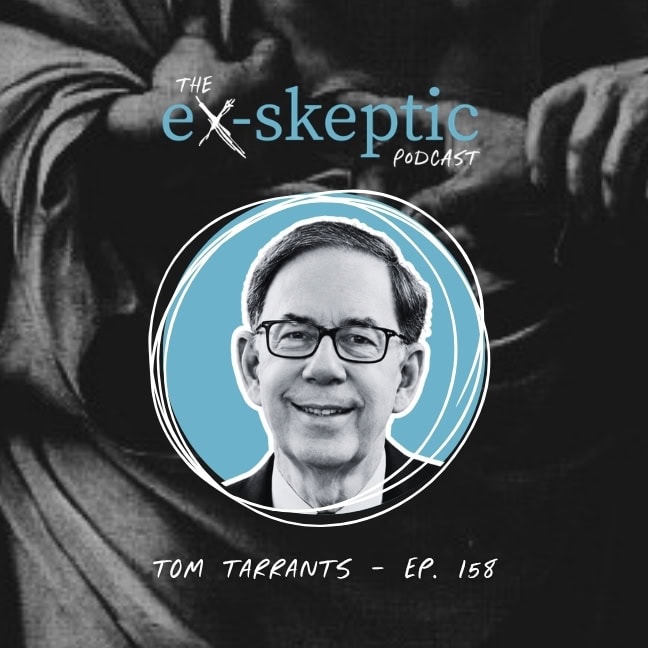

Tom Tarrants grew up surrounded by Christianity, but he describes his early life as one of “practical atheism”, professing belief in God while living as though God did not exist. As racial tensions and fears intensified in the American South, Tom was drawn into increasingly radical racist and antisemitic ideology. His choices led to violence, imprisonment, and ultimately solitary confinement.
Alone in a prison cell, Tom began seriously searching for objective truth. His journey through philosophy eventually brought him back to the Bible he had heard throughout his childhood, but this time, he began to understand it differently. What followed was not simply a change in beliefs, but a transformation from a life driven by hatred to one centered on loving God and loving others.
Today, Tom has spent decades studying and teaching what it means to genuinely follow Jesus. In this conversation, he and Jana explore the difference between nominal Christianity and authentic discipleship, the danger of destructive ideas, the importance of seeking truth wherever it leads, and how humility, love, and the work of the Holy Spirit can change even the hardest heart.
🎙️ Love the show? Support the mission and explore eX-skeptic merch here: https://ex-skeptic-shop.fourthwall.com/
Guest Bio:
Tom Tarrants is a longtime writer, mentor, and President Emeritus of the C.S. Lewis Institute. After coming to faith in Christ, Tom devoted much of his life to understanding authentic Christian discipleship. He studied classics at the University of Mississippi, earned a Master of Divinity with a focus on Scripture and discipleship, and completed doctoral studies in Christian spirituality with additional emphasis on discipleship.
Tom is the author of Consumed by Hate, Redeemed by Love and Following Jesus Christ. His life and ministry center on helping people move beyond nominal Christianity toward genuinely knowing, loving, serving, and following Jesus.
Resources Mentioned:
- Consumed by Hate, Redeemed by Love By: Tom Tarrants: https://www.amazon.com/dp/1400215382?lv=shuf&channelId=500&plpRedirect=mhFallback
- Following Jesus Christ By: Tom Tarrants: https://www.cslewisinstitute.org/following-jesus-christ/
- New Living Translation (NLT): https://sites.tyndale.com/nlt/
- The Gospel of John
- The Psalms
- Matthew 16 / Mark 8
- 1 John 4:19–21
Chapters:
00:00 – Rethinking What It Means to Follow Jesus
02:52 – Meet Tom Tarrants
06:11 – Living as a “Christian Atheist”
09:32 – Accepting the Culture, Not Christ
13:16 – How Radical Ideas Took Hold
19:45 – The Failure of Christians to Address Radicalism
21:27 – The Descent into Violent Extremism
24:29 – The Night Everything Changed
32:07 – Prison and Solitary Confinement
35:35 – Searching for Objective Truth
38:32 – When Scripture Opened His Eyes.
45:08 – A Transformation Taking Place
49:52 – From Hatred to Loving Others
55:13 – From Nominal Christianity to True Discipleship
59:56 – Taking an Honest Look at Christ
01:05:52 – Sharing Faith with an Open Heart
01:10:22 – A Life Transformed by the Love of Christ
01:12:50 – Closing
Connect with eX-skeptic:
Website: https://exskeptic.org/
Facebook: http://www.facebook.com/exskeptic
Instagram: http://www.instagram.com/exskeptic
Twitter: http://x.com/exskeptic
YouTube: https://www.youtube.com/@exskeptic
Email info: info@exskeptic.org
eX-skeptic Transcript
Ep. 158
November 20, 2026
Rethinking What It Means to Follow Jesus
TOM TARRANTS: I knew Jesus was the answer, and I prayed a very simple prayer to Jesus and acknowledged my sin, my sorrow for all the evil that I had done and asked him to have mercy on me and take my life if he would wanted it. I had no idea that he would. I mean, what a mess, what a mess, what a hot mess. As I say now, um. You know, great wonder is that, uh, that the Lord heard me.
JANA HARMON: Hello and welcome to eX-skeptic, where we explore unlikely stories of belief. We talk with people who once rejected Christianity, misunderstood it, or walked away from it, only to discover that the Jesus they had assumed they knew wasn’t the real Jesus after all. I’m your host, Jana Harmon. Thanks for joining us today.
Whether you are a long time listener or are new to this podcast, or if you’re just simply exploring questions of faith, I’m really grateful that you’re here. We often think of skepticism as rejecting God or walking away from Christianity, but sometimes the greater misunderstanding isn’t rejecting Christianity at all. It’s embracing a version of it that bears little resemblance to the life and teachings of Jesus.
My guest today, Doctor Tom Tarrants, describes his younger self as a Christian atheist. It sounds like a contradiction, but by that he means someone who claimed the name Christian while having little understanding of who Jesus was or what it truly meant to follow him.
Instead, he embraced an ideology that justified hate fueled beliefs and violent acts, all the while believing he was serving a righteous cause. Yet today, he is a deeply devoted follower of Jesus Christ, whose life bears little resemblance to the one he once lived. What could possibly bring about such a profound change of mind and heart in someone who was once hate filled?
What does it mean to move from simply identifying as a Christian to truly following Christ? Doctor Tom Tarrant’s story is one of the most extraordinary accounts of transformation I’ve ever encountered. After experiencing the radical change himself, he has devoted his life to helping others understand what it truly means to follow after Jesus.
I think you’ll find his story both sobering and deeply hopeful.
Well, welcome to skeptic. Tom, it’s so great to have you with me today.
TOM TARRANTS: Well, thank you for having me, Jana. It’s a real pleasure to be with you. And it’s good to see you again.
Meet Tom Tarrants
JANA HARMON: Yes, absolutely. I first met you, Uh, Tom, almost 20 years ago. It’s hard to believe that you were president of the C.S. Lewis Institute in Washington, D.C., and you still have your hand in quite a lot of things there, as well as doing some active writing. And we’re going to talk a little bit about that.
But before we do, uh, can you give the listeners an idea of a little bit about the things that you’ve been involved in and in the C.S. Lewis Institute, as well as some of your educational background? So, they’ll have an idea of the kind of academic training that you’ve experienced.
TOM TARRANTS: My work at the C.S. Lewis Institute has, uh, focused on, um, helping people to really know and, um, faithfully live as disciples of Jesus and, um, having that grounded in Scripture. And so, I’ve spent, um, a lot of my Life after I became a believer. Um, really thinking about this because I was a, a nominal Christian before I became a true Christian.
And, um, and I was around a lot of nominal Christianity. And so, it’s been a question for me and a concern for, uh, much of my life. Um, so, I went to University of Mississippi and, uh, studied, classics there. I to seminary. I moved actually from Mississippi to the Washington area in 1978. And so, I’ve been here for nearly 50 years, and I did a master’s degree. Uh, master divinity degree particularly focusing on scripture and on discipleship. And then, did a doctoral program in Christian spirituality with a lot of additional work focused on discipleship.
So, I spent a fair amount of time with, books and with wise people and scholars and theologians and, um, focused primarily on this whole subject of what is true Christianity. What does it mean to really know Jesus Christ and to, to live with him, to follow him and to be, A fruitful disciple of Jesus. I keep learning, too. I, I I’m a lifelong learner, so I’m always interested in learning more. Um, so it doesn’t end with me, so.
Living as a “Christian Atheist”
JANA HARMON: Ah, no, nor should it for any of us. Actually, it this this podcast, Tom, as you know, is where I speak with people who were once skeptical of faith. In some regards skeptical of God, skeptical of Christianity. But you’re sitting here as someone who, you’ve already mentioned had some kind of nominal Christian belief, but yet in in one of your books is called Consumed by Hate. Redeemed by Love. You characterize the, let’s say, the first chapter of your life as someone who had radical ideas, believed in and very, I guess you would characterize now as hate filled kind of rhetoric and ideology.
But you’ve also mentioned to me prior is that even though you might have called yourself a Christian growing up, that you characterized it as somewhat of a Christian atheism. Can you talk with me a little bit about how you were raised in the South with your family, and how you fell into what you consider to be Christian atheism?
TOM TARRANTS: Yes. Well, I think it’s important to make, uh, a clarifying statement here to start with, um, about, Christian atheism. That seems like a contradiction in terms. And it is if you are really using the words properly. But there’s such a thing as theoretical atheism. People develop arguments against, uh, Christian faith and the arguments that they feel are persuasive. Um, we know a lot of that. I mean, that’s very common, but even more common, and it doesn’t get enough attention is something you might call practical atheism.
Practical atheism is people who live as if God doesn’t exist. So, they would not call themselves atheists, But their life. Reflects the kind of behavior and attitudes that you would find in someone who doesn’t believe God exists at all. Uh, so, um, yes, I was a practical atheist. Now I have a lot of sympathy for atheists, actually. Um, there’s so many things that can turn people away from God. And one, one of the one of the notable, uh, major things is, um, uh, professing Christians who, um, really discredit Christianity.
Accepting the Culture, Not Christ
So how did all of that work for me? How did I fall into that? You know, I grew up in a culture that was very conservative. Mobile, Alabama. Uh, back in the 50s and early 60s. Very conservative, very traditional town. Um, founded in 1702.
And everything there had been segregated from 1702 up until the 60s. And it was very, very common to go to church, and we had a lot of Catholics and a lot of Protestants. And it was sort of the thing you did. I mean, it was just respectable people go to church. It’s part of the culture, you know. And so, my dear mother, she. I believe she really knew the Lord. And she was especially concerned for us kids to be in church on Sunday.
And so, I grew up. My earliest memories are going to church, you know. And, from just a little boy, I never questioned any of it. Um, but none of it really made any impact on me and so, you know, as time passed, I was in church quite a bit. They preached the Bible where I went to church. It was a Southern Baptist church. It was a sort of a megachurch before there were such things. And, so no, no question about, you know, whether truth was being taught or preached.
But I was, you might say, immune to it. It just didn’t penetrate. It didn’t get through to me. Now, I understood what was being said. You know, cognitively, um, I understood it well enough, actually, that when I was 13, I thought, well, um, I’ve heard about hell, and I don’t want to go there. And so, I’m going to make. I’m going to make a profession of faith. I want to be saved so I don’t go to hell when I die.
JANA HARMON: Yes, of course,
TOM TARRANTS: That is, um, not uncommon. Or in those days, at least. And so, I made a profession of faith, and I, I was sincere, as far as I knew. I mean, it wasn’t like hypocrisy or, uh, pretending or anything. But nothing really changed except I got wet when they baptized me. And the Baptist said, you know, they’re famous for that. If you join a Baptist church, you will get immersed in water.
So, I went down a lost person, and I came back up a lost person. Mhm. Um, so no amount of water will make you a true Christian. But I thought I was, I thought I was and that gave me a very different outlook on life.
How Radical Ideas Took Hold
JANA HARMON: Yeah. You, you were raised in a very interesting culture too, in the South in the 60s, uh, 50s. And there was a lot of racial, racial unrest there, some segregation, uh, some a lot of radical ideologies floating around the influence of Marxism, communism. There was quite the cultural soup in which you found yourself now as you were growing up, you started adopting some fairly radical ideas and actually, in a sense, baptizing them through the name of Christianity.
How can you embrace the kind of a radical or racist ideology, and yet still call yourself a Christian in a sense? I think that that’s where there seems to be a tension point.
TOM TARRANTS: Yes, well there is. Um, you know, I, I grew up in an era where in the 50s and 60s, where there was a tremendous fear in America of communism and the global communist movement and conspiracy within the United States and in the US government.
And so that’s kind of the, um, larger cultural frame where I grew up, Mobile, as I mentioned earlier, was, um, segregated from its beginning in 1702. When you went to well, the town, for example, was divided into sections where white people could live and sections where black people could live, but there was no crossover, no crossover whatsoever. That’s the way it had always been.
And of course, underlying assumptions were that black people were not equal to white people. And, you know, there needed to be this separation of the races so that you didn’t have a kind of interracial marriage that was considered a, a great evil to be resisted and prevented. Um, well, that was just normal.
And people today can’t imagine that kind of thing in America today. But so, you know, you really absorb a lot from your family and their attitudes and values and behavior. You just almost osmosis. But the same thing happens in the culture. You know, and so that was just what I was. This is your word, the soup that I was, uh, part of. And it influenced me. I wasn’t, you know, thinking about. Oh, is this right? Is this wrong? It’s just this. It didn’t even occur to me. This is just life. This is the way it is.
And so, you can maybe imagine a little bit of a great shock that I felt and many, many other people throughout the South. Um, when the federal government, um, ordered desegregation of the public schools. And, uh, that’s where things really took a turn for me. Um, I began to read, material. Of course, it was all over the media. Um, the governor of Alabama was, a man named George Wallace. And he was, a very, very strident and vocal opponent of all of this. And he said, well, the civil rights movement, the civil rights movement is actually, part of the Communist conspiracy behind it all that the communists are, um, orchestrating things.
And, um, well, you can imagine how that went over. I mean, people were really inflamed and, uh, fearful about this. And so that that affected me. And I began to do some reading and, um, encountered literature that was commenting on all of this and explaining it from the standpoint of what you would call racist and, and anti-communist, uh, perspectives.
And I then discovered some material that introduced a new element that I hadn’t known before. And that was the Jews. And the way the story ran was that, yes, the civil rights movement is, uh. Really, communist inspired and influenced. But behind the communists are the Jews. They stay out of sight. They hide their hand, but they manipulate. And they do this all over the world, and they’ve done it for centuries trying to control the world. And so ultimately, the Jews are responsible for all of this.
So, this may sound bizarre to some people, although it’s making it’s making, uh, a resurgence today. There’s more and more of this kind of thinking. And, um, the likelihood of it increasing, I think is, is pretty significant.
The Failure of Christians to Address Radicalism
JANA HARMON: Tom, weren’t there also theologians who were endorsing segregation and the this, this, these ideas of the Deep South at the time that made you, as a Christian, feel as if you were contending for something that was good to maintain segregation, whether it be in the schools or the culture or anywhere else.
TOM TARRANTS: Oh, sadly, um the Bible believing churches. Evangelical. Churches. Broadly. Evangelical churches, um, that I knew anything about, they, they mostly were either quiet, or they spoke out against this, desegregation and the civil rights movement. Um, and that’s something that’s been written about in the past. And I think now there’s a widespread recognition that that that was a great failure on the part of Bible believing Christians.
They had been so immersed in the, the culture, that it was a very difficult thing for them to, really get their heads around what the Bible truly said about this. You know, there’s so much prejudice and, blindness. And so, they missed the moment, so to speak. Uh, or as, as we sometimes hear, they were on the wrong side of history.
The Descent into Violent Extremism
JANA HARMON: Yes, yes, but do you? You embraced this kind of more radical ideology in a sense that you were pushing back against, um, desegregation and you got involved in a group of people that were willing to use violence in order to demonstrate or protest what was happening in culture. And you got in a great deal of trouble that landed you in prison.
Um, can you give us just a moment about how that happened and, and what happened and how you ended up in prison?
TOM TARRANTS: Yes. Um, so sad tale about, um, when my, uh, high school was desegregated right at the height of all of this, um, um, social upheaval, um, I became acquainted with some people who were committed advocates of this, um, kind of ideology. I mean, basically the idea was things are so bad that somebody needs to do something, and nobody seems to be doing much of anything.
And so, there was this kind of, call to action, uh, on the part of these really extreme groups. And, uh, I thought, well, right, these people have it right. Something needs to be done to stop this. So, I got connected with, um, just a short, a very long story with a group in Mississippi, neighboring state in Mississippi, which was ground zero for the civil rights movement. And, this group was called, uh or described by the FBI as the most violent right wing terrorist organization in America at the time.
And the name of the group was the White Knights of the Ku Klux Klan. They were responsible for a great deal of violence in Mississippi. Most of the violence in Mississippi. Um, so I got connected with them, and life went in a very different direction for me from that point on. Uh, it was already spiraling downward. But them it accelerated. Accelerated? Yeah. Very sad.
The Night Everything Changed
JANA HARMON: Yeah. So, what happened then? Ended up, uh, putting you in prison?
TOM TARRANTS: Yes. Well, I went one night with another member of this organization, um, young school teacher from Jackson, Mississippi, named Kathy Ainsworth. And, um, she had been drawn into this, like, I had Kathy Ainsworth and I went to Meridian, Mississippi, uh, late one night to plant a bomb at the home of a Jewish businessman there who had spoken out against the Klan and was a big supporter of civil rights.
And, um. We arrived at his in his neighborhood, I guess a little after 1:00, maybe in the morning, and, um, everything seems quiet and, um, nobody out walking dogs or any of that sort of thing. And so, we pulled up in front of the house and, um, I took a bomb, 29 sticks of dynamite timing device, and I was, uh, walking it up to the carport of the house. And, um, about halfway there, shots rang out.
Well, I was stunned. Um, had not expected anything like that. And I dropped the bomb and miraculously. And I’m not using that word loosely; the bomb did not explode. It should have, uh, demolitions experts that later inspected it said they couldn’t understand why it didn’t explode. Uh, anyway, I dropped the bomb. It didn’t explode. I spun around and ran back to the car. I was hit with a load of double buckshot in my upper right leg. Somehow managed to get to the driver’s door, got in, and Kathy tried to help me get in.
Bullets were flying everywhere. I had no idea what I had stepped into, but there was a Swat team with 26 men, heavily armed, concealed all around the area. They were all shooting at us. And, um. So, I started the car and sped away. And doing so, Kathy was hit with a round of rifle fire, and, um, she, um, she died on the seat of the car there. Probably within, I don’t know, a minute, two minutes, something like that.
But I was totally absorbed with trying to get out of the area because the police car was right on my bumper and they were shooting. The guy in the passenger seat was shooting at me. So, they were chasing me for about 15 blocks, I think, in this, um, residential area. Um, and um, eventually I went around the corner and, um, skidded up into, uh, a yard and they crashed into the back of my car, and I got out with. I have a submachine gun and a hand grenade on the front seat, and I opened fire on the police car, and the guy who was driving saw what was happening, and he ducked.
The other guy had been shooting was about halfway out of the other side of the car, and he was hit three times in the chest, once in the heart, uh, with this, uh, gunfire. Um, so. I had run out of bullets and, uh, dropped my gun, and then the other guy popped up and, uh, fired, and I was hit again. Um, then I guess he went to look after his partner. Uh, and I kind of stumbled away and collapsed in the backyard of a house right there in the intersection.
Five minutes later, police, FBI, uh, state troopers. The place was just covered, uh, and they were shining their big search lights all over the place trying to find me, and I was I mean, meanwhile, just laying there gushing blood and, um, a little group of four of them saw me and came up carefully, slowly. And I didn’t have any weapons at that point. I was just laying there and, um, got right over me and turned off their lights and started shooting their shotguns.
And I was hit twice with, uh, from a range of about. 3 to 4ft, I guess. They turned on the lights, and I was still breathing, and, um, one pulled out his pistol to, uh, finish me off. And at precisely that moment, an ambulance driver who had heard the shooting ran up to see what he could do to help. And, um, they couldn’t. They couldn’t finish the job, so to speak. And they’d been given orders by the chief of police that there were to be no survivors. Uh, which the chief of police acknowledged. I mean, this is not kind of speculation.
Um, now, mind you, this was Mississippi in the 60s. Its, um, life was a little different down there in those days. Um, but, um, anyway, the police officer that was shot three times, his heart stopped. He was on the ground. Somehow the EMTs got his heart beating again, and it’s. Now, I don’t want to overwork this term, but I would say it was a miraculous development. Uh, that just doesn’t happen with a with a bullet lodged in your heart. Um, and they flew him to Atlanta for open heart surgery, and he survived and actually got out of a hospital before I did. It was just him. I would call it a miracle.
Prison and Solitary Confinement
JANA HARMON: Um, yeah. It’s just such a miracle. Not only not only that he survived, but also that you survived multiple rounds of gunshot and shotgun. It’s just it’s hard to explain it. I mean, from any it kind of natural point of view. Uh, so you got placed into prison. You escaped. I mean, for anyone who wants to really read his, the whole story, it’s just amazing.
Riveting. It’s unbelievable. Almost. You ended up escaping from the jail. And you the prison. One of the worst in in, uh, in Alabama. But that you were placed back after an escape to solitary confinement. Why don’t you talk with us a little bit about what that was like and how that that small six by nine cell was a place that God reached down and changed your heart?
TOM TARRANTS: Yes. Well. Um. I wish. I wish it had happened, uh, sooner, but, as you indicated, I was. I was, in hospital for actually about a month. They initially said I would not live, and, uh, that I would die in 45 minutes when I first got to the hospital. But God spared my life, and, eventually got sent, tried and sentenced to 30 years in the prison in Mississippi’s, parchment prison. Um, but the, uh. A brief mention, I, I did work out this escape plan six months later and with two other inmates, and wow. It was successful, uh, initially, but within three days. Uh, it was two days that FBI had found out where we were.
And there was, uh, a very difficult, um, encounter person with me. One of the persons with me was killed. Right where I’d been standing. Five minutes earlier. And but my life was spared again. And it was after that that I was in that prison cell. Uh, by myself. And, um. I was without hope and without God. It’s a good description of my situation. This is not as hopeless a situation is, one could possibly imagine.
Well, I wish I could say that at that point, uh, I had some kind of, um, Damascus Road experience, and my eyes were opened, and, uh, I came to faith in Christ and my life was changed, but it didn’t actually start off that way.
Searching for Objective Truth
Um, all I could do to keep from going completely crazy was to read. And I began to read, um, things I had not gotten around to earlier. Like, uh, The Rise and Fall of the Third Reich and, uh, Mein Kampf and, uh, a long list of, um, fascist, uh, Nazi neo Nazi kind of literature. Racist, uh, literature. But, um, after going through a lot that I, I found myself wanting to read. Um, philosophy. Classical philosophy. Uh, Plato, Aristotle, Marcus Aurelius. I read through their works.
And, um, I came out of that with a desire. Well, um, a more clearly articulated, uh, belief that there is such a thing as objective truth. It’s not just about what we make up in our mind and want to believe. I mean, there is truth that exists. And, uh, the challenge to us is to discover it. To find it. And, um, that really resonated with me.
And I thought, you know, I really want to seek truth. And I didn’t have any notion that what I believed was wrong. But I had this desire to seek truth. And, um, and so that combined with, um, the comment from Socrates that the unexamined life is not worth living. That set me on a trajectory. You know, I want to examine my life. I want to seek the truth.
And I began to read and, um, through the readings that I was able to get my hands on. Um, that hunger increased, and eventually I came to the point where I felt this drawing to read the Gospels, and, um, I had, seen some things in my, uh, earlier reading on philosophy and whatnot. Uh, political philosophy, conservative political philosophy that had gotten my mind, uh, moving in that direction.
When Scripture Opened His Eyes.
And, um, so I began to read, and I found that something was going on that I hadn’t experienced before. And, um. It’s like I had been blind all my life, and now I was beginning to see. Beginning to see. And as I read the scriptures now, I was not a stranger to the Bible. I mean, you were raised in a Baptist church. Like it or not, you’re going to have a lot of Bible, uh, read, taught, preached, uh, to you. Uh, like I said before, it never penetrated. It never really broke through. Um, but something was different this time.
My eyes began to be opened in the sense that I began to grasp the meaning of what I was, what I was reading, uh, and how it applied to me personally and brought me to a place of conviction of sin. That kind of phrase that’s used often in, uh, Bible believing circles, uh, that is to say, an awakening to the fact and reality of my sin and what I had done, um, that really was contrary to the will of God.
And, um. So, the light began to get brighter, and I began to see more and more clearly. Um, and that that really was taking me to a place I’d never been before, which was what the Bible describes as repentance, uh, awakening to our sin and a turning from it, uh, and to Christ. And that’s just what happened to me. I there was one verse that really hit me hard and, uh, that was in, Matthew 16. It also appears in Mark chapter eight. But, um, Jesus says, what does it profit a man to gain the whole world and lose his own soul?
And somehow that just really, um, broke through in a way that nothing had for, uh, opening my eyes to the reality of what I was doing.
You know, I it was all, you know, I would have said that I was a patriotic American, uh, Christian trying to protect America from, uh, a communist takeover and white Christian America from, um, racial destruction and things like that. That’s what I would have said before, but, uh. And sincerely so. But as as my eyes began to be opened, which is only possible if the Holy Spirit is working, then, uh, I began to see it. Now, what it’s really about is me.
But this has really been about as me and my ego, my pride, my self-seeking. Um, that was deeper down than I was not aware of any of it, but my eyes were open to the fact that, uh, I was really far from God and deep in sin. And I needed I needed forgiveness from God. And I got on my knees one night in my cell and just prayed a very simple prayer and asked.
Now this. This is where the Baptist now shine. All the teaching I knew John 3:16. God so loved the world that he gave his only begotten son, that whoever believes in him will not perish but have everlasting life. I knew that I knew that by heart, and so I didn’t need to go and read about Buddha or, um, I didn’t need to go read about Muhammad or, uh, I didn’t need to do the searching of other religions or philosophies or anything.
I knew Jesus was the answer, and I prayed a very simple prayer to Jesus and acknowledged my sin, my sorrow for all the evil that I’d done, and asked him to have mercy on me and take my life if he wanted it. I had no idea that he would. I mean, what a mess, what a mess, what a hot mess. As they say now, uh, but, you know, great wonder is that, uh, that the Lord heard me with.
And he’ll do that for anybody, but truly turns to him, you know, and really seeks him. And, uh, something changed inside. And I went to sleep that night and slept well the next day. Life was different. God was real to me in ways that I’d never known before. And I had three desires that have stayed with me now for all these years. Um. Wanted to live for God. And I wanted to read the Bible. And I wanted to pray. And those things are still with me today.
A Transformation Taking Place
JANA HARMON: That’s beautiful. Beautiful. So, what happened when you say that your your eyes were blinded, but they became open. And once you were seeking truth, all of those things that you believed prior to that time, um, all the radical ideology. What happened with all of that? I’m just trying to figure out your paradigm shifting because you’re talking about actually moving from one view of the world to another in the way that you think and the way that you live in the way that you act, the way that you see others, the way that you see yourself.
I mean, you’re talking. It sounds like a very fully orbed transformation in every aspect. Uh, mind. Heart. Life. Can you talk with us about what that transformation really looked like?
TOM TARRANTS: Ideas have consequences. Ideas have consequences. And so, I got into all of this through adopting a set of ideas, ideology. And, um, once I was in it, I was, um, I was in it, you know. Um, it recalibrated everything.
Well, as I was, had finished my reading through classical philosophy, and I was reading some political conservative political philosophy. There is a very big difference between conservative political philosophy and this extreme racist, anti-Semitic, conspiratorial kind of mentality. In fact, they don’t like each other.
You know, it was kind of an incremental move, uh, but a very significant one, um, that disowned all of that stuff I was previously involved in. And I was reading a book again; ideas have consequences by a philosopher. The title of it was The Decline of the West. And the author was James Burnham. And it’s a very good book. Uh, and around page one, o, one or 2 or 3. Uh, he trained his guns on anti-Semitic ideology of anti-Semitism and then on racism, and with just incredible clarity of mind. Uh, he, he just, uh, dismantles in a very clear, concise way the key foundational beliefs of anti-Semitism. And separately, then he took up racism.
Uh, and after reading that, it was like. It just demolished it. There was really no substance to this whole ideology. Uh, and so, you know, I, I read that and. My mind was liberated from lies and deception that had nearly destroyed me and had moved me to do a great deal of evil in my life. That happened before I was converted. So, it’s not like once I became a true Christian, I realized all of it. I had discovered that shortly before I, uh, began to read the Bible and so I had that spell had been broken.
From Hatred to Loving Others
JANA HARMON: So, there was a. Yes. So, there was a dismantling of sorts of the false ideologies that allowed you to become open to, to the pursuit of truth.
TOM TARRANTS: Yes, yes. What happened after I was converted was that God changed my again, ideas have consequences. I began to read the Bible. I loved the Bible. I of course I respected the Bible all my life. But, you know, I scarcely ever read it. But, um, I was hungry for the Bible and to read the scripture. I just couldn’t get enough of it.
And what happens when you begin to, um, immerse yourself in, in the Bible? Um, is that Holy Spirit. You know, if you’re praying for the Holy Spirit to illuminate your mind, um, you begin to see things differently, and you can learn things that are life changing.
In the course of reading the New Testament, it became very clear to me that Christian faith is about loving God with all your heart, mind so, and strength, but also about loving your neighbor as you love yourself. And, a passage that, I’ve got a Bible here, a passage that really spoke powerfully to me at this point was found him and first John. And it’s, um, I think the end of chapter four or thereabouts is the end of chapter. Here in verse 19 it says, we love because he first loved us. If anyone says, I love God and hates his brother, he is a liar. For he who does not love his brother, whom he has seen, cannot love God, whom he has not seen. And this commandment we have from him. Whoever loves God must also love his brother.
Well, uh, you know, I was not the sharpest knife in the drawer, but I had enough, enough wits about me to figure out that, oh, well, that’s not confined to white people. You know, there are black people who are Christians, too. And so, they’re my brother. My sister. And so, God used that and other verses as well, to help me to move from simply, um, realizing I’ve been wrong about a lot of my beliefs. Uh, most of them, to seeing that there’s more than just a change of beliefs and understanding. Uh, you know, we’re called to have a different attitude of heart and behavior.
You know, love for our neighbor. And love is not, uh, the word agape in the New Testament isn’t primarily about, um, warm affection. And there’s another word for that for philio, but it’s about, uh, the will. It’s primarily about the will; about choices you make. And so, loving agape type love in the New Testament is really about seeking the good of other people. It’s an attitude of, uh, as one Greek scholar put it, uh, unconquerable benevolence, you know, really trying to, uh, do the good you can for whoever God puts in your path, you know, treat them the way you would like to be treated if you were walking in their shoes.
That kind of thing began to register with me, and, God changed my heart, beyond simply the understanding of that. I mean, I just, all I can do is attribute it to the work of the Holy Spirit. Um, I think people who have experienced, um, new birth will know what I’m talking about. Uh, it may come sooner for some than others, but we are called to love our neighbors, whoever they happen to be. Whoever’s in front of you. And regardless of whether they are people that are appealing to us or, uh, or not, you know, or.
From Nominal Christianity to True Discipleship
JANA HARMON: Yeah. So, what you’re describing for us now, loving God and loving neighbors and loving others just seems such a far cry from the young man who had a pack of dynamite, you know, to destroy someone’s home. Um, someone that you were fueled by, hate to destroy. And now you are driven by love. Love for all, all humans who are made in the image of God. What a beautiful, beautiful thing.
I’m sure again, those who are listening to the story thinking, okay, he was left in that jail cell, that prison. So, you’ll have to read the book to hear all the ins and outs. But you were in that cell for quite a long time. You had quite a journeying outside of, uh, out there. Uh, really the hand of God who allowed you to be released from prison eventually. And that’s when you pursued those advanced degrees and really, really immersing yourself in the Bible and what it means to actually follow Christ.
And I know that you and you’re sitting here really decades later, um, as someone who has followed Christ for, for most of your life now, and, and you’ve written a book called Following Jesus Christ. What’s interesting to me is that through this conversation, we’ve contrasted what it meant to be someone who was a practical atheist but called yourself a Christian.
You weren’t what you would consider a quote unquote “true Christian”. But yet. And that day in your jail cell, when you got down on your knees and you gave your life to Christ, things changed and you became what I would consider. And you as well, a true Christian, a true follower after Christ. Because everything in your life since then has followed after the person of Jesus Christ.
Can you give us a little idea of what this book is about? For those who might be interested, they’re looking at your story. They’re looking at your journey going, oh my goodness. You know, he really understands what it means to give all and to be completely transformed by Jesus.
TOM TARRANTS: I’ve spent the last 40 years studying um, academically and just everyday life. Um, this whole question of, uh, what it means to truly follow Jesus Christ as we find him in the scriptures. And what I’ve tried to do there is to simply obey Jesus. He said, go and make disciples of all nations, baptizing them in the name of the Father, the Son, and the Holy Spirit.
And the part that often gets, uh, neglected is what comes next. Um, and teaching them to obey everything that I taught you, the kind of, um, nominal Christianity that has been a plague on the church. From early years, early centuries, and it’s a problem all over the world. Protestant, Catholic, doesn’t matter. Uh, here in America, there’s plenty of it. That’s what I’m trying to address. Get to the root of the problem.
And when people’s hearts change and they come to know and love God and want to, um, follow Jesus and live as Jesus lived, that deals with these issues. Not. It’s the issues of hatred and all the rest. Um, it may take some time for some people more than others, but, you’ve got to get to the heart of the issue.
And so, yeah, this is this is a kind of, it’s not my only motivation by any means, but it’s, um, it’s a way to address some of the things that I was involved in and other people are being sucked into even today. Go to Jesus and discover who he is and the kind of life he calls us to, and the power he gives us to live. You know, the power of the Holy Spirit to live a new life.
Taking an Honest Look at Christ
JANA HARMON: Yes. It’s a wonderful, uh, book. It’s a resource. Uh, but I think it’s also reflective of your heart in loving others, Tom, and that you’re actually offering this book for free as a downloadable resource. Um, you can get a PDF copy of this. We will put the link in the show notes for anybody who’s interested. And my understanding is it’s also being translated in in languages beyond English. But so, thank you for that for your gift in that.
But Tom but I’m thinking also of those who might be listening who are either theoretical atheists, they’re practical atheists, they’re nominal Christians. They’re going, ha! I wonder? I, you know, I wonder what it really does mean to look in the direction of Christ in a real and genuine way.
Uh, you were put in a hard place in solitary confinement in a prison, and that forced the issue for you in a sense that you were you were seeking after something, and the Lord met you there, but you were willing to open yourself to seek after truth. Um, what would you say to someone who’s looking at you in your life and your transformation, that God is there for anyone who turns in his direction?
TOM TARRANTS: Well, that’s a great a great question, Janna. Jesus said, if you seek. You will find. And I think a big part of the response here would be, do you really want truth? Wherever that might take you. And that was my attitude when I began seeking for truth, that I was committed to seeking truth no matter where it took me. I had no idea where it would go.
Now, I did not, as I said before, have any notion that it would take me away from what I was believing. It didn’t occur to me, but I just had this desire for truth. Um. If you want truth, then pray for it. Ask God to help you. And to send his light and his truth into your heart and mind.
And you know, that’s definitely different from kind of a a skeptical attitude. What is it that you really desire? What do you want? You want to just argue with people about religion. You know, a lot of people spend a lifetime doing that. Um, do you want truth? Do you really want God? The real God, the living God. And do you want Jesus? And you can come and say, I don’t know if you even exist.
I’ve heard a number of testimonies like that. People that say, I don’t, I don’t know if you exist or not, but if you did, I want to know you. You can do that. It’s just that simple. And, you know, there’s some steps you can take if if you’re sincere about that, um, you can begin to read, um, read the Bible, read. But don’t start with the Old Testament. Start with the New Testament and start reading the Gospel of John. That is a great place to start. And when you start reading, just pray God, if you exist, I pray you will open my understanding to what I’m about to read. Um, and um, it can be just that simple.
Get it? Get a translation of the Bible. That is understandable. Um, some of them are better than others in terms of ease of understanding the text. So, a good one if you’re first starting off on this is the New Living Translation. Uh, it’s a really good, um, you know, a New Testament version of it or the whole Bible, but read the New Testament part, read, read John and read the other gospels and, uh, read again and then read again.
Just keep reading and you might want to go read in the Psalms as well. Um, there’s some very powerful things in the Psalms or reading the Gospels. Reading the Psalms would be a good starting point. Wouldn’t be the whole story by any means. But it’s a place to start. And, you know, you might want to go and listen to some broadcasts of teaching of the Bible. Maybe go to a church and sit on the back pew where nobody will bother you and listen to, uh, you can do things like that.
People are at different places in terms of their readiness to take these steps, but, um, uh, it can be just as simple as starting off with prayer, which is the right place. The first thing to do.
Sharing Faith with an Open Heart
JANA HARMON: And then. That’s wonderful. That’s wonderful. And as for us, who we who are Christians, it seems that oftentimes people look at Christians and Christianity and think they’re not real. There’s they’re not true. There’s nothing there. Uh, look at the way that they live or their lack of love.
How can we as Christians demonstrate the love that you talk about? If we’re if we’re really Christ’s followers and we’re trying to reach people who may be skeptical of Christianity or of Christ or the beliefs that we hold, um, how can we do a better job, I guess, of either demonstrating Christ or reaching those who may be suspicious or skeptical of who we are and what we stand for?
TOM TARRANTS: Great question. Um, well, one thing comes to mind right off, and that is, um. We are all of us, no matter how long we’ve been believers are, uh, we’re a work in progress. Nobody has arrived yet.
And so, starting off with, um, a recognition of that, that you are, um, still far from what you ultimately want to be and will be, and acknowledging that to people and, you know, don’t come in with all the answers, but just acknowledge, you know, I’m on this journey myself. I don’t have it all together. Um, but my heart has been changed and continues to be changed. And, but I’d like to share with you some of the things that, um, that I’ve found, you know, and of course, this is really a kind of attitude of humility.
Too often we come with an attitude of arrogance. You know, I’ve got the answers. You need to listen to me and do what I tell you, and then everything will be okay. We need we need humility in our approach to people and our interaction with them. Um, and a real concern for them as people, for their souls, and not for just winning the argument. I spent lots of time around apologists and a lot of apologists they love to argue and win the argument.
And that’s not the way that you really get to people. You can win the argument, lose the person. And so, people know they can pick it up. They can sense it, you know. Do you care about them or are you just out to win the argument, you know? Um, so pray for that. Pray for that kind of attitude of humility and love for people. Um, acknowledgment of your own weakness. You don’t have it all together. Um.
And just be a friend. Just try to be a friend. Um. And then pray, pray, pray. That’s the Holy Spirit to give you wisdom. Because you can’t save anybody. Nothing you can do can save anybody. Nothing you can say can save anybody unless the Holy Spirit works in that situation. And so, you’re totally dependent on the Holy Spirit for anything of real substance to happen.
Um, so it creates a different approach. You know, you’ve got really grounded in prayer and humility and love and kindness, gentleness and friendliness. Make yourself, make yourself, uh, attractive, so to speak, to people and not off putting. Uh, those are just a few thoughts.
A Life Transformed by the Love of Christ
JANA HARMON: Yeah, those are wonderful thoughts. And I I’m just sitting here again in just amazement at the transformation that has occurred in your life from the from your early days, from your teens into your early 20s until you really found Christ. You were consumed by hate, as you’re the title of your book. But now I am sitting across from someone who is consumed by love for God, for Christ, and for others, and showing us the way of what it looks like to actually live a surrendered life, a life of humility and grace.
I’ve again known you for almost 20 years, and you do. Your life does demonstrate the fruit of the Holy Spirit. It’s obvious to me the presence of God lives and abides in you, and that it is your heart to love and to serve the one who loves you so, and for others to know him like you do. So, I really appreciate you, Tom.
Your life, your ministry, your walk, your example, um, your love for Christ. But I also appreciate you coming on and telling your story. Um, like you were saying before. Oftentimes we live such imperfect lives, but you were here today to really tell of your life, warts and all. You know that you were willing to reveal that in humility so that you can proclaim the wonder that it is of life in Christ, and then the transformation that’s possible.
I hope and pray that someone who’s listening can recognize that they too are sinners. We’re all sinners and we all need Christ. But that change is possible for all of us and for any of us. So, thank you so much, Tom, for coming, for sharing so beautifully today.
TOM TARRANTS: Thank you Jana. It’s been a real delight and joy to be with you and be able to share about what God has done for me and what he’s still doing. A work in progress like everybody else, you know, and, uh, it’s, uh, it’s a wonderful Life. And hopefully somebody will hear something that might help them take a step forward.
Closing
JANA HARMON: Today’s conversation highlights a reality we don’t often consider. It’s possible to carry the name Christian without ever truly knowing Christ. It’s also possible to reject, embrace, or even defend a version of Christianity that bears little resemblance to the life and teachings of Jesus. But Tom’s story also offers tremendous hope when we’re willing to seek truth honestly and encounter the real Jesus.
He has the power to transform not only what we believe, but who we become. As Tom’s life so beautifully demonstrates, following Jesus isn’t simply about adopting new beliefs. It’s about a new heart, a new direction, and a new way of living.
If today’s conversation has stirred questions, doubts, or curiosity about Christianity, you don’t have to navigate those questions alone. One of the reasons we created eX-skeptic is to connect honest seekers with people who have walked a similar path. Many of our guests know what it’s like to wrestle with difficult questions, and many would be glad to connect with you personally with your doubts. Just email us at info@exskeptic.org We’d love to hear your story and help you get connected.
If you’ve enjoyed today’s episode, would you take a moment to subscribe? Leave a review and share it with a friend. Those simple actions help more people discover these stories of hope and transformation. And if you believe in the mission of eX-skeptic, would you consider becoming a financial partner?
We are a listener supported ministry dedicated to helping honest seekers encounter the real Jesus through thoughtful conversations and compelling stories. Your tax deductible gift enables us to continue producing these conversations and making them freely available to people around the world who are searching for truth.
You can learn more and make a donation at eX-skeptic.org. Special thanks to the C.S. Lewis Institute for their partnership and support of this podcast, and to Ashley Kelfer for producing today’s episode. And most of all, thank you to you for listening and we hope to see you next time when we’ll hear another unlikely story of belief.