
What if you’re content with life, confident in science, and still quietly curious?
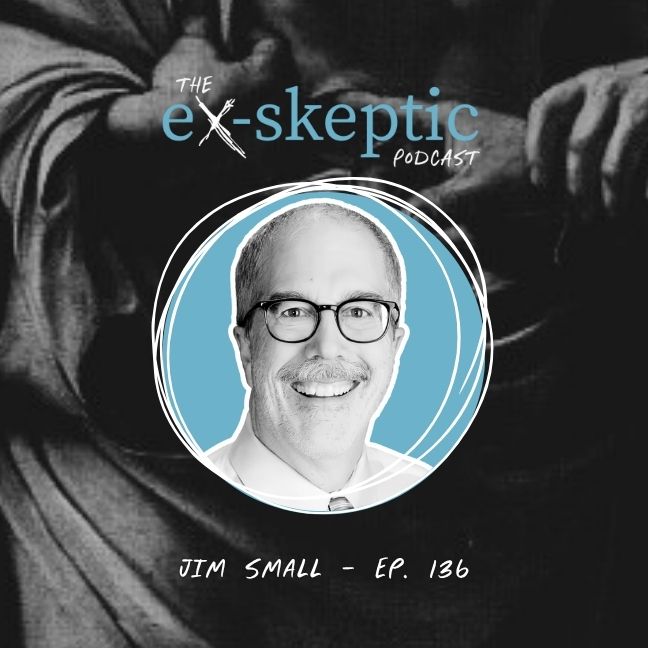
Dr. Jim Small, MD, PhD, pathologist, professor, and lifelong scientist was raised without faith and felt no need for God. Science explained the world well enough. But through marriage, community, and simply showing up at church, curiosity began to stir, not from crisis or doubt, but from an openness to questions he’d never felt compelled to explore. In this episode of eX-skeptic, Jim reflects on a quiet, surprising journey from confidence in science alone to faith in Christ and how curiosity slowly reshaped how he understands life, death, and truth.
Guest Bio:
Dr. James Small, MD, PhD, is a retired pathologist and current Professor of Microbiology at Rocky Vista University College of Osteopathic Medicine. His career spans Duke, the University of Utah, and service as Medical Director of Laboratories at Porter Adventist Hospital in Denver, with research published in the New England Journal of Medicine. Raised in an atheist home, Jim was surprised to discover faith in God and Jesus during his medical training. He’s now active in the Christian Medical and Dental Associations and has served on medical mission trips abroad. Jim and his wife of 44 years have three daughters and five grandsons.
Resources Mentioned:
America’s Christian Credit Union (ACCU): https://americaschristiancu.com/Jana/
C.S. Lewis, The Screwtape Letters
Connect with eX-skeptic:
Website: https://exskeptic.org/
Facebook: http://www.facebook.com/exskeptic
Instagram: http://www.instagram.com/exskeptic
Twitter: http://x.com/exskeptic
YouTube: https://www.youtube.com/@exskeptic
Email info: info@exskeptic.org
eX-skeptic transcript
Episode 136
Jim Small, MD, PhD
Jim Small
00:00 – 01:07
I told a student once, we were talking about why, why did I believe the Christian story? And I said, well, because I think it explains the world better than any other story. What? What are you talking about? And I said, well, on the one hand, we are created in the image of God. So that’s where all of the medicine, hospitals, great works, discoveries, feeding billions of people, that comes from the image of God’s side of us. But then we all ate the apple and so there’s the negative side of us, the rebellious side of us. And all you have to do is watch the news to understand the rebellious side. And we are an uneasy balancing act between those two sides of how we were made. And I think that explains the world better than anything else I’ve ever seen.
Jana Harmon
01:13 – 02:22
What if life feels complete without God? A happy home, a thriving pursuit in medicine, and a confidence that science has all the answers. That was Dr. Jim Smalls world. Faith seemed unnecessary. But then something happened in his well-ordered life that caused him to consider the possibility of God after all. Welcome to Ex Skeptic, where we explore unlikely stories of belief. I’m your host, Jana Harmon. This podcast is for the curious skeptic who wonders if there’s more to life than meets the eye, or for the thoughtful Christian who wants to understand and engage skeptics with both truth and compassion. Each conversation uncovers how real people wrestle with doubt, meaning and truth, and how some discover faith in unexpected ways. Today we’ll step into Jim’s journey, moving from ‘there’s no need for God’ to wrestling with life’s deepest questions. I invite you to listen in, not just to hear a story, but to reflect on your own and to perhaps see the world a little differently. And I hope you’ll stick around to the end to hear Jim’s wise advice for us all. Let’s get started.
Speaker 1
02:23 – 03:41
Do you ever feel like your values are being challenged? In today’s world, it can seem like our beliefs are constantly under fire. That’s why it matters who you partner with, especially when it comes to your finances. America’s Christian Credit Union stands firm in faith, serves the community, and offers exceptional financial services designed for believers. With their elite checking program, you can take your banking to a whole new level. You can earn up to 4% annual percentage yield on balances under $15,000. You can get paid up to two days early, depending on when your employer sends your paycheck. And you can even receive exclusive discounts on loans. Plus you’ll enjoy benefits like cell phone protection, identity theft monitoring and everyday shopping. Discounts what really sets ACCU apart is their mission. They’re partnering with Christians nationwide to advance God’s work because your money should reflect your mission. So if you’re ready to bank with purpose, visit AmericasChristianCu.com Elite to learn more and to make the switch. Today. America’s Christian Credit Union is federally insured by the NCUA.
Speaker 2
03:42 – 03:45
Welcome to eX-skeptic, Jim. It’s so great to have you with me today.
Jim Small
03:45 – 03:46
Great to be here.
Jana Harmon
03:46 – 04:04
I met you not long ago on a Reasons to Believe forum. You are obviously a man of science, a man of medicine, and I would love for the listeners to know who you are, a little bit about your education, the kind of work that you’ve done or are doing.
Jim Small
04:04 – 05:28
Well, my name is Jim Small. I have too many degrees. I have an MD and a PhD. Just ask my wife. It took me seven and a half years to get through medical school rather than four. I went to Duke Medical School, which was outrageous. I grew up in Denver, went to college at Colorado College, was, you know, a good student, obviously got into medical school, met my wife during medical school and then we picked up and moved to Salt Lake City for residency, which was an interesting experience. And then we had had a three year stint in Las Vegas, which was very, very hot. And then we moved to Denver in 1990 and I’ve been there ever since. We have three daughters and five grandsons. I was a private practice pathologist, mostly in the hospital setting. Pathology includes medical examiner work, but I did almost none of that. Almost all of what I did was looking at people’s biopsies and figuring out what they had. And I did that until 2018. And then I became a professor at Rocky University College of Osteopathic Medicine. And that’s where I’ve been ever since.
Jana Harmon
05:29 – 05:53
So, Jim, let’s get started with your story. You’re sitting here, you told me when we met that you were raised or born into an atheist home and that’s how you started your introduction. So I’d love to know a little bit more about that, how your atheistic beliefs were formed, maybe even where that went back or came from, from your parents or your family. How did that shape who you were and your views?
Jim Small
05:53 – 09:15
Well, looking back, I would say it was a small an atheist rather than a capital, a loud, obnoxious atheist family. My dad’s view was always that religion was for those people who were weak enough to need it. So he wasn’t anti-religious. He just thought it was unnecessary if you were a real grown up. And my mother was softer about that, although her parents were both, again, atheists. My dad’s grandfather, interestingly, was a Methodist minister in the Pacific Northwest. And I think that they went to church some, but he never talked about it much. So I found an interest in science, dinosaurs, etc. Very early in my life and grew up thinking science was the answer to everything and the most important thing ever. In fact, I, to my embarrassment, told a music teacher in seventh grade that all this music theory was all very well, but I was going to be a scientist and it was unnecessary. So I will say when I was probably 6, 7, 8 years old, somewhere around there, I went through a phase where I was like, inconsolable about my own personal death. I worried about it constantly and my parents had no tools to deal with it. I mean, them telling me, well, everybody dies, that was like, not helpful at all. Not at all. I didn’t care if everybody else died. That’s not what about me. That’s what I cared about. And they gave me, you know, what was it? Thanatopsis, I think, was the name of a poem about death from the Enlightenment and all this stuff. And it just was useless. And fortunately, you can only stay in a state of that kind of fear and loathing for so long, and then your body says, it’s time to get over this. So then went through school, did well, and had another relapse of that fear somewhere around 16 or 17 years old. And it was, you know, I remember my brother, I was driving and I was just kind of, you know, not responsive or anything. And my brother said, what’s the matter with you? And I wasn’t going to tell him that. I also remember, interestingly, all of my girlfriends that I had of any note were all girls and women of faith, everyone. I don’t remember having a relationship with a “secular woman.” So, yeah, Presbyterian, Catholic, Jewish, all of them, and then most recently Methodist.
Jana Harmon
09:17 – 09:48
So you were growing up, science was your thing. I guess in your home there was a presumption that there was no God and that for you, science was the thing that would explain everything and that you didn’t need God, just like your parents. I guess you presumed similarly that God was extraneous to the explanations of the world, but yet you had this existential angst a little bit from time to time about death.
Jim Small
09:49 – 09:51
Angst may be too weak a word.
Jana Harmon
09:51 – 10:36
Okay, okay. So it was really panic might be okay. I know that’s fair. I think that that could be quite frightening, especially as a child. And then again even as a teenage boy, as you were moving into science and more and more of science, did you understand or accept the presumption that the natural world was all there was? And if that’s true, did you accept or understand the implications that came along with that? And yeah. Including, obviously, you thought about it with regard to death.
Jim Small
10:36 – 11:29
I thought about it with regard to death. I mostly, as one of my fellow residents said, what do I do with this? Well, I think about it for a little while and then I repressed it. And so I think that’s kind of what I did. I thought about it for a little while and then I just repressed and thought about other things. You’re assuming I was a deeper thinker than I probably was here. I wasn’t actively seeking. I wasn’t thinking there was anything to seek for, I guess. Or I was just so busy and occupied with swim team and rifle team and grades and a few friends and girlfriends that it just didn’t pop into my head as something that was something I should be even looking for.
Jana Harmon
11:29 – 11:58
There were Christians in your world. Did you see faith as just, okay, they need that? I don’t. Did you have any idea what that was? I mean, you said you weren’t a deep thinker. What did you consider religion to be? Did you call yourself an atheist? I mean, how did you juxtapose yourself against these other religious people?
Jim Small
11:58 – 13:56
Well, I always thought the word atheist was a faith term just as much as Christian is. And so I don’t think I ever called myself an atheist. I would have said agnostic freely, but I don’t think I would have said, how on earth could you prove there’s no God? That’s absurd. That makes no sense at all. I can doubt this and be skeptical about it. That’s fine. But that seems like a leap of faith to be an atheist to me. As I have gotten older, I’ve thought a lot of people probably don’t want there to be a God rather than don’t think there’s a God, and it’s with we humans, and I am one of us. What we want is what we often manufacture evidence to prove. I think that’s a real risk that we all take. If there’s something that we want. The intellectual side of us should try to look for things that disprove things, not for things that prove our preconceptions. Am I grown up enough and mature enough to do that? Not consistently, but that would be my ideal would be to say, okay, I’m a Christian. What could disprove my faith? And if I was an atheist, I ought to say, okay, I’m an atheist. What could disprove my position? That’s how I think a doctor is trained to think about their diagnoses. What could disprove this diagnosis more than how can I confirm it?
Jana Harmon
13:57 – 13:59
To try to take a more neutral perspective.
Jim Small
14:01 – 14:23
To try to get my preferences out of the way. I think Brene Brown once said, ‘We are not logical creatures with emotions. We are emotional creatures that are occasionally logical.’ And I try to remember that I am an emotional creature who every once in a while, in good moments, is logical.
Jana Harmon
14:23 – 15:09
Yeah, it’s a struggle for us all, isn’t it? The tendency to move towards confirmation bias and motivated reasoning and all of those things that we try to prove what we want to be true. The things that we desire seem to be the drivers. So again, in your life, you saw people who were religious. You didn’t think that you needed that. You had science, you had science to be your director and your goal. These, these Christians, how did you perceive their religion? Was it again, just a crutch of some sort of a hobby, a place to belong, just something you didn’t need or you just didn’t really think? I mean, did the question even come up in your mind at all?
Jim Small
15:09 – 15:50
I don’t think I ever thought that being a Christian made you stupider. And you do hear that. I don’t think I ever thought that. And again, I don’t know that I ever consciously connected my dad’s ‘Well, this is for the people who need a crutch’ to people that I knew were highly accomplished, highly intelligent. My high school graduating class was incredible. And one Christian gal went on to Stanford and then med school and then became a surgeon.
Jana Harmon
15:51 – 16:13
So in those times, even when death was an issue for you, you didn’t look or wonder, is there a God? Is there life after this life? Is there something more than this? I mean, and again, you were around some Christian people. Did you ever ask the question of them? How do they handle death? How did they perceive it? Are these bigger issues that seem to really haunt you?
Jim Small
16:14 – 17:11
I don’t remember really doing that. I think I had the idea that this was a problem I had to solve myself and I had to learn to deal with this myself. And I remember dad went through some awful health issues back then, and he basically said, well, I don’t fear death. And so I figured that was the ideal because I had a great, I had a ‘Leave it to Beaver’ upbringing. It was perfect. Home, three brothers, supportive, loving. You know, I didn’t lack for anything because of this that I perceived. So it can actually be problematic from a spiritual point of view to not have any big problems because you don’t start looking if you don’t have a need.
Jana Harmon
17:11 – 17:38
Yeah, if there’s no felt need for God, then, then there’s no need to look, essentially. So you moved along in your education, I guess, getting more and more engrossed in science and in medicine and I presume there you became more enveloped in a community that embraced the same worldview that you did, that nature was all there is.
Jim Small
17:38 – 18:31
Yeah, pretty much. But these people kept intruding on me. And there were guys and girls in college that were obviously smart, that had prayer groups and I thought, okay. And in fact, one of them went on to Harvard Medical School the year after I applied to medical school. So it’s again, it was, I guess a bit of a curiosity to me. Not enough to actually pursue it, but enough to at least, I don’t think my heart was ever hardened like some people’s are. I don’t think that happened to me. Thank goodness.
Jana Harmon
18:32 – 18:56
No. It’s good to be a curious person, not closed off to options about ideas. I mean, certainly you were in a track of learning. So then what happened? Did this curiosity take hold? Was it a woman that you dated? Or what was it that made you turn in the direction and say, ‘Okay, I’m really intentionally curious about this and I’m going to do something about that curiosity’?
Jim Small
18:57 – 23:19
In medical school you get rammed up against eternal issues. Life, death, suffering, fairness, justice. These things come in in spades in medical school. And I remember there were two men that I met, they were patients. And the first guy was about 30, more or less tall, handsome, broad shoulders, strong, and his job was to sweep up a bar and his wages were beer. So he was an alcoholic. He had a severe nutritional defect that short circuited parts of his brain and he could not build short term memories for the rest of his life. So he was trapped and yet he wasn’t worried about anything. He was probably going to live 30 or 40 more years as a ward of the state, essentially because that was his choice. And I thought that’s not right. And then the next guy was an old African American farmer in his late 50s, surrounded by this incredible loving family. He probably had an elementary school education, but just goodness shone out of this man’s eyes. And I thought, I want him to be my third grandfather. I mean, this guy is unbelievable. And then I found out he had multiple myeloma, which is a cancer of the bone marrow. And in the 70s, that was a sentence of death by torture, by bone fractures. And I thought, even worse. This is not fair. This is not right. What is going on here? So I suddenly had to confront what I’ve since called my medical students, the eternal issues. And I didn’t have any tools and I didn’t know to start looking for them. So then I went through the second year of med school, which is family medicine, internal medicine, and so on, rotations, and saw more pain and suffering. And then at the beginning of graduate school, I met my future wife, who was a 19 year old nursing student. Blind date, you know, but her father was a Methodist minister. And I was entranced and entrenched. Still pretty entranced with her. She wanted to take me to her church. And I figured, okay, I’ll be like an anthropologist. I’ll observe these crazy southern people in their rituals and that’ll be fine. And besides, I’ll get to sit next to this girl that I like. And so then we fell deeper in love, got married, had a child, and Denise said, well, I would really like Sarah to be raised in the church. And I said, okay. I mean, you came out good. Sure. So we started going to church with our daughter. And then one day in a little church in Salt Lake City, a little Methodist church in Salt Lake City, the pastor was praying and I thought, I started praying along and I said, I think I believe this. How did that happen? So. And from then on, I felt like I believed it. Did I feel a great wash of the Holy Spirit? No. Did I feel, did I write down the date and time in my journal like a good evangelical? No. All I know is that it was mid-80s in a Methodist church in Salt Lake City on a Sunday. That’s all I can tell you. But suddenly I just realized I believed the story. And so that’s my boring conversion story.
Jana Harmon
23:19 – 23:38
So you were kind to your wife, who wanted to raise your child in a church, and so you went along to be a supportive husband and father, I would imagine. How long were you sitting in the church where you were listening to sermons and were you actively participating in the body of the church and that sort of thing?
Jim Small
23:38 – 25:50
Well, we kind of slid into that. We didn’t go that much. When we were still in Durham, my wife’s relationship with church is complex because her father was publicly a well respected minister and privately at home was a terrible father. And so it was, that was a little awkward and I think to some extent I was her rebellion from church land when we got married. But she’s always told me, hey, you were, I knew you were a good, kind person and that, you know, it was worth taking a chance on you. But then when we got to Salt Lake City, we looked around for a church. So it was probably a couple of years before I. And the other thing that happened was there was a very active young adults group in that church. So at first I went in there feeling very superior because, hey, I was a doctor, I know more than these people. Well, I did about medicine, but I didn’t know more than them about a lot of other things. But they accepted me into this group. It was a, you know, there were nice dinner parties, there were, you know, Bible studies, there was all kinds of stuff going on. And so that broke down any remaining social barriers I might have had that maybe, you know, these Christians are weird, they don’t like people, all these kind of various straw men that we build up in our lives about what other groups are like. And that was part of it too. So for me it was very little intellectual conversion and very much an emotional belonging, social and then spiritual conversion. And the intellectual came much later.
Jana Harmon
25:50 – 27:03
For me, that’s not an uncommon tale, isn’t it? That’s what the anthropologist would say, is that people join church because it gives them a place to belong and to believe like minded beliefs in a community of faith. But you say that the intellectual part came later. Well, it’s the spiritual part you said came first before the intellectual journeying. But that doesn’t mean the intellectual journey didn’t come because I would imagine you’re sitting here as a very, very intelligent man who holds an MD, PhD, and that although you talked earlier about that, we’re all susceptible to the fact that we believe the things that we want to believe. And maybe you wanted to believe in that moment and maybe you were compelled to believe somehow spiritually, which can happen and it can be very real. But yet you’re also a man who pursues things that are true and you want to understand what is reality. So tell me about the grounding, this intellectual grounding after you came to a place of faith. What did that look like? What did that feel like? What path did you take?
Jim Small
27:03 – 28:01
Well, you have to remember I was in the middle of residency with three small children, so I didn’t have a lot of time to dig into things intellectually. Fortunately, we had an intelligent pastor who, if he brought up scientific things, he brought them up softly. But yeah. So graduated residency, we moved to Las Vegas. We joined the Methodist Church there. There’s this sucking sound when you’re a doctor, and people just assume that you know more than you do sometimes, and they put you in leadership positions. And so I would read, do the readings. The Methodist Church is a more liturgical church, and so I would do Bible readings and was more of a leader in the Sunday school classes and that sort of thing.
Jana Harmon
28:01 – 28:36
Did you ever question whether or not the Bible itself, like, textually speaking, it was true, or how did it relate to other religions or, you know, those kind of questions that might arise. As a thinking person, you seem to be brought into it naturally through your marriage and through your family, as something that seemed to make sense. It made sense for her in spite of the trouble even in her own family, which is quite remarkable, that she remained faithful.
Jim Small
28:36 – 28:41
Oh, it’s a miracle. Yeah, it’s a grand miracle.
Jana Harmon
28:41 – 29:05
But she. Yeah, she obviously believed it, but there’s something about understanding and embracing it as true, you know, intellectually, for yourself. Now, I know that I guess this begs the question. A lot of people can believe that it’s true. It’s just true because it’s true and not really look, you know, underneath the surface. But again, you’re sitting there as a thinking man, and I don’t want to push an intellectual narrative on you that, you know.
Jim Small
29:06 – 29:25
No, no, no, that’s. And I am. So I did, through the 90s, start reading more. One thing Denise did was she got me a book. They used to be called Book on Tapes. Now they’re called Audible of the Screwtape Letters read by John Cleese.
Jana Harmon
29:25 – 29:27
C.S. Lewis’s book.
Jim Small
29:27 – 29:28
Yes, yes, The Screwtape Letters.
Jana Harmon
29:28 – 29:30
Yes. That’s the greatest version, I think.
Jim Small
29:31 – 29:41
Fabulous. Oh, John Cleese is great. I thought. After that, I thought of what if, who was the guy who did Hannibal Lecter?
Jana Harmon
29:41 – 29:42
Anthony Hopkins.
Jim Small
29:42 – 29:48
Anthony Hopkins. He would have been a darker and more ominous version of Screwtape.
Jana Harmon
29:52 – 29:55
For the listeners, could you explain what the Screwtape Letters are?
Jim Small
29:55 – 32:46
Yeah. So the Screwtape Letters is 31 letters written by a senior devil. He’s the undersecretary of his department to his young nephew Wormwood, who is a recent graduate of the Tempest Tempters Academy. And Screwtape is teaching his nephew how to entrap and ensnare humans who they call patients, interestingly. And so each letter is a different weakness of humans exposed from the devil’s point of view. So it’s an inversion of the usual way you think of things. And it just, it captured me. I listened to that tape over and over and over and I can still quote from memory parts of the Screwtape Letters. I thought it was a brilliant way of explaining the spiritual world. And I had a real, I now have a CS Lewis shelf in my home library. So I’ve got Mere Christianity, I’ve got all of the science fiction novels, I’ve got all the Narnia books and on and on. And we even bought some British versions when we were in London that I had not seen in the US before. So CS Lewis satisfied the intellectual side of me for a long time. I realized he was brilliant, smart, logical thinker, clear thinker, and he was a former atheist. Yep. So I basically kind of said, because again, busy practice, a lot going on in life. And I figured if somebody this smart who’s this well read and who understands this is, I think, important. He understood old literature in a way that we moderns don’t, because that was his career, was studying older literature. So for him to say, this does not read like a legend, he has credibility in my mind for saying it doesn’t read like a legend a lot more than if I read it and with zero background in that kind of literature and said, ‘oh, this reads like a legend.’ Well, so what, Dr. Small? You don’t know any. How many other legends of that era have you read? Zero. But if CS Lewis, who was a medieval literature guy, said, ‘This doesn’t read like legend.’ I take that seriously.
Jana Harmon
32:47 – 32:52
Yeah, you’re referring to the Bible or scripture. Scripture does not read like legend or mythology. Yeah.
Jim Small
32:53 – 33:48
And then when I, I also was. Was struck when I would read the Old Testament, how honest they were. They did not whitewash their heroes. They didn’t say, you know, ‘well, yeah, David slept with a woman and then had a baby and killed her husband.’ And they didn’t wipe that out. They left it in there. So there’s a commitment to honesty that was very important to me that I see in the Old Testament. It’s not written as a, ‘Oh, look how wonderful we’ve always been book.’ It just isn’t. And so that I think also to me is soft evidence of its reality. Who would write that if they were trying to convince you of something? Yeah.
Jana Harmon
33:48 – 33:51
I believe they call that the criterion of embarrassment.
Jim Small
33:51 – 34:48
I think the CS Lewis and just realizing how honest the Old Testament seemed and then more recently realizing that the New Testament writers came straight out of that tradition. There’s the, Matthew, Mark, John, were all believing Jews, and they came straight out of that tradition. So I don’t. And then Luke found out later was a doc. And I love Luke’s writing. And it doesn’t read like a legend. It reads like a travelogue. So, you know, I just can’t buy the argument that the Bible is untrue because of this or that or this. Or somebody did computerized textual criticism and decided that Paul didn’t write the letters that start with ‘I, Paul.’
Jana Harmon
34:48 – 35:49
Yeah. So you’re honest enough to still continue to open yourself to the possibility of being wrong. You know, like you were saying very early, you need to be open to the possibility of disproving your own position so that you can try to approach it as in neutral as a way as possible. But yet, as someone who believes there’s an existential reality and truth to the life that you live in Christ isn’t there? An the way that you see the world and the way that you do science and the way that it explains ethics and all those things, the way that it explains death, it gives you hope for something else. There’s a lot of ways that I would say it’s terribly difficult once you’ve embraced Christ and Christ has embraced you and your life, to look outside and find anything that’s more true, more good, more beautiful than life in Christ.
Jim Small
35:49 – 38:45
Well, I’ve had just a couple. I’ve been gifted a couple of religious experiences. Each individual is created in the image of God as an individual. And, you know, you can’t group people’s experiences together too much. But I remember lying on the couch once, and all of a sudden I felt that my head was on Jesus’s lap and He was stroking my hair and saying, you know, ‘It’s all going to be okay.’ And I just lay and just reveled and relaxed in that experience for a few minutes. And then my chattering, rational brain kicked in, said, ‘Well, oh, come on, that was a nice wishful dream.’ And I said, ‘I don’t think it was.’ So that’s one that I go back to when I have doubts. I think, ‘Wait a minute, you were given this gift. Come on.’ And then I had another one. At a prayer meeting, a men’s prayer meeting, there was a song that the chorus was something like, ‘Come up here, Come up now, my beloved.’ And I had this vision that I was on the ground looking up at a doorway that was up above me and I had wings. You know, it wasn’t a theologically wonderful dream, but I had wings. But I was holding on to this heavy backpack, and my wings weren’t strong enough to pick up the backpack and let me fly up to this doorway. And I thought, ‘Well, why don’t I just let go of the backpack?’ But I couldn’t do it. I couldn’t let go. And then it was over. And I still revisit that sometimes. And I still think, ‘What am I still holding on to in that backpack? I know I am. I know I have not gone all in.’ But those two, those are the two most vivid religious experiences I’ve had. But they carry me along if I get wrapped up in my doubts. And of course I get wrapped up in doubts. And I think it makes me a stronger evangelist, frankly. I think having half of my life be non-Christian and half of it be Christian, I can talk to either group perfectly fine.
Jana Harmon
38:45 – 39:14
The panic that you used to feel growing up with death, how has that changed now that you are a Christian? Thinking of the, even thinking of the image of you lying in Christ’s lap and the comfort that that brings. I mean, the reality of that. But also, how does that relate to your, especially as a man of medicine who’s been involved in seeing life and death a lot and suffering. What is your view of death now?
Jim Small
39:14 – 40:37
It’s a transition from living life in matter to a different life. I’ve gone back and forth from thinking – going to heaven – I see it more as a transition. I still dislike death. I’ve sat by my father’s side while he passed away, you know, reciting the 23rd Psalm to him from memory. And I will not know until I pass that veil if dad believed or not. I won’t know and that bothers me. But the process of dying is ugly. So the physical process of dying, there’s, you know, this idea of a beautiful death. Yeah, right. That, yeah, almost nobody’s going to get a beautiful death. I’m just sorry. Not in my opinion. So I think of death as the enemy. As a doctor, I think I know it’s inevitable. I don’t like it. I don’t like death, but I’m not as petrified of it as I was when I was a child.
Jana Harmon
40:38 – 41:39
I appreciate the reverence that you have for the body I’ve heard it recently by an esteemed scientists that was saying that if you don’t believe in God, it’s hard to explain life. You said there’s something missing. You know, that element of life, life itself. What is that? You know, that thing that we all intuitively know exists and we know when it’s gone, but it’s hard to explain that without God. I know you kind of touched on it, but I’d like to kind of bringing it back around just for a moment. When people say that they can’t believe in God and believe in science, you know, ‘I’m a man of science. I don’t need God.’ How do you see those two things coalescing together as some kind of coherent view? Or are they completely separate or do they integrate? Do they reinforce each other? Do they work in tandem? How does that work?
Jim Small
41:39 – 43:44
You know, I’ve evolved over the decades about that. I would have probably 30 or 40 years ago, I would have said they are separate areas of life and they don’t overlap worth a darn. And they answer different questions and that’s okay. So what, are they in conflict? No, I would have thought they were in conflict when I was in college because I bought all the old anti-Catholic diatribes about how the Catholic Church was getting in the way and we would be so much more advanced and all this, all of that was made up by a couple of chemists in the late 1800s, but I bought all that. I just sort of assumed that religion was in the way of science, but I would not have in the modern era. There’s so many examples of religious scientists, it’s hard to make that case anymore. But as I’ve grown older, I’ve come to realize that I’m more of a two books guy now that there’s ‘the book of nature’ and that it is an honor to study the book of nature. And it is even an act of worship to study the book of nature and to figure out how all these things happen. It’s cool as heck. Science is cool as heck. But that’s one book. And then we have the ‘book of Scripture.’ And guess what? They have the same author. And so if it looks like there’s a conflict, well, there’s the data and there’s my interpretation. And those are different. And I have to keep in mind that the data is the data. My interpretation is up to me, and it can be all over the place. And so if they conflict, it’s probably my interpretation, not the data. And so that’s kind of where I sit sort of philosophically, I guess, about science and faith.
Jana Harmon
43:44 – 44:54
Yeah, that’s good advice, Jim, that I’m sure that there are a lot of people right now who are listening, and they are there with their hands open and they’re going, okay, I’m curious, you know, kind of like what you were not resistant. I’m not pushing it back. Might be curious enough to go to a church if I was invited. Like, you were kind of drawn in by your family and curious. Curious enough to sit there and listen to someone speak about it, perhaps. Maybe curious enough to open the Bible and see what is exactly in here. You know, what is Genesis saying? What are the Gospels saying? Does it ring true? Is it like Luke, who’s recording dates and times and peoples and places and are things that are testable, maybe not certain proof, but things that are worth considering? How would you advise somebody who might say, ‘Okay, I’m curious. What should I do?’ What would you recommend?
Jim Small
44:55 – 47:02
I think relationships with fellow intelligent people is really helpful. And then just ask questions and look for answers. It’s not silly. It’s not hateful. It’s not bigoted. All of these stereotypes that are thrown around are not aspects of Christianity. They’re aspects of individual people. And I told a student once, we were talking about why did I believe the Christian story? And I said, ‘Well, because I think it explains the world better than any other story.’ And he said, ‘What are you talking about?’ And I said, ‘Well, on the one hand, we are created in the image of God. So that’s where all of the medicine, hospitals, great works, discoveries, feeding billions of people, that comes from the image of God’s side of us. But then we all ate the apple. And so there’s the negative side of us, the rebellious side of us. And all you have to do is watch the news to understand the rebellious side. And we are an uneasy balancing act between those two sides of how we were made. And I think that explains the world better than any. Anything else I’ve ever seen.’ The student was silent about that, said, ‘I see what you mean.’ So I think it’s a great explanation, but don’t get in the weeds too much. So that’s what I would advise somebody. And I’d say, ‘Hey, do you want to talk sometime? I don’t have all the answers, but we can look together.’
Jana Harmon
47:03 – 48:10
I love the way that you’ve integrated your kind of simple story to faith is not simple at all. You know, it’s love and it’s belonging and it’s dealing with death and it’s spiritual and it’s, and it’s lying in the lap of Jesus, you know, and it’s giving meaning and it’s giving a cohesion to the universe. It’s all of those things and it’s really, you’re sitting here giving as a witness, giving a beautiful testimony to all that belief in God can be for those who are willing, who are curious enough to step forward. And thank you again for just being a testimony to that and even for making yourself available, not only probably to the listeners, to people in your own world to have conversations in a humble way. As someone who has an MD, PhD, you are sitting there in a place of humility because you know what’s been done for you. So thank you so much for coming on today.
Jim Small
48:10 – 48:41
I appreciate what you’re doing with collecting these stories. It’s a valuable archive for us and a reminder that I’ve met people in Christian medical who became Christians in their 60s. So that’s one of the ‘unfair things about Christianity’ is you can accept it minutes before your death and you get the same denarius that the person that was born into a Christian family gets. It’s fabulous.
Jana Harmon
48:41 – 48:42
It’s never too late.
Jim Small
48:42 – 48:44
Yeah, it’s never too late.
Jana Harmon
48:45 – 49:57
Thanks for joining us today on eX-skeptic. My guest today, Dr. Jim Small, reminds us that even a life that seems full and satisfied can be interrupted by deeper questions science alone can’t answer. His story shows how faith and reason, medicine and meaning can come together in surprising ways. At eX-skeptic, we share unlikely stories of belief not just to inspire curiosity and those who doubt, but to help Christians engage skeptics with humility and understanding. If Jim’s journey sparked questions or encouragement for you, I invite you to keep listening, explore our curated playlists and join the conversation at eX-skeptic.org or on our YouTube channel. Don’t forget to subscribe, leave a review and share this episode with a friend who might be curious. Together we can create a space for open, thoughtful and life changing conversations. If you have a story to tell, please email us@info skeptic.org and we’d love to hear it. eX-skeptic is part of the C.S. Lewis Institute podcast network and produced by the wonderful Ashley Kelfer. Make sure to join us next time when again we’ll share another unlikely story of belief.