
🎙️ Love the show? Support the mission and explore eX-skeptic merch here: https://ex-skeptic-shop.fourthwall.com/
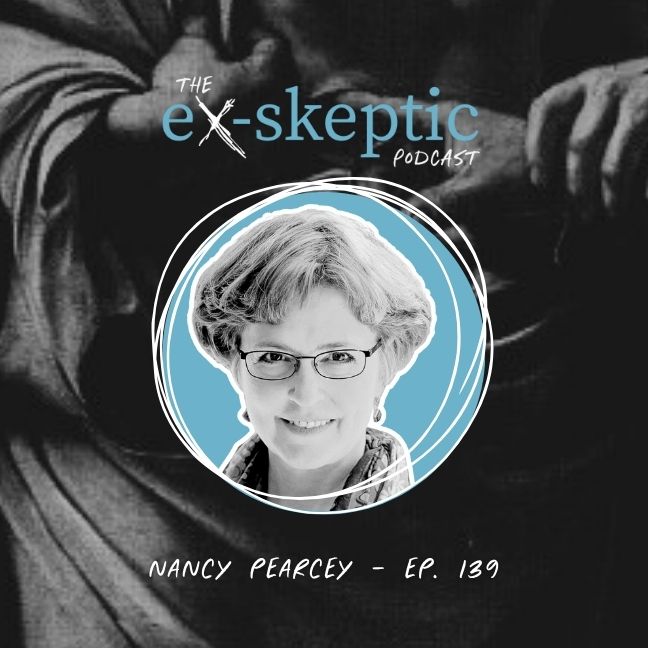
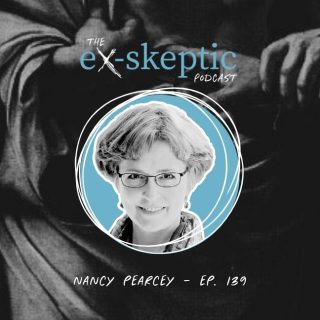
Before she became one of today’s leading Christian thinkers, Nancy Pearcey walked away from Christianity. Disillusioned by shallow answers and a painful home life, she turned instead to atheism, relativism, and Eastern spirituality in search of something she could truly believe. After studying at Francis Schaeffer’s L’Abri in Switzerland, her search led her back to the exploration of a robust, intellectually grounded faith.
Listen and hear Nancy share how rigorous thinking, honest doubt, and lived experience converged to reveal Christianity as not only true, but as the most coherent explanation of reality.
Guest Bio:
Nancy Pearcey is a professor and scholar in residence at Houston Christian University and a former fellow at the Discovery Institute. Once a skeptic who abandoned her childhood faith, she became convinced through careful study that Christianity offers the most rational account of reality.
She is the award-winning author of Total Truth, Finding Truth, Love Thy Body, and The Toxic War on Masculinity. Her work has been described as “C. S. Lewis for the modern age,” helping believers think clearly and helping skeptics see the intellectual and moral depth of the Christian worldview.
Resources Mentioned:
Website: www.nancypearcey.com
Mentioned Books:
- Total Truth: Liberating Christianity from Its Cultural Captivity
- Finding Truth: 5 Principles for Unmasking Atheism, Secularism, and Other God Substitutes
Nancy’s recommended resources:
- Mere Christianity, Miracles, C.S. Lewis
- Escape from Reason, The God Who is There, Francis Schaeffer
- The Dust of Death, Os Guinness
America’s Christian Credit Union (ACCU): https://americaschristiancu.com/Jana/
Connect with eX-skeptic:
Website: https://exskeptic.org/
Facebook: http://www.facebook.com/exskeptic
Instagram: http://www.instagram.com/exskeptic
Twitter: http://x.com/exskeptic
YouTube: https://www.youtube.com/@exskeptic
Email info: info@exskeptic.org
Episode Transcript, eX-skeptic episode 139, Nancy Pearcy
Nancy Pearcey
00:00 – 00:14
Just through my reading, I finally had to admit that I had come to be intellectually convinced. You know, I realized you can keep reading your whole life, keep learning your whole life. But what I had learned was enough to be convinced that it was true.
Jana Harmon
00:21 – 03:15
Why do people walk away from faith? For some, it’s intellectual questions without answers, doubt that seem more honest than belief. For others, it’s emotional hurt, hypocrisy, or disappointment that makes God feel distant or even unreal. And sometimes both converge when the mind can’t reconcile truth and the heart can’t trust love. That’s the crossroad where Professor Nancy Pearcey once stood before she became a leading Christian thinker, a professor at Houston Christian University and the award winning author of Total Truth, Finding Truth, and Love Thy Body. Nancy was a skeptic who walked away from Christianity when no one could answer her questions. She set her faith aside and went searching elsewhere through philosophy, science and Eastern spirituality in pursuit of something solid enough to believe and live by. Anything but Christianity. So how does someone move from having left Christian faith to rediscovering it as the most rational and meaningful explanation of reality and all of life, including her own? I’m Jana Harmon and this is eX-skeptic, where we explore unlikely stories of belief. For some, these are stories of those who walked away, yet somehow found their way back to a belief both meaningful and true, satisfying both head and heart. I hope you’ll come along and listen in to Nancy’s fascinating journey. Do you ever feel like your values are being challenged in today’s world? It can seem like our beliefs are constantly under fire. That’s why it matters who you partner with, especially when it comes to your finances. America’s Christian Credit Union stands firm in faith, serves the community, and offers exceptional financial services designed for believers. With their elite checking program, you can take your banking to a whole new level. You can earn up to 4% annual percentage yield on balances under $15,000. You can get paid up to two days early, depending on when your employer sends your paycheck. And you can even receive exclusive discounts on loans. Plus, you’ll enjoy benefits like cell phone protection, identity theft monitoring, and everyday shopping discounts. What really sets ACCU apart is their mission. They’re partnering with Christians nationwide to advance God’s work because your monies should reflect your mission. So if you’re ready to bank with purpose, visit AmericasChristiancu.com/elite to learn more and to make the switch. Today, America’s Christian Credit Union is federally insured by the NCUA. Welcome to the eX-skeptic podcast, Professor Pearcey, it’s so great to have you with me today.
Nancy Pearcey
03:16 – 03:18
Thanks for inviting me. It’s good to see you.
Jana Harmon
03:19 – 03:53
I have long held great esteem for you, Nancy. It’s been, it really is truly a privilege to be speaking with you today. To have your story on your writing, the substance of your work has, your books have long influenced my thinking. And so I’m just thrilled to have you on today. Can you give the listeners just a sense of the kind of work that you’ve been doing over the decades, the focus of your work and where you’re located?
Nancy Pearcey
03:55 – 04:53
Yes, well, I teach at Houston Christian University, so that tells you where I’m located in Houston. And I’m a part-time professor and part-time scholar in residence. So I split my position between those two. And the reason for that is because I do write a lot of books and, and really that was my life from a long time before I came to the university. I’ve written what, about seven books or so, and they’re all on apologetics. You know, in some way, apologetics was such a big part of my own conversion. That’s what I teach, that’s what I write about. I just live and breathe apologetics and I think I have the best job in the world because I get to talk to young people all day about how to defend their Christian beliefs. How do you know God is real? How do you know it’s true? And how do you talk to your non Christian friends and family members more effectively? So it’s a great job.
Jana Harmon
04:54 – 05:33
Oh wow. It sounds like you really are in your sweet spot and well deserved. Again, your work has had so much influence around the world and I’m so interested in finding about your journey because you were once a doubter, a great doubter of these things that you are proclaiming as true now. So why don’t we start back early in your childhood and give us a sense of your upbringing. Was it Christian, was it non-Christian or skeptical? Or what flavor of childhood did you have in terms of shaping your own worldview then?
Nancy Pearcey
05:34 – 06:38
I was raised in a Christian home, but it was a Lutheran home. And I don’t know if you know that, but it’s all Scandinavians are Lutheran. It’s kind of like all Irish are Catholic. So, okay, my dad’s Swedish, my mom’s Norwegian and actually that does give it a unique flavor. An ethnic religion is not the same. The weakness of it is that parents will often rely on the ethnicity to hold their kids. You know, so when I started asking questions in high school, my dad’s response was, basically, we’re Swedish, you know, what do you mean? You don’t know if you believe in God anymore? Right. So I think that was one of the weaknesses of growing up in an ethnic religion is that there’s no sense that you need to evangelize your own kids. No need, no thought that you need apologetics, you know, for your own kids questions. Well, in the Lutheran background, you know, going to Lutheran church, going to Lutheran schools through sixth grade, there was never any sense that you needed an intellectual component to your faith.
Jana Harmon
06:38 – 06:51
So as you were growing up, you said in high school, you started having questions. Why don’t you walk us through that? And what kinds of questions were you having? How were those questions received?
Nancy Pearcey
06:56 – 08:08
Yeah, you know, looking back, the first time I started to realize that I needed better answers was I had a friend. My closest friend was Jewish. We played in the school orchestra. We played violin. She was first chair and I was second chair. We were very close. And it dawned on me over time that she was Jewish because of her family background and she wanted to please her parents. And come to think of it, I was Christian because of my family background and because I wanted to please my parents. And it dawned on me that if the same principle leads to a different outcome, then it cannot be an adequate epistemological principle. And I didn’t think of it, obviously, in those terms yet. But it did hit me. I don’t have a good reason. If I’m just doing this because of my family, that’s not a good reason. And that’s when I first started facing the fact that I had no good reasons for being a Christian. And that’s when I started, you know, actively asking questions. I asked my father point blank, ‘Why are you a Christian?’ He said, ‘works for me.’ That’s it. He’s a university professor.
Jana Harmon
08:08 – 08:08
Oh, my.
Nancy Pearcey
08:08 – 10:51
I really thought I would get more than that. I had a chance to talk to a seminary dean who was Lutheran Seminary. He was my uncle. And he said, ‘Don’t worry, we all have doubts sometimes.’ Like, it was just a phase I was going through. And I decided, I guess Christianity just does not have any answers. And that’s when I decided, about halfway through high school, I decided to lay aside my religious upbringing very consciously, very intentionally, you know, I didn’t just slide like some people do. I very intentionally said, okay, I don’t have good reasons for this. And it struck me as a matter of intellectual honesty that if you don’t have good reasons for something, you shouldn’t say you believe it, whether it’s Christianity or anything. So I still remember when I very consciously said, ‘Okay, I’m putting this aside, and it’s up to me. Since nobody in my life is answering my questions, it’s up to me to find truth.’ So I embarked on a search for truth. And that’s when I started reading philosophy. I literally started walking down the hallway to the library at the public school I attended and pulling books off the philosophy shelf because I thought, if I can’t get any living people to answer answer my questions, maybe these dead guys can. Yeah, but that’s the philosopher’s job, I figured, you know, to answer questions like, what is truth and how do I know it? And is there a foundation for ethics or is it just true for me? True for you? Is there meaning to life? And it didn’t take long for me to realize that if there was no God, the answer was no to all of those, that there was no meaning to life. We’re on a rock, flying through empty space. There’s no foundation for affects. There’s not even a foundation for knowledge. What I mean by that is it seemed to me that if all I have is my puny brain in the vast scope of time and space, what makes me think I could have access to some sort of universal, transcendent truth? Ridiculous. That’s how I thought about it. That’s obviously ridiculous. And so I became the one in my friend group arguing for relativism. In one conversation, I remember a friend speaking about a mutual friend said, ‘Oh, she’s so wrong.’ And I said, ‘You can’t say people are right or wrong.’ I was jumping in and promoting my relativism. So by the time I left high school, I had really absorbed these secular ‘isms’, even determinism. I figured if materialism is true and we’re basically complex biochemical machines, there’s no such thing as free will. So I was very consciously committed to a host of secularisms by the time I graduated from high school.
Jana Harmon
10:51 – 10:57
Those are pretty stark realities, I would imagine for a teenager.
Nancy Pearcey
10:57 – 11:47
It actually was hard, you know, because I realized it’s not easy to live without knowing any sort of truth. Like, how do you make moral decisions if you really don’t know that the decisions you’re making are going to be ultimately for good or bad? You don’t really know. When John Paul Sartre, the existentialist said, ‘We are condemned to be free.’ Most people think that sounds like an oxymoron. You know, freedom is a good thing. What do you mean, condemned? I knew what he meant. I knew what he meant. I thought it was a very difficult thing to feel like this. There’s no reliable truth for you to ground your life on. There’s no reliable moral principles to know that what you’re doing is really right or wrong. You’re just going blindly in the dark. So you’re right. It was actually a very dark and difficult time.
Jana Harmon
11:48 – 12:11
It seems like it would almost be paralyzing in a sense especially there’s no truth, there’s no way to know it. I’m not really acting, I mean, I’m not really thinking. I’m just acting and responding in ways that are beyond my control. I mean that it seems like it really is an unlivable or untenable kind of way to do life.
Nancy Pearcey
12:12 – 13:11
And, but I wanted to be honest about what atheism meant. In other words, I had friends who were asking questions or losing their faith, but they would stick with the church because they had friendships there. You know, they stayed for the social life and I didn’t want to do that. If atheism was dark and difficult and inhumane. I wanted to know that and live it out. I read Bertrand Russell and he became my role model because in one place he said, he talks about, you know, we’re just products of chance, concatenation of atoms, as he puts it, you know, that everything we work for, you know, will ultimately die when the universe dies. A heat death. Nothing we do will make any difference ultimately. The actual words though that he uses are the modern person must build his life on the scaffolding of unyielding despair. And you know, he, it’s almost a heroic stance, right?
Jana Harmon
13:13 – 13:16
The courageous, sober-minded adult in the room, right?
Nancy Pearcey
13:16 – 13:39
Who looks out at the meaningless universe and says, I’m going to face it bravely. But I wanted to do that if that was true, you know, if that’s because if you’ve been raised a Christian, it’s sometimes hard to even feel what atheism feels like, you know what I mean? And I wanted to do that. I wanted to be very consistent. If there’s no God, I would, I really want to live out the consequences of that.
Jana Harmon
13:40 – 13:41
So what did that look like?
Nancy Pearcey
13:43 – 14:33
Well, my husband doesn’t like me to say it was a dark and difficult time because he said people will think it was just emotional then. But, but if you are building your life on the scaffolding of unyielding despair, of course you’re depressed all the time. Of course the world looks very dark to you. So I don’t, in some ways I’m glad I went through it because I appreciate Christianity much more than somebody who’s never left, you know, sort of a little Christian bubble. But I would say that most atheists do not consistently live off their worldview because it would be so, so demoralizing and depressing. So, but that was my goal, is to be a very honest atheist.
Jana Harmon
14:33 – 14:36
Yeah. To live as consistently with your worldview as possible.
Nancy Pearcey
14:36 – 14:37
Exactly.
Jana Harmon
14:37 – 14:57
So when you were in that moment in that time where you were trying to be intellectually honest with yourself and you looked at all of those religious people, what was religion to you at that point, or belief in God, what did you perceive that to be?
Nancy Pearcey
14:58 – 15:39
Well, I have to tell you, some of the twists and turns that happened was when I graduated from high school in my senior year, I had a kind of experimental course in intellectual history, which was wonderful. But we had to write a final paper and my final paper was titled ‘Why I am Not a Christian.’ I did not know that Bertrand Russell had written a famous essay by the same title. So this was my manifest manifesto, you know, of disbelief. And the teacher was a frothing at the mouth atheist. And, and literally when he talked, he would get foam.
Jana Harmon
15:40 – 15:40
Okay.
Nancy Pearcey
15:43 – 21:59
And first of all, he said, ‘Why should I give you an A for this paper you just wrote about yourself?’ Well, every great movement starts with one person. So he gave me an A. But he was interesting because though he was an atheist, he said, ‘Slow down, be sure you know what you’re rejecting.’ Because he said, ‘I know very open minded, tolerant, intelligent Christians and I know some very closed minded atheists. So just because you’re going toward atheism doesn’t mean you’re going to be an open minded, tolerant person. Why don’t you look into Christian philosophy first?’ Well, I never heard there was such a thing as Christian philosophy as opposed to theology. So I literally went to the local university, this was New Mexico, New Mexico State University. I literally went to the university, went to the card catalog, which is what we had back then, and looked up philosophy-Christian and went to the shelves and I’ll tell you what I found. I found Alan Watts. Do you know Alan Watts? I know of him. Right. So I think he was a former pastor or maybe Episcopal priest, I think. Anyway, he was A former pastor who had become very big in the New Age movement by preaching we could have all the benefits of Christianity by realizing it really is teaching the same thing as Eastern religions. You know, that all the religions are really the same. They’re all are different expressions of a common mystical experience. Oh, I loved it. I even went to the bookstore and bought more of his books. And I also found Teilhard de Chardin. French Jesuit. Do you know him? Well, he’s kind of a cult figure in some places. He’s very popular, too. He was a Jesuit. So he’s Catholic priest who came up with the idea that God is sort of a spirit evolving in and through the world, kind of panentheism, you know, that the world is God’s body and God is the soul within it, and God is evolving upward and onward. And Christ is the ultimate, is actually the end point of this evolutionary process that, you know, Christ is evolving into being the transcendent universal Christ. Well, I loved him too. I loved him because he talked about unity and how we’re all evolving toward this wonderful unity where, you know, the entire globe will be unified. And so those are the kind of religious ideas I got caught up in. And they were appealing because they kind of said, well, you can keep the religious, the Christian trappings while, in fact, you know, embracing all these sophisticated, interesting Eastern ideas. And I also read, you know, the Hindu scriptures, the Upanishads and the Bhagavad Gita. You know, I went whole hog into sort of the Eastern side of things. And so I read Siddhartha, you know, the novel Siddhartha by Haman Hesse, which is well the fictionalized story of the Buddha as a young man and how he becomes the Buddha. So that was kind of where I was going in my search as a replacement for Christianity. You know, maybe these Eastern ideas would provide a sense of meaning and hope that I had lost when I left my Christianity behind my view of Christianity. Which is kind of what you’re asking, too. Well, first of all, it did let me down, and so I had no interest in going back. I’d ask my questions. I gave it a fair shot, you know, and it did let me down, so I had no interest in going back. And my own family, the version of Christianity I knew in my family was not appealing. You know, the Lutheran Church is a liturgical church, but it’s sort of dead and dry. There’s not a lot of emotional expressiveness in a Lutheran service. And my parents were not people that I would want to emulate. In fact, later when I started considering Christianity, I realized that I not only had intellectual questions by that time, but I also had an emotional barrier, namely, I did not want to be like my parents, whatever my parents were. I did not want to be that because my father was abusive. We can, we can get to that later, the role that they played in my conversion. But my father was very physically abusive. In books on abuse, they will often ask, was it open hand or closed fist? And it was closed fist. You know, his favorite was the knuckle fist, you know, with one knuckle extended to cause a sharper stab of pain. So that also was part of my association with Christianity was, you know, here’s the parents who taught me to be a Christian. And what were they? My father was a monster. You know, I mean, all my siblings agree, you know, because sometimes families break apart. But no, everyone in my family agrees that he was very abusive. And, my mother, as a result, was very weak. You know, I mean, in hindsight, I can see why she would be afraid to counter him. But at the time, we thought, you’re the other adult here. Why aren’t you defending us? Well, on the other hand, now I know she wouldn’t defend him because she would be next. You know, he didn’t hit her as far as we know. But if she had countered him enough, he would have. So all that to say, you asked how my view of Christianity, it was very negative. And so Eastern religion seemed like a fun and kind of sophisticated and culturally relevant because, you know, this is the 60s about the Maharishi. The Beatles brought the Maharishi over to the US and Transcendental meditation was a big deal. So that seemed much more appealing to me at the time.
Jana Harmon
22:00 – 22:08
How long did you stay in that world or that thought life?
Nancy Pearcey
22:08 – 22:39
Well, it was not all that long in terms of years, what from 16 to 20. It’s just that I was so intentional about it that, you know, that I went much farther than people might do if they weren’t intentional about it. You know, like I said, about 16, 15, 16, about halfway through high school, very intentionally gave up my faith and by the time I graduated, I had thoroughly absorbed secular ideas. And, you know, that in hindsight, that’s pretty fast.
Jana Harmon
22:39 – 22:40
Yes.
Nancy Pearcey
22:41 – 22:49
So I ended up going to L’Abri when I was about 19 and becoming a Christian at about 20. So it wasn’t all that long, but it was just very intense.
Jana Harmon
22:50 – 23:02
So L’Abri, talk to us about L’Abri, where it’s located and how in the world did you find yourself from a girl in the United States over to Switzerland?
Nancy Pearcey
23:04 – 25:00
So we had lived in Europe when I was a child and I loved Germany. And so I had saved my money all through high school to go back. My money was, my high school job was I played the violin in the El Paso Symphony Orchestra. So New Mexico State is in Las Cruces. It’s a 45 minute drive to El Paso. So that’s another fun twist. I got back to Germany by playing my violin. But my father, at the same time that I went to Europe, my father got a job in Ankara, Turkey, teaching at the Middle East Technical University. And while he was there, it was right before the military coup in 1971, and the streets had become very dangerous. There were armed skirmishes between communist agitators and the government. And Westerners were getting car bombs and package bombs. And my father was there with USAID. So the US Government said, you need to leave, it’s too dangerous. And so he was going to drive across Europe to the cheap Luxembourg flights. There were cheap flights back then out of Luxembourg. And a Christian friend told him, well, if you’re going to drive through Switzerland, you need to stop at this place because L’Abri is in Switzerland. So my parents, I’m in Germany and my parents write to me and say, hey, we’re stopping in Switzerland, come see us. You know, because we won’t see you, we’re going back to the States. So sometimes people say, ‘Why would you go to a Christian place if you went to Christian?’ And my answer is, ‘I wasn’t going to a Christian place. I was going to see my family.’ Okay, yes, I had no intention of going to a, you know, if a Christian place held no attraction to me, I had no intention of going back.
Jana Harmon
25:01 – 25:01
Right.
Nancy Pearcey
25:01 – 25:35
Absolutely none. And so I arrived at L’Abri and I was blown away. I didn’t know there was such a thing as apologetics. I didn’t know Christianity could be supported with good reasons and arguments that it could stand its own against the secular ‘isms’ that I had absorbed by that time. And I was so amazed that when they said, ‘Hey, would you like to stay?’ Back then, it was very loosely organized. If they had an extra bed, they would say, ‘You want to stay?’ And so I said, ‘I think I will.’ These Christians are really unusual.
Jana Harmon
25:35 – 25:46
For those who are unfamiliar with L’Abri, can you just describe what a unique place that was there in Switzerland?
Nancy Pearcey
25:46 – 27:53
Yeah, yeah. I realized I was kind of jumping ahead there. So L’Abri was sort of a residential ministry where people could go and live with families, with Christian families and ask their questions about God. And the way it started with Francis Schaeffer, who’s known, his form of apologetics was dubbed cultural apologetics because unlike other apologists who look at purely logical arguments, he looked at how ideas percolate down through culture, through art, literature, music, movies. It’s the same ideas, and you still have to know how to argue against them. But in some ways, they’re actually harder to see when they’re coming to you not in words, but in the form of images and storyline and composition of a painting. So he was teaching Christians how to identify worldviews, secular worldviews, when they come to us in these cultural forms. So L’Abri was just a few chalets sprinkled through a little Swiss farming village, and they would open their homes, and so many people, myself included, would say they became Christian not just through the apologetics, but also through the Christian community that they experienced by living there and seeing a quality of love that they had not seen back home in their churches or families. And so that’s what made it so unique, is that he had, Francis Schaeffer had a unique form of apologetics which appealed to me because I was in Germany studying at the Heidelberg Conservatory, studying violin. So the art emphasis certainly spoke to me. But then also the community, you know, living. And when you were there, you weren’t just a student, you were part of the community. You helped make breakfast, and you helped do the, take care of the garden, and you help do the laundry. So you were a genuine part of the community, and that’s what made it such a 365 kind of experience.
Jana Harmon
27:56 – 29:20
What an amazing and a unique opportunity and experience to step into a Christian community in that way. But not just community, but the community of ideas as well, where ideas were spoken about and lectured and discussed and debated and talked about over lunch and dinner and long hours after. And it sounds like it gave you, finally, it gave you a place and a people to talk about all these ideas that you had actually coursed through in your worldview experience. You had taken a world through a worldview, through what you thought was Christianity, and then atheism, naturalism, and then panentheism and Eastern religion. And so that by the time that you got to L’Abri, you had lived experience as well as held ideas of all of these different worldviews. And I’m sure you were trying to tease out what was really real, truly true, what was true truth, to state the name of one of your amazing books. So tell me, what did that look like living there? I mean, obviously you were not closed off to all ideas, but you were definitely exposed to Christian ideas which you thought you had rejected. What did that look like?
Nancy Pearcey
29:21 – 30:06
I was there twice. So the first time I was there, the majority of the students were intellectually seeking non-Christians. It had all been word of mouth, but I was very afraid I might be drawn in emotional because I was drawn in emotionally because it was so appealing. Intellectual Christians, culturally sensitive Christians, reaching out to the counterculture. I was afraid I might be drawn in and then it wouldn’t be real. A little parenthetical side of this is my sister stayed with me as well. She became a Christian before the first week was up. Oh, my. I was furious. You know, she left me to fight by myself.
Jana Harmon
30:06 – 30:07
Yes.
Nancy Pearcey
30:07 – 33:19
She also lost it immediately when she came home. And she said, ‘Oh, they were just nice people. They made me feel good, you know, they made me feel welcome.’ Well, I foresaw that. And I said, ‘If I do this, I don’t want it to be for emotional reasons. I have to be intellectually convinced that it’s true. I am not going back to Christianity.’ So as a result, after about a month, I left. I felt so much internal pressure to try to resolve this that I left and went back to the States. But because of L’Abri, I discovered apologetics. And so I started reading C.S. lewis. I’d never heard about him before. You know, G.K. Chesterton and Os Guinness, I think, had written his first book by then. You know, his first book, the thick one, the Dust of Death. And so just through my reading, I finally had to admit that I had come to be intellectually convinced. You know, I realized you can keep reading your whole life, keep learning your whole life. But what I had learned was enough to be convinced that it was true. So I thought, where do I find other Christians? Well, I knew some at L’Abri. So a year and a half later, I went back, and that’s when I stayed several months and really got grounded in Christian worldview. And, you know, so that if you read my books today, they all have the fingerprints of L’Abri on them. You know, I mean, I develop them further. You know, I update them to our own day and so on. But the influence of L’Abri is very evident in all my writing. But you were asking what were the actual ideas? One of the things that I get frustrated with when I hear people’s conversion stories is they don’t tell you what ideas they were persuaded of. For example, the first one I had to work through was relativism. You know, I was arguing there’s no such thing as right or wrong. And the Shaffers were influenced by what a philosophy called common sense realism. And Common Sense Realism doesn’t mean, you know, practical sense, which is how we usually use it. It means common to all humanity, universal human experience. You know, like, what is the worldview supposed to explain? It’s supposed to explain our experience. Not just your personal, but human experience as a whole. You know, how do we experience reality? And a worldview is supposed to explain that is supposed to give you a structure that explains what humans experience and, you know, the arguments that were made at L’Abri with the staff and so on when I was there, were. Well, everyone has a sense of right and wrong. It seems to be built in every culture has right or wrong. I mean, there might be occasional quirky individuals, but you can’t have a coherent society of civilization without some sense of right or wrong. And if your worldview doesn’t account for that, something’s wrong with your worldview. You know, this is one of the basic facts of human experience that a worldview is supposed to explain. You can’t deny it, because the purpose of a worldview is to explain human experience, not to try to explain it away.
Jana Harmon
33:19 – 33:20
Yes.
Nancy Pearcey
33:20 – 34:01
And oh, that’s true. You know, my worldview does not explain this basic datum of human experience. And so I need to go back to the drawing board, back to the drawing board and find a worldview that does account for human experience. And very similarly with determinism, from the moment we wake up in the morning, we know that we’re making choices. There’s a USC philosopher who says if someone denies the reality of free will, then when they go to a restaurant, they should say, just bring me whatever the laws of nature have determined, I will get.
Jana Harmon
34:01 – 34:02
Right.
Nancy Pearcey
34:03 – 35:17
And so again, you know, the fact that we have free will is one of those basic data of human experience. Everyone, everywhere you go, common sense, to use that word, from common sense realism. It is common to all humanity. And that’s what your worldview is supposed to explain. A worldview is not supposed to try to say, ‘Well, it’s not really real.’ A worldview is supposed to explain those things that are so central to human experience that we all live them, whether our philosophy accounts for it or not. This is how we live. And the way to test a worldview is taken into real life. Just like you test a scientific experiment, a scientific theory, by doing an experiment in the lab and seeing if it turns out the way the theory says it should. You take a worldview into the world and say, does it explain how humans experience the world? And so I realized determinism didn’t work either, because it was in fact countered by universal human experience of the fact that we do have free will, we have choices. The, the example that my students often remember the best is Rodney Brooks. He was head of the intelligence Artificial Intelligence lab at MIT. So these are high ranking scientists?
Jana Harmon
35:18 – 35:18
Yes.
Nancy Pearcey
35:18 – 36:24
And in his book Flesh and Machines, he literally says, okay, the human being is a big bag of skin full of biomolecules interacting by the laws of physics and chemistry. And then he says, of course we don’t. It’s very hard to see people that way. And he actually gives the example of his children. And he says, if I really try hard, I can see that my children are machines. And then the next sentence is, is that how I treat them? Of course not. They have my unconditional love, even though that is totally irrational within my worldview. And you ask, how does he put these together? And then he says, I realize that this is repugnant to see our, you know, your daughter as a machine. And that if anyone actually believed it, we would be justified in locking them up and calling them psychopaths. He literally says this. And it’s like, wait, if your own worldview would justify you in locking people up as psychopaths, why are you recommending it to the rest of us?
Jana Harmon
36:24 – 37:21
When you were sitting around that table at L’Abri and you were mulling through these ideas and how they were really not coherent and they didn’t correspond to reality, they weren’t fully explanatory, whether it be moral oughtness, the moral objective rights and wrongs, that we really can’t ground that sense of real good and evil and have a place to put it unless you have some kind of a transcendent source or whether or not it’s information comes from a mind or, or whether or not we have free will. What were you doing? Were all of these kind of pieces falling into place where you were creating some kind of a coherent puzzle? And it happened to be the Christian worldview that actually explained reality in the best way as compared to these other worldviews that started to fall apart upon examination.
Nancy Pearcey
37:23 – 37:35
Yeah, and let me give you one more. You know, when I said that as a 16 year old, I thought, how could I have any access to any sort of objective truth? You know, so I became skeptic as well.
Jana Harmon
37:36 – 37:36
Yes.
Nancy Pearcey
37:36 – 46:46
And so to give you an idea of how skeptical I was, I was actually arguing with friends. One of my friends was giving me sort of the historical arguments for the resurrection and so on, you know, for the reliability of scripture. And I, this was when I was in Germany. And so a friend and I were, we were both being a little bit coy because we hadn’t told our parents really that we had rejected our Christian background. And so we weren’t saying it right out. And finally my friend got frustrated and said, ‘Okay, let’s tell me this. Do you believe Jesus rose from the dead?’ And my German friend said, ‘Well, that’s sort of the crux of the matter, isn’t it?’ And I said, ‘No, it’s not. It could be a wonderful parable that makes some people feel good.’ So that’s how postmodern I was already. Where, who cares about facts? Who cares about true or false? You know, will you believe whatever makes you feel good? And even that I had to counter with, well, common sense realism, to bring it back to the official name, basically says there’s a lot of things that humans do know, no matter what their beliefs are. Nobody in practice doubts that they exist, no matter how skeptical they are, you cannot live doubting your personal existence. You’re on your personal identity. Nobody in practice really denies the reality of the material world around us. You know, we don’t walk out in front of traffic, you know, so in practice, no matter how skeptical our philosophy is, in real life we know that the real world there, the material physical world is real. And what you want to do is find a worldview that explains why the human mind is capable of knowledge. Well, and you asked how did I answer these? Well, the Christian worldview says we can trust the human mind because we’re made in the image of God. You know, that there’s a continuity of categories, you know, between our mind and God’s mind. So that to some degree we think in a similar way to God, so we can trust the mind. That explains why we know what we know. That explains why we have free will. We’re made in God’s image. That explains why there is a, like you said earlier, a moral standard, an objective moral standard, because God’s character is holy. Here’s how one philosopher, there’s a French philosopher named. You have to say it with a French accent. It looks like Gilson. Okay, and, but if you’re a philosopher, you say ‘Gilson.’ But he makes this wonderful argument. He says because humans are capable of knowing, the first cause that created them must have a mind. Because humans are capable of choosing the first cause that created them, must have a will. And he sums it up by saying, because a human being is a someone and not a something, the first cause that created them must be a someone, a personal being, and not the non personal, non conscious forces of nature, as naturalism or materialism would tell us. And so it was very clear to me as I was working, you asked, how did I come to Christianity? Because it did have answers for all of those questions. Every secular ‘ism’ that got shot down, I could see that Christianity did offer an answer and a reasonable answer that made sense. I’ll give you the two positive arguments that made a lot of sense to me. One is the one we kind of touched on already, that humans are personal beings. You know, that we are someone and not a something. And in philosophy, personal doesn’t mean warm and friendly. It means a conscious agent who is capable of, you know, to think, act, feel, choose. And this is one of Schaeffer’s major arguments, is that human beings are personal beings and therefore there must be a personal cause. You know, the first cause that created us must have at least the capabilities that we have. Water doesn’t rise above its source. And so if you look at any non-Christian philosophy, it’s not going to fully account for why we are personal beings, especially the modern atheist worldviews that are mostly naturalism and materialism. They’re all going to reduce human beings to something less than personal – deny free will, deny ability to choose, deny, deny love. You know, love is just a chemical reaction. It denies the personal elements. And so it ends up having to say, like you said earlier, they all have to argue it’s an illusion. Well, that’s reductionism. That’s reducing humans to something less than they really are. And Christianity, because there’s a fully personal God is the only answer that explains why we are personal beings. Even the Eastern religions that I was looking into, they don’t. Because the deity, the divine in Eastern thought is not a personal being. It’s a non-conscious essence or substance that permeates all things. So essences are not personal beings. They don’t create worlds, they don’t love us, they don’t communicate. So how can they create personal beings? Water doesn’t rise above its source. So in Eastern religions too, they become reductionistic. They say, well your personal existence is an illusion. In Hindu it’s maya. The material world in Hinduism is technically an illusion. And you think you’re an individual, but you’re not. You’re really part of this generic spiritual universal essence that underlies everything. So it denies you individuality, it denies that you are a personal being. Every non-Christian worldview ends up denying at least some element of us as personal beings. Only Christianity really affirms all the elements that make us personal. You know, rationality, love, moral choice, etc. Only Christianity gives an answer. And so that’s summarized as, you know, God is a personal being. So He explains why we are personal. That was very persuasive to me as in terms of a positive argument and the other positive argument, you’ll probably laugh at this. I don’t tell people this very often, but the other thing that I found incredibly impressive was the Trinity. Okay, a lot of Christians, like wait a minute, that’s one of those weird things we’re just supposed to believe, but it doesn’t really make sense. Well, I had enough philosophy background to know that all the way back to the ancient Romans and Greeks, the ancient Greek philosophers, they had worked, they struggled with the issue of the one and the many. And that is, what they tried to figure out is, is reality essentially one, as in pantheism, you know, underneath all the diversity, is it really one or is it really many? Like an atomism, you know, everything really taken down to its essence is all these separate little atoms. That’s the one in the many. And the Greeks philosophers had wrestled with this. Is it the one of the many, sometimes called unity and diversity. And, it shows up everywhere. Like in politics, it’s you know, communism or laissez faire, you know, capitalism, it’s you know, the one where you have no real separate identity or, or sociology, the collective or the individual. Economics. Did I say that one already? Communist yeah, communism versus laissez faire. It turns out that, well in politics, totalitarianism or anarchy, you know, so the one in the many actually is a problem in all areas of philosophy. And I knew that so that when I heard that Christianity says the ultimate reality that created us all has a perfect balance of the one and the many. And that explains why all of reality has that structure. Ultimately it’s from God, but it fits who we are. You know, ethics fits who we are, our human nature and. Yeah, so when I, when I went to L’Abri and they made the argument that the Trinity answers the question of the one and the many, I was utterly impressed because I knew what a big issue this was in philosophy. And I thought no other philosophy explains why the world has a perfect balance of the one and the many. And it’s not just two. Two could be a duality, but three is the smallest number you can have and still have a genuine plurality. It’s very economical. It’s the least you can have and have true plurality, your true many, the one, the one God who is also many.
Jana Harmon
46:47 – 47:42
So all of these conundrums, in a sense, were being, these questions were being answered in a coherent, logical way that made sense to you. That made sense as a, again, a good explanation for reality in the world outside of us. Reality for who we are in our own persons and our humanity and love and freedom and personhood and dignity and all of those things. So all of the pieces were coming together and so you made a decision. I guess it’s that your past sounds very logical towards belief. So you came to a place of, I guess, intellectually holding that this is the best worldview that explains reality as you perceive it and know it is that.
Nancy Pearcey
47:42 – 48:12
Which is what philosophy. Which is what philosophy is supposed to do. Yes, it’s supposed to explain our experience of reality. You know, I mean, what else is there? Because, you know, it’s like those, those examples I gave of people who said, well, I’m a materialist and it all holds together logically, but it doesn’t fit my real life. To which I say, well, why hold a philosophy that doesn’t fit the real world? We ordinary people want a philosophy to answer to our actual real life, not. Not just some sort of intellectual system.
Jana Harmon
48:13 – 48:53
Yeah. So at what point then did that come down to a personal place of belief? There’s, there’s intellectual belief and then there’s a fiduciary trust in the person of Christ. And those are two very different things. And you spoke earlier that you became a Christian. I know that that’s could mean a lot of different things when you were around 20, 19. And so what did that look like or mean for you once you realized that this was philosophically sound, you know, these were the answers that you were looking for? It made sense to you then what did you do with this? How did you move forward from there?
Nancy Pearcey
48:54 – 49:00
Well, I did realize that this point where you make a decision, but the way I thought of it was, ‘Okay, God, you won the argument.’
Jana Harmon
49:04 – 49:06
I love that. Okay. Yeah.
Nancy Pearcey
49:08 – 49:15
And, and I literally, I said, ‘I know Jesus comes in there somehow, but I don’t really get it.’ That was my, that was my prayer.
Jana Harmon
49:15 – 49:18
No, no, that’s an honest prayer. Right.
Nancy Pearcey
49:19 – 49:40
And I did spend the first year and a half, like I said, I went back to the library after a year and a half. I spent that first year and a half just reading apologetics and, and philosophy and, and getting, making sure I was really intellectually convinced because, you know, I want some people second guess themselves. I wanted to make sure I didn’t, I wasn’t going to later say, did I just do something really stupid.
Jana Harmon
49:41 – 49:42
Right.
Nancy Pearcey
49:42 – 50:57
And so I really, I continued to work just on the intellectual level for a good year and a half and then I went back to L’Abri and when I went back to L’Abri, that’s when I really began to work more on the personal side. And I don’t usually get to tell this part of my story, so this is fun. At L”Abri, on staff was a psychiatric social worker and she agreed to be on staff because she realized that for many people the barriers to God are not just intellectual, but also emotional and especially within your family, conflicts with your parents and so on, especially missionary kids and pastors kids. She was a missionary kid from New Zealand. Anyway, her name was Sheila Bird and we called her Birdie. And so Birdie was the one who helped me really understand what Christianity meant on a personal level. And this, as I mentioned, my father was very physically abusive. And that’s where a lot of the emotional, psychological, spiritual healing had to come. And I still remember the day I said to Birdie, you know, I think maybe I have some emotional barriers too.
Jana Harmon
50:59 – 51:01
Of course, of course, yes.
Nancy Pearcey
51:02 – 51:33
And I’m sure inside she’s going, oh good, she finally sees it. But, and there’s another interesting twist to this. Okay, so when I said that I went to L’Abri because my family was driving through and they stop. You see, after Schaefer wrote his books, his books had just come out. There began to be a sort of a ‘touristy Christian’ who would come to L’Abri and say, ‘Oh, let’s see what’s happening at a L’Abri’ because he wrote a book. And so my parents were one of the first ‘tourist Christians.’
Jana Harmon
51:34 – 51:36
Oh, interesting.
Nancy Pearcey
51:39 – 52:08
Yeah, they would. That they were just going for touristy reasons. Let’s see what’s going on here. And so what that meant, though, was that Birdie saw my father. You know, my family walks into the Saturday night lecture that Schaefer used to give every Saturday. And Birdie was sitting there, and she told me later, she said, I looked at your father and I thought, there’s a man who oppresses everyone around him.
Jana Harmon
52:08 – 52:09
Oh, my.
Nancy Pearcey
52:09 – 54:00
Yeah, she just looked at him and said, okay. She also noticed that, you know, some of my siblings were there, that there was no coherence in our family. There was no unity. There was no relationship. And so if she hadn’t seen that, I might not have gotten the healing I needed because I don’t know if I would have said anything. You know, I’d left my family behind. When I left home, I was going to erase my life and start over. Because my childhood was so unhappy. It was so painful. I thought, I can start over. I’m going to rebuild my entire personality from scratch when I left home. And so I had suppressed my childhood. And if Birdie hadn’t seen my dad, I might not have even brought it up. But of course, then she did. So I met with her on a weekly basis, and it was Birdie who helped me to realize I can’t leave my past behind. You can’t just suppress it and start over. You actually have to work through it. And, you know, seeing her for weekly for several months, it was huge because, you know, I had. What it meant was I had the intellectual side of Christianity, which was wonderful. And then I got the emotional, personal side of Christianity, too, in such a rich way. And one of the interesting things Bertie did. So I had decided it was time to go home, but I was scared. I was really scared of going home and seeing my father again. And it was a Sunday morning, and Schaeffer was giving his lecture, his sermon. And I, you know how you sometimes open the Bible sort of randomly and say, just show me something. Show me something that will help me right now.
Jana Harmon
54:00 – 54:01
Yes.
Nancy Pearcey
54:01 – 55:28
So I opened the Bible randomly and I started reading a psalm. And I thought, this isn’t relevant. This isn’t speaking to me at all. So I closed the Bible and got up and walked out in the middle of the sermon. Of course, Birdie saw me, and she knew that you don’t just walk out for no reason. So she signaled to one of the L’Abri workers, one of the staff workers, to follow me and talk to me, because this worker was the worker in the chalet where I lived. And so I had gone out and sat on the steps outside. And so this worker named Elaine came and sat next to me, and she said, ‘yeah, I was really scared to go home the first time, too. Let me show you a Bible verse that helped me.’ And of course, it was the psalm I had opened to. Oh, goodness, was the psalm. It was 127, the verse that says, ‘though my father and mother have forsaken me, the Lord will take me up.’ And I knew that meant, you know, my parents had let me down. They had not been good parents. But the Lord will supply, he will step in and supply what your parents lacked. And, it was so fascinating. It was the exact psalm I had looked at and given up on. I just hadn’t read far enough. And she said, and Elaine showed it to me and said, ‘okay, that’s my verse. My father and mother have forsaken me. The Lord will take me up.
Jana Harmon
55:28 – 57:54
I love the way that you’ve told your story, Nancy, because I think sometimes people do have the sense of. If I just, you know, check the box of belief, you know, and I can make sense of it, that that’s enough. But, no, I mean, you’re really bringing us, there’s just so much more to what it means to believe and what it means to trust and that we are whole people and that it’s heart and it’s head and it’s lived experience and how you make sense of all of all of those things. And, evidently you came to a place where you were able to receive the love of Christ, even though it looks like through the face and the demeanor of Birdie for a little while. But you felt, and I think that God does that. He uses people to help us understand who he is in a deeper, more meaningful way. And I imagine that there are some people who are listening who either have been hurt and can’t understand a good God or a loving God or can’t even comprehend the possibility of believing in whoever this biblical God is because of the harm or the hurt that they’ve received from at the hands of Christians or in the name of Christianity. And then I can also think of those who are like, well, I, you know, I’ve asked questions, I’ve gotten no good answers, haven’t, they may have even looked at apologetics, but maybe, you know, things are still just not making sense to them. They can’t seem to pull this together for this coherent worldview that you’ve seemed to offer so beautifully. Now, you actually spent a lot of time working through and finding your way. And of course, the Lord was drawing you. As you say, conversion is a very mysterious thing. And, but there are those, especially now in this cultural moment, it seems like people are saying, ‘well, maybe I was wrong about God. Maybe I should give him another chance. Maybe there is something more, more there. Maybe there’s something more emotionally, maybe there’s something more intellectually. Maybe there’s a better life for me there. And I’m willing to look.’ And again, you did the due diligence. But how would you, what would you say to someone who says, okay, I’m curious, I’m willing to give it a shot. What is the direction that they should go?
Nancy Pearcey
57:56 – 59:28
Well, people do often ask me how to understand Christian worldview just because I write on those topics so much. And you know what I tell them? The two top apologists of the 20th century were Francis Schaefer and C.S. Lewis in terms of the sheer number of people who either converted through their work or were brought through a crisis of faith. And so why not start with the best? Why not learn from success? I tell people, don’t read the modern people. Start with Lewis and Schaeffer. And of course, Lewis, it’s primarily miracles in Mere Christianity because sometimes people start on the Great Divorce or something. No, no, no, not on his novels. And with Schaeffer, it’s Escape from Reason and the God who was there because again, he has books of sermons and so on. And so starting with those four books, they, like I said, learn from success. They did so well. What is it, what was it about their presentation of Christianity that was so impactful and that brought so many people to conversion. I would start there, you know, in terms of just figuring out what is Christianity and how do you know what questions you know, bring your questions to those books and start there. And they’re also not hard to read. They’re not, you know Adleric philosophers. And so they’re also very accessible for just about anybody to want to read. So Lewis and Shaffer start, start with the best.
Jana Harmon
59:29 – 01:03:10
And I would, I would include Pearcy in that list, I think, for your books, because you translate that idea, like you say, of Christian worldview, what it is, what it isn’t, how you know it’s true, probably more clearly than anyone I know. So your books Finding Truth and Total Truth are, are just excellent for those who are curious. It’s critical to learn how to think critically. Right. Wow, what a rich conversation this has been. Nancy. I think so many of us, they think that Christianity or faith kind of stands and falls on some kind of a ritual or rule. I think so many are, if I may use your word, reductionistic. And the way that they view Christianity, the way that they view faith, they, they think that, that it’s not worth believing, it’s not grounded. And then there are a lot of judgments made upon it. But I think what you’ve brought to the table to today is something so rich and so grand, you know, how high and deep and wide is not only the love of Christ, but the Christian worldview. I think that there is, there is so much, all of the world, all of reality speaks to the reality of God. If you’re willing to see and, and, and see what the Christian worldview brings. Human dignity, free will, will, you know, objective moral value, purpose, all of these things that are, love, all of these things that our human hearts and souls long for existentially. Otherwise you are getting a devalued, mechanical, you know, just reduced view of self, of others, of the world, inability to explain so many things. But yet you’ve, you’ve kind of, I would say you’ve brought us a feast today. If someone is willing to come up to the table and sit and partake, partake, even just take a taste of what the explanatory power of the world Christian worldview, but also of the offering of God and how you can see yourself, how you can see others and your mind, using your mind in a way that does bring cohesion and a correspondence, you know, that matches with reality of our human experience. It’s really a feast. And if someone would come to the table based upon even your long journey, your arduous journey for searching after total truth and finding it, this conversation will have been worth it, right? That someone else, as you say, and as Schaeffer says the goal is for evangelism is for other people to come and see and to taste and see that God is good and and I pray that that is what happens through your story, Nancy, through this conversation that eyes are opened and that people are willing to come come to the table. So thanks so much for coming and telling your beautiful story today.
Nancy Pearcey
01:03:11 – 01:03:19
Well, thanks for having me. I love telling this story. It seems like the older I get, the more I appreciate the fact that that God got hold of me. So I appreciate the opportunity
Jana Harmon
01:03:19 – 01:03:20
too.What a remarkable journey from walking away from faith in search of truth to finding the truth and reason ultimately led Nancy back to the Christianity she had once left behind. Her story reminds us that belief isn’t blind. It’s grounded in a worldview that makes sense of both our minds and our most basic human intuitions and experiences. Her story speaks to anyone who’s ever doubted, questioned, or quietly wondered whether Christianity could freely hold up under scrutiny and still satisfy the deepest longings of the soul. If this conversation stirred new questions for you, I’d encourage you to keep exploring. You can visit exskeptic.org to find curated playlists by theme stories of doubt and discovery arranged around questions like Is it rational to believe in God? Is faith something that I can believe in again? Is God real? and more. You can also try our new conversational AI prompt to ask your own questions and be guided to relevant stories and resources. If you’ve appreciated today’s episode, please follow, rate, and review this podcast. It helps others to find these stories of unlikely belief and share it with a friend who might be wrestling with faith and doubt. We’re grateful to the CS Lewis Institute Podcast Network for their partnership and to our producer Ashley Kelfer, whose thoughtful editing brings these stories to life. To support the work of eX-skeptic or to pick up our eX-skeptic merchandise visit exskeptic.org. You’ll also find ways to connect with me, our guests, and other resources to help you engage faith in your questions more deeply. Thanks for listening and join us next time for another unlikely story of belief.