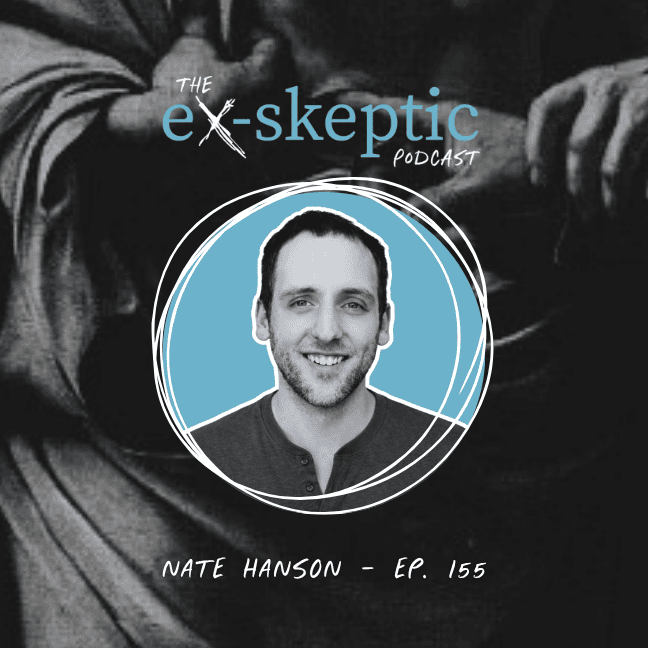


For years, Nate Hanson was deeply committed to Christianity. Influenced by voices like Francis Chan and immersed in ministry, he devoted his life to radical discipleship and church planting. But after years of burnout, disappointment, and difficult questions, cracks began to appear in the faith he had always known. What followed was nearly a decade of public deconstruction through his podcast Almost Heretical, where he wrestled honestly with doubt, theology, and whether Christianity could withstand serious scrutiny.
Yet what Nate expected to be the end of faith became the beginning of a new search for truth.
In this episode, Nate shares how engaging skeptical arguments, historical scholarship, and the evidence surrounding Jesus led him to reconsider the very faith he thought he had left behind.
🎙️ Love the show? Support the mission and explore eX-skeptic merch here: https://ex-skeptic-shop.fourthwall.com/
Guest Bio:
Nate Hanson is the co-host of Faith Lab, a podcast dedicated to exploring thoughtful Christianity and helping people wrestle honestly with questions of faith. For nearly a decade, he hosted the popular podcast Almost Heretical, where he openly chronicled his own journey through deconstruction and engaged in conversations surrounding doubt, theology, and spirituality.
Today, Nate seeks to create space for gracious conversations and to help skeptics, doubters, and seekers thoughtfully engage the truth claims of Christianity.
Nate is also a tech professional, specializing in AI and coding. He lives in Oregon with his wife and children.
Resources Mentioned:
eX-skeptic Guides: https://exskeptic.org/bookstore/
Nate’s Resources:
- Podcast Website: Faith Lab Show www.faithlabshow.com; He recently shared his personal journey back to Christianity in the episode Deconstruction Led Me Back to Christianity.
Nate’s Recommended Resources:
- Tim Mackie, The Bible Project: https://bibleproject.com
- Tim Keller, Questioning Christianity video series: https://qcpodcast.gospelinlife.com
- Tim Keller, Reasons for God
- Richard Bauckham, Jesus and the Eye Witnesses
- Lydia McGrew, https://lydiamcgrew.com
- Peter J. Williams, https://www.divinity.cam.ac.uk/directory/peter-williams
- Shane Rosenthal, The Humble Skeptic podcast
- NT Wright, The Resurrection of the Son of God
- James D. G. Dunn, New Testament Scholar
- John Lennox, https://johnlennox.org
- Stephen C. Meyer, The God Hypothesis, https://www.discovery.org/p/meyer/
- Justin Brierley, Uncommon Ground, https://justinbrierley.com
- John Dickson, Undeceptions Podcast, https://undeceptions.com/podcast/
Chapters
00:00 Why Nate Returned to Christianity
00:26 Introduction to Nate Hanson’s Story
02:54 What Is Christian Deconstruction?
06:25 Growing Up in a Christian Family
09:13 Church was Life
12:09 Francis Chan and Radical Faith
17:10 Pursuing Full-Time Christian Ministry
21:49 Ministry in San Francisco’s Toughest Neighborhoods
28:07 Gunfire and a Crisis of Faith
31:44 When Blind Faith Began to Unravel
33:14 Exploring Different Christian Traditions
36:30 The Almost Heretical Podcast and Deconstruction
41:32 The Dominoes Falling
42:40 Giving Christianity One Last Chance
45:20 Investigating the Historical Evidence for Jesus
49:48 Can Christianity Stand Up to Skepticism?
52:43 The Resurrection and 1 Corinthians 15
55:32 Questioning God, Science, and Alternative Worldviews
58:00 Why Nate Became a Christian Again
01:01:55 Rebuilding Faith After Deconstruction
01:06:02 Advice for Parents of Children Who Leave Christianity
01:11:49 Advice for Anyone Questioning Their Faith
01:18:31 Closing
Connect with eX-skeptic:
Website: https://exskeptic.org/
Facebook: http://www.facebook.com/exskeptic
Instagram: http://www.instagram.com/exskeptic
Twitter: http://x.com/exskeptic
YouTube: https://www.youtube.com/@exskeptic
Email info: info@exskeptic.org
eX-skeptic Transcript
Ep. 155
October 9, 2026
Why Nate Returned to Christianity
NATE HANSON: Why do we have so much more writings about this than we have about anything else? Why did this survive? Why did why did this change the world? You know, like it’s you have to come up with a pretty crazy explanation for that. Um, and I just I just couldn’t get there. SO that’s why I’m a Christian again.
Introduction to Nate Hanson’s Story
JANA HARMON: Hello, and welcome to eX-skeptic, where we explore unlikely stories of belief. You believe I’m your host, Jana Harmon. Most times we hear stories of those who began with skepticism and then came to embrace faith. Today’s guest is someone whose story doesn’t begin with skepticism, but with a deep commitment to Christianity.
Nate Hansen was a church planter and ministry leader who spent years fully immersed in a radical expression of the Christian faith. But over time, questions began to surface, questions that led him not just into private doubt, but into a very public process of rethinking what he believed through his podcast, Almost Heretical.
Nate spent nearly a decade exploring those questions out loud, walking with others through deconstruction, uncertainty, and the possibility that what they once believed might not hold up. But that wasn’t the end of the story. As Nate took a closer look at the historical foundations of Christianity, engaging both skeptical voices and serious scholarship, he found himself reconsidering something he thought he had nearly left behind.
In this conversation, we explore that journey from deep faith to doubt to a renewed confidence grounded not just in experience, but in evidence. I hope you’ll come along and listen in.
And welcome to eX-skeptic. Nate, it’s so great to have you with me today.
NATE HANSON: I’m so excited to be here.
JANA HARMON: Oh, I think I’m more excited for this, for this conversation, and I’ve been in a long time. I’m just really thrilled to be with you, that you’re here to really tell a little bit about your story. But before we start that, um, tell the audience, the listening audience a little bit about the things you have your hand in, the things you’re passionate about these days.
NATE HANSON: Yeah, well, I am the co-host of a podcast called Faith lab that’s @FaithLabShow.com, and that is a, it’s an old show with the with a new name, because for 8 to 10 years I was hosting a podcast helping people walk through deconstruction and kind of losing their faith, which is the process that I was in for a long time.
So that there’s a long story there of doing ministry with Francis Chan and growing up in the church and all that stuff, but that’s sort of the 3000 foot flyover, I guess.
What Is Christian Deconstruction?
JANA HARMON: Mhm, mhm. Yeah. We’re going to get into that story today. That’s why you’re here. So, um. Before we begin, you mentioned the word deconstruction. And oftentimes our stories are people who are just coming from a place of skepticism, really hadn’t encountered Christianity. And they they’re very, very skeptical of it.
And then they end up becoming Christians for one reason or another. Your story doesn’t begin that way. Your story is one of Christianity and that you leave behind. You deconstruct. Um, before we get into that story, can you just define what you mean by deconstruction? Because I think there’s a lot of different ideas of what deconstruction might be for the Christian.
NATE HANSON: Yeah, yeah, certainly. It’s a word that has a lot of meaning, meanings and has meant things. Um, in other in other areas. I think in Christian deconstruction, it often means someone who largely what I saw is grow up in the church, or have the church and Christianity be a significant part of your life, and then you reach a point where you go, I’m not sure how much of this I still believe.
I’m not sure if this is true or there’s other reasons people might deconstruct. I had a bad experience in church. I had, I was abused, I was mistreated, I was lied to. Um, there’s lots of stories that I’ve heard over the years. Those are not my stories, but some degree of. I’m not sure I can hold on to this faith anymore.
Let me let me pull it apart. Let me piece it apart. Let me examine every piece and see how much of this holds up for me or doesn’t. Um, and, and kind of go, go with that as it might. Like, where does that lead you? And for a lot of people, I’ve, I’ve seen that being a one way street out of Christianity to a very post-Christian, Progressive kind of mindset.
Some stay in kind of progressive Christianity and then some move out to post-Christian. And there are some certainly that that find their way back to traditional Christianity. I would say I just didn’t see as many of those.
But yeah, so that’s what I think. What I mean by deconstruction is taking the whole thing apart. Examining it and seeing is, does any of this deserve to stay, or do I need to leave it behind?
JANA HARMON: Mm. Yeah. So, deconstruction in and of itself is not necessarily a bad thing. Right. It’s actually taking a closer look at what you believe and why you believe it. Um, yeah, definitely. Yeah, I know I had a I guess you could call that a period of deconstruction. Even when I started into looking at the Christian worldview itself, um, through graduate work and, and you’re encountering things that you had never thought that you would believe or whatnot.
But. Yeah. Sometimes you land in a more solid place than when you began. But it can feel very disconcerting at the time where you feel like your beliefs are being challenged or undermined.
But let’s get into your story. So that’s why you’re here. Um, so let’s start at the beginning date of in your childhood, the way that you were raised. Talk to us about, um, your family of origin, where you were raised, and what faith or how faith played a part or role in your family and in your own personal journey.
Growing Up in a Christian Family
NATE HANSON: I grew up just outside Portland, Oregon, where I still actually, or I live again after spending some time in California, which we’ll get into. But yeah, about 20, 30 minutes outside of Portland, Oregon.
Um, we attended a small Baptist church, and this is a church. I tell people I didn’t just go to church. We were so a part of church. It was it was ingrained in our lives. And my and specifically this church, my parents got married there. My grandparents were members there, both sides. So, my parents knew each other from the age of like three or something. And, and then my great grandmother was a founding member of this church.
And so, it was it was a very, uh, significant part of my life and a wonderful part of my life. So that’s we brought it, you know, we say deconstruction. I knew a lot of people who I know, a lot of people who had such a poor experience of church, and they wanted to get away because they needed to, like, process that experience they had and how they were lied to, how they were mistreated.
That was not my story at all. I had a wonderful experience. Most of my friends are still from church and from the different churches I’ve been a part of, but that church as well, I mean people I call aunt and uncle that weren’t even my aunts and uncle like it was so, so much family and my parents still attend that church and I know the people there.
And so, it was it was a big part of my life. Um, And just a wonderful, beautiful experience. These are the people that we did life with. These are the people that we connected with and did everything with. So, um, I, we were the kind of family that was there, you know, 2 or 3 days a week and, um, and just. Yeah, spending a lot of time there.
JANA HARMON: So you were in a, in a church where it was just part of your life. Part of your community. Part of your heritage. Uh, it was just the rhythm of life, I presume, through that experience that you absorbed this belief in God and Christianity and everything you were being taught there as a child.
NATE HANSON: Yeah, yeah. I mean, my, you know, I think I probably came to the Lord when I was 3 or 4 and, you know, just brought up in it and baptized a few years later. And I never as I never questioned, is this true? Is this right? Is this good? Um, because my life was good, my family was good, my friends were good and everything was wonderful, so I never questioned. Is this the right way to be living? Is this the right set of beliefs to have? And I didn’t need to.
So, everything was everything was great and I, I it almost was like the, the air I was breathing, the water I was swimming in it. I didn’t know to question it. It was just all I had.
Church was Life
JANA HARMON: And even as you were growing up, because I know in the northwest part of the United States, it’s not always a conservative Christian culture surrounding you there, especially like in the Portland area. Did you bump up against other, other ways of looking at life and perspectives and worldviews as you were growing up?
NATE HANSON: I would say, I would say rarely. I mean, we again, because we’re 20 or 30 minutes outside of Portland, um, and Portland was a bit different at the time, too. It wasn’t as extreme as it’s gotten now, but I would say I didn’t really. I just wasn’t really exposed to much.
We like, when I say the church was our life. I mean, we lived just down the road from the church. We were there multiple times a week and my family was there. My grandparents were there. My like, all my friends were there. So, from a young age, I knew that I wanted to be involved in this. I wanted to I was I was a musician and a singer. And so, I was like starting the worship leader track, I guess, and started leading worship in junior high and then high school and then for the church.
JANA HARMON: I would imagine that even through all of this, you never questioned your belief, your, that your understanding who God was, who Jesus was, what Jesus did for you. There were no doubts during this time. Sounds like you were full steam ahead in terms of your Christianity and your Christian walk.
NATE HANSON: Yeah. I had no doubts. I had no reason to doubt. Like I say, everything was. Everything was good. Um. And I will say I was. I was always a person from a very young age who wanted to understand how things worked. I wanted to take things apart, deconstruct them.
Um, I remember our family would get, like a new appliance, like a new microwave or a new mixer, or there were so many things, a new tape player or something like that. And I wanted I would beg my parents; can I have the old one? Like, can we not sell it or get rid of it? Can I have it? And I had a spot in our garage where I would take my things and I would store them there, and I had my tools, and I wanted to take the whole thing apart and see how it worked.
I wanted to see with that tape player if anyone out there still remembers tapes.
JANA HARMON: Oh, I do.
NATE HANSON: I wanted to see how does it read the tape that’s going through and how does it pull that out and where does it like send that through and what motor is driving that. And um, and sometimes I would try to put it back together, but often I just wanted to know how did this work, how did these components work together and how is it made.
And so that was a big that’s still a big part of me and my brain and how I think about things. But at that time in the church I wasn’t like, I gotta take this apart. I there was nothing to take apart. I thought, this is this is wonderful. This is great.
Francis Chan and Radical Faith
JANA HARMON: So, you just you progressed on, um, did you graduated high school and you mentioned Francis Chan. Did you? You said obviously he lived in the California area. Were you influenced by him or his teachings or how did you get associated with ministry? I presume you were moving into a full time ministry mode at that point.
NATE HANSON: Yeah. So, in high school, I’m leading worship at the church. I’m leading worship for the high school group. I’m very plugged in there. And our high school group goes on a, um, to a winter conference every year with a bunch of the churches in our church network in the Portland area here, and other states come to this. And so, I was I was going I’d, I’d gone a couple of years and, but the speaker this year was Francis Chan and he this is before Crazy Love and before the Passion Conferences and before any of that.
He was just a West Coast speaker. He would go to junior high conferences and camps and high school camps and things like that. So, I didn’t know who this guy was. But I’m sitting there in this large hotel complex, conference center thing in Portland, Oregon, right by the Columbia River, and listening to this guy talk.
And I had never heard someone talk about their relationship with God, like, this man was talking about his relationship with God. It’s this idea of, are you fully committed to this God? Do you believe this in the sense of it’s going to change your life. You’re going to do something about what you believe.
Does your love for God look crazy? Crazy Love? Um. And are you committing to that no matter what? And so, after the days and days of him speaking and all the sessions of talking about what a radical commitment to the Lord looks like, what radical faith looks like, and commitment and laying everything down for this relationship you have with God.
I got alone, and I remember sitting by like a stairwell, I think, at the end of a hall in this hotel room, just on the, you know, hotel carpet there with my Bible to my side and just praying. And I was probably 17, I think it was my senior year, junior or senior year, probably 16 or 17. And thinking and telling the Lord like, I’m, I’m fully committed, like I’m. I’m making a commitment for the rest of my life that I’m going to live for you. Serve you and be in relationship with you in whatever way that looks like giving up everything.
Um, I’m going to be radical. I’m going to. I’m going to go for this completely and I,I did that’s that’s when everything sort of changed. I mean, I was a Christian my whole life, as I’ve said, I was raised in the church. Um, I was committed to the church and to my family and to my friends at the church and to Jesus. And but this was like another level. And that sort of started changing everything for me.
And I graduated high school and I went to Portland State University, which is here. Um, probably 20 or 30 minutes away from my house, lived with my parents, stayed at home and was commuting to school, working for my dad’s insurance agency, and then getting on the bus and taking the bus into, um, Portland State and doing classes, and then coming back home and on the rides in and on the rides back, I was listening to Francis Chan sermons and David Platt sermons.
He’s another very like, kind of radical belief. I think he wrote the book he wrote was called radical and listening to missionary biographies on the way in and out. I mean, Jim Elliot’s from Portland, Oregon. Here. You could drive by his house and see that. So, I felt a deep connection to him and wanting to, wanting to use my life.
Don’t waste your life. Right. John Piper, like this. This was the this became the mantra of my life and my existence was, I’m going to pour out my whole life in service of the Lord because I don’t want to waste my life because I want to hear well done, good and faithful servant. And because I want to share this message with as many people as I can.
So, I’m going to live a radical life. I’m going to not have the things that people have in life. Um, you know, the home and the mortgage and the car payments and the nice schools and the I I’m going to I’m going to do this and it’s going to lead me to I didn’t know I didn’t know where that was going to lead me. People asked me like, what is that?
What’s ministry going to look like? Where are you going to go? Where do you think you’re going? I was like, I don’t, I don’t know. I’m not sure what it’s going to be. I just know that I’m going to follow this path. And that’s what I did.
Pursuing Full-Time Christian Ministry
JANA HARMON: So how long were you along that path where you had given yourself fully to radical discipleship? Full time minute, I presume? Full time ministry? I think you got involved with Francis Chan’s ministry. Is that right? Or why don’t you walk us through that?
NATE HANSON: Yeah. So, I graduated college a few years later. Um, and I was like, I gotta be down in Southern California. I got to go down there where Francis Church is. His church was in Simi Valley, California. I was like, I gotta I gotta get there. I gotta be around this world where I. I’m imagining this in my, in my mind as I’m watching this.
Francis, these Francis sermons every week. My dream job was always radio. I love audio from a young age. I was like on my Fisher-Price microphone with the tape player, and I was hitting the record button, pretending I’m trying to, like, mimic the radio, like, you know, whatever. They like the call signs and, you know, you’re listening to, like, I wanted to do all.
I just I loved it, I loved the audio form. And so, I always wanted to be in radio. I mean, sports talk would have been the best, but I always wanted to be in radio. And so, I was like, I threw some resumes to some radio stations, almost kind of forgot that I had done that. And then I, I was thinking about how to get down there to Southern California.
And I heard back from LA radio, which is a large Christian station in Los Angeles over in Glendale. And they have like. 5 or 6 stations. But the main one is LA. And they wanted me for a producer of this Christian talk show that I had never heard of, and I had no clue what I was stepping into. So, in the fall of 2008 and so I had my place to live, I had my church and I had my job.
And so I’m, I’m commuting from Simi Valley over to Glendale every day. And for those of you that have been to Los Angeles, you know, that can be 45 minutes to an hour. I’m doing radio. I’m auditing classes because I’ve already graduated. So, I’m just auditing classes at Eternity Bible College, which is the Bible college that Frances had started in a little strip mall behind the church down there to try to train up people to do full time ministry without going into debt.
And so I was like, I’m going to do that. I’m going to do everything. I did a homeless ministry with the church and met some friends through that, and I was just trying to do do as much meat as many people get as connected as I could while learning about radio on the side. But it was a very interesting thing because the radio station was very much about apologetics and defending the faith and bringing on just a lot of voices that that later I would, I would go to have those they would later I would realize, these are the people that I need to listen to to help me regain my faith again.
But at the time, I thought it was like, who needs to have like the reasons why you just you just read the text and you go and do something about it. I was annoyed with how much they needed to have it proved to them or something. This audience. And yeah, I was like, this is not the way, this is not the way. So, it’s just funny.
JANA HARMON: It’s interesting.
NATE HANSON: Yeah, yeah. Those are those are the voices. Now that I’m trying to bring on my show, um, because I think there’s, there’s so much there.
JANA HARMON: Yeah. Bit Ironic. Yeah.
NATE HANSON: Yeah.
JANA HARMON: Yeah. So. Yeah. Obviously, God was planning some seeds that even though you were kind of spurning them at the moment, but. So, you were all in. Sounds like you were all in, uh, with your faith. You were. You were living it. You were reading it, you were doing it. You were doing all the things. So then. Then what happened?
Take us a little farther along your journey.
NATE HANSON: Yeah. Yeah. So Southern California, um, I ended up getting pretty sick, actually, when I was in Southern California. Two weeks turns into two months. Turns into six months. Turns into. I’m on a, I’m on extended leave from the radio station. Um, and, you know, six months turns into a year. And I think ultimately, I was back in Portland for a year and a half, ended up having to leave the job later, got diagnosed with, like, ulcerative colitis, which I have now and so, but doing a lot better than I was doing at that time.
Um, because I eat, I just eat a lot better now. But. But yeah. So, my life’s on pause. I’m back in Portland trying to figure out, like, what does the future hold? You know,
I want to get married. I want to have kids. I want to go on the mission field. And I’m stuck here with health complications. And I’m young. I’m 20. I think I was 22 or 20, probably 23 at that time.
Ministry in San Francisco’s Toughest Neighborhoods
At that time, and by this point, you know, Francis had already he had moved. He had left cornerstone because he felt like, um, he wanted to plant churches and he wanted to be doing ministry with, you know, in more difficult areas than Southern California, I think.
And so he moved to the Bay area at that point and was in the tenderloin district of San Francisco, which I’ll get to that in a second. Some may know what that district and what that region is like, but, um, I, I had another friend who had moved there with him, and he invited me down to come check it out because I was feeling a little better. I was like, I want to get back, you know, I want to. I want to press play again on the on the Nate Hanson story. And so, I moved. Well, I didn’t move yet, so I went down for another two weeks, three weeks to check things out.
And my friend and I are walking on the street of the tenderloin, right outside the ministry building where he’s living and where Francis comes in to, to work with this, this ministry there. You’re in what feels like a whole other world.
And the city has essentially swept the homeless and the drug problems all into this. I can’t remember if it’s like a ten block square, um, there’s 600 or 700 single resident apartment complexes in this small area. They’re like these they’re old hotels that have these single rooms all down a hall. And at the end, there’ll be a shared bathroom. There’s, um, needle deposits in those. There’s the buildings.
Just smell of the drugs and the alcohol, and, um. And we decided in this ministry. And this is what Francis was doing when I got there. But to adopt these buildings, essentially, and one person for one building and tried to put a pastor in a church in each of these buildings to, to reach these people. And so, I’m watching all this happen.
I’m going down to check it out. And so, me and my friend are walking down the street. We just left the ministry building and this guy comes walking towards us. There’s people everywhere, right? So, I’m not thinking anything about this guy walking towards us and big, big tall guy and which I’m tall. I’m six two. So, this guy’s taller than me, bigger than me.
And he’s walking. We’re walking down on one side. He’s gonna walk on between my friend and the street. He’s gonna walk on that on that side of us. Um, and right when he passes my friend, he pulls his fist back and just punches my friend right in the mouth, like, right in the teeth. And just like. So, I’m like my friends. Like, hunched over now and I’m, like, trying to figure out, like, what do I do?
JANA HARMON: What do I do here?
NATE HANSON: And, we look at the guy and we’re like, you know why? Why did you do that? Because he’s not like, being aggressive anymore. Like he’s just pop and then stands there. So, he’s not, like, coming at us anymore. He’s just standing there and we’re like, why did you do that? He’s like, I don’t know. And then he walks off.
So, I’m down there evaluating, is this the place I want to go and do ministry? And I remember thinking like, well, that’s my confirmation. Like, this is where I have to be. Look at how lost and broken and, um, and hurting this community is. And the people here must be if they’re punching people on sidewalks and not even knowing why they’re doing that.
I got to be here. So, this is my next step. And so, two weeks later, three weeks later, I, I moved down and I moved into that building, that ministry building, for the next year I was there. Um, and I had a building where I was going in and ministering to these people, bringing them food that we had donated to us, and trying to talk with them about Jesus, trying to hear what their needs were.
Um, a lot, a lot of it was taking people to rehab, taking people to appointments. Um, trying to I remember this I remember this one guy. We he just he was an alcoholic, and he was trying to quit. And so, we had this felt like a big, monumental moment where he’s like, I want to get rid of all of it. And so, we’re in his room and we’re, like, pouring out the alcohol down the sink.
And he’s like, I’m done. I’m done with his life. He’s in his 60s. And, you know, we’re praying and we’re pouring out the alcohol and we’re worshiping and we’re so excited. And then the next day I go and check out his room again, and it’s all there again.
And so many stories like that where I’m like, did I see? Did I see anything happen here in this year that I was a part of this ministry? Did I see any change? So many stories like that of just heartbreak and not seeing some big miraculous thing, um, at least not seeing the miraculous thing that I thought I would see that I expected to see. And then after a year there, Francis and I really wanted to be planting churches, and that ministry was kind of going a bit of a different direction into a more like homeless ministry and, um, you know, taking care of, of needs like that.
And, and it was well established and we wanted to go to another area in San Francisco called Hunter’s Point Bayview, which is at the time. And it’s changed a lot since then, even in the last ten, 15 years. But, um, at the time it was that’s where the gangs were. That’s where the gang violence was, where the low income housing and, um. Yeah. But down by the old ship docks and, and we would meet every morning in this building and we would pray, like, what are we supposed to do today? Like, what should we do today?
And usually, the answer was we should go walk out on the streets and go to the low income housing and talk to people and try to meet people and see how we can help people. I mean, it was literally that simple.
And one of our guys that was in our ministry. Um, one of the one of the pastors was um, uh, he had come out of prison. So, he and he had had some gang related stuff in his past. And so, he connected with some of the guys and was just trying to show them a better way. And they really respected him. And he connected in pretty quickly with them.
Gunfire and a Crisis of Faith
And he had heard one day after we’d been there like a year, maybe in this, in this new area in Bayview. Uh, he had heard of this turf war that was going to go down between these two gangs. And the gangs are just these low income housing communities. And then there’s one here, and then there’s this one, you know, a few blocks down.
And we’re ministering to both of them. We’re in these communities, we’re talking to these people, and we hear that like, you know, they’re feuding and there’s going to be this turf war thing that’s going to go down at one of them. And so, he had this idea to, you know, let’s bring the whole church.
He’s like, let’s get everyone there and we’ll just have like an outdoor worship service and we’ll just like circle up. We’ll just pray and sing and, and maybe we can keep this from happening. Maybe we can be a change in this, in this community. And so, uh, the day came, it was a Saturday or Sunday or something like that, and maybe 30 or 40 of us all met there.
And so, we probably were there for five minutes, ten minutes. And then the, I hear a like a Pop, pop pop. From around the corner, right by one of the buildings where we’re standing. And then I see these 16 year olds. I don’t know how old they are. They look pretty young to me, running like from around that building with, holding weapons. And I’m concerned about, like, a stray bullet or something like that. Um, I’m concerned about we have women. We have children here. Um, babies.
And I’m just thinking. And I’m one of the leaders. It’s me and this other guy, and, um, Francis wasn’t there that day, and so I took a few people in my car and left, um, and drove out thinking, are we going to get hit, like, on the way out, even of this, of this community? And so, anyway, we didn’t. Made it home. Dropped people off, got back to my place where I was staying in this ministry housing that I was staying in.
And I just remember, like, shaking. I don’t know if any of you have ever been in a like a intense moment. I’ve had a couple of them in my life, but after an intense moment, my body just like shakes and I have to, like, hold my body so it doesn’t shake. And so, I was shaking and I was just crying because, um, I was trying to figure out, like, one of my why am I crying? And I think what it was, you know, all those trips on the bus every morning when I was going to college and listening to these sermon, these sermons and these missionary biographies of all the amazing things these guys did, and I was like, I think I just failed the bullet, the gun to your head test.
Like, would you deny Jesus if you had a gun to your head? I was like, I couldn’t even do that. I couldn’t even I couldn’t even stand there. And I was like, what kind of faith do I even have? And, um, you know, I’ve thought about that story a lot over the years because that was like, I feel like that was a pivotal moment in things starting to change and me starting to kind of rethink things and lose faith.
And I’m like, why? Why was that? Like why? Why did that change things? Um, and it’s taken me years. And I was talking to a buddy from he wasn’t there that day, but he wasn’t on the basketball court that day. But we were talking the other day, and I think I kind of got to a place that I hadn’t ever got to. And like thinking about why that was significant for me. And outside of just like it was a scary thing that happened.
When Blind Faith Began to Unravel
And I think it was that I realized in that moment that I had my brain turned off.
My brain was off. Not saying someone told me to do that necessarily, but my brain was not engaged. I was, I was, I was, I was involved in a ministry. And the way I, the way I was choosing to be involved in that ministry was that like, we don’t we don’t. It’s not about like what you’re feeling or what you’re thinking.
It’s about like, we’re just going to trust. We’re just going to hope. We’re just gonna. You know, even if everything looks like something different, even if it looks like a bad situation, we’re going to just trust it. Like God would. Could take that bullet and just, like, turn it right? Like it’s. We’re protected.
We’re safe. We don’t need to, like, actually think about things. I remember we were also very anti academic. I remember like hearing of people that went to seminary or went to Bible college or when I was like, oh, so you have to like study it. You have to like, no, you can’t just open the Bible and like, look at the clear, plain reading of Scripture and do something about it. So, it’s like very anti academic just turning, turning my brain off, turning my logic off, turning my reason off and just doing what I thought was faith, which meant like a blind. Just like I don’t need to know anything. I’m just gonna it’s like it’s more like hope. It’s more just like, I hope this is the right thing. Um, and I think that kind of that story for me showed me that I had done that, that I had had my brain off .
Exploring Different Christian Traditions
And, so I just after that I remember starting, I didn’t leave San Francisco at the time. I was still there, still in the ministry, but I could just feel like something was different. Something started changing in me and started like reading theology books that weren’t a part of my camp, which is like that was very foreign to me. It was very the walls were drawn very. The lines were drawn very thick. The walls were very important about who was in and who was out. And you didn’t read people that were outside of your, like, reformed, um, the Protestant, uh, you know, Desiring God, Gospel Coalition, if you know, like you just read within that and you did not read anything outside of that.
And I started reading like Rene Girard and I started reading, um, oh, so many others, but just like other perspectives that I was like, oh, so like Eastern Orthodox stuff and like realizing like, oh, so Christians have thought about some things in different ways over the course of history. And some of them still do.
Some of them are older than the tradition I have. This is more complex than I thought it was. So that’s, those are some of the things that started changing. And then ultimately, I just got so burnt out with ministry. I mean, it was a 24 seven very intense ministry that the home I was living in next door was like people I was ministering to because they were part of our ministry.
It was I was in ministry housing. So, I was like, I’d get a call at like 10:00 or a knock on the door at 10:00, 11:00. It’s like, oh, I got it. You know, do help them in some way. It’s just constantly, every day. I just needed a break. And now I’m rethinking my starting to, like, get cracks in my faith and rethinking my faith.
But I’m teaching every week, and I. I gotta just, like, get a break. Take a break. We were pregnant at the time. I was like, I got a pause. So, we just people were asking like, why are you leaving? Like, what are you? Why are you going back up to Oregon? And I was like, I don’t know. I just feel I feel burnt out. I feel I didn’t even know. I don’t even have the words at the time I was like, I just gotta, I just need a break.
So, we moved. We moved pretty quickly back up to Oregon, and we were living in just like a little apartment off the back of someone’s house from a church up here. And there was a field of sheep next door. And I would stand outside and just hear, like the sheep, like baaing and I’m like, wow, this is a totally different change of pace from the bullets and car horns and um, and yeah.
So that’s that, that started the Oregon days, uh, returned to Oregon and, and the, the podcast came shortly after that when I started rethinking my faith more publicly, I guess.
JANA HARMON: Yeah. So, you were obviously burnt out, disillusioned. Um, from your very intent, I would call it a very intense experience with ministry and yeah, I can’t imagine the way you describe it, what that must have felt like and been like. And to really live that day after day, 24 /7 for as long as you did. So, you went to this place of respite next to sheep where it’s very different, very, very different pastoral scene.
The Almost Heretical Podcast and Deconstruction
Um, yeah. So, you entered into a new phase. You said you started a podcast and, and I know that it’s called Almost Heretical. And that’s where you started your public deconstruction journey. Why don’t you describe for us what that those next, as you said, about eight years looked like for you where you were trying to work through your questions and in a public way?
NATE HANSON: It didn’t it didn’t start with thinking I was leaving Christianity. At the time, I thought that I had seen, like intense radical Christianity and seen some of like how that can go wrong and less about like how I think I was led into it being wrong, but just more like how you can take that so far to where you don’t actually have anything to offer someone in ministry.
You’re just, I felt like, so empty. I’m like, who? Who am I actually like, what? What kind of a life do I have to give to someone? Is it all just about escaping this world and going to heaven? And it’s like we just we just, were so much on the heaven and hell thing and like, I’m like, but I’m. I feel like this empty person. Like, I don’t feel like I have anything. I don’t think I have some good, good version of life to give to someone like, follow me.
You know, it’s like it’s basically like we’re going to die at any moment, so we want to go to heaven. Do you want to be on that team? You know, it’s like it felt much more like that. Less. Less on like, um, yeah. Follow me as I live a good life. Um, in light of in Jesus and trying to follow Jesus. And so, I didn’t feel like at the beginning of starting the show that it was going to be like my, my path out of Christianity. Um, deconstruction wasn’t really even a term people were talking about at that time or like, I don’t know, I just thought we were going to look at, um, like I say, these Eastern Orthodox faith and maybe more ancient traditions, um, and branch out a bit, get more creedal.
And, um, at the time, I was my one rule when I got back to Oregon was like, I’m not going. I’m not going to. I’ll go to a church. I’ll. I’ll listen. You know, like, I think I’m not joining a community group. I’m not joining ministry. I’m not, like, signing up for anything. I’m going to go I’m going to sit in the back and I’m going to listen to someone teach. And I actually, I when I was teaching down in San Francisco, I wanted I don’t have any like Bible training other than just growing up in the, in the church.
Um, so I didn’t have, like, any, any actual training. So, I would I would watch these. I think they’re called Bible in Five videos where this guy would, like, lay out on a whiteboard, like the overall structure of what a book was. He’d go through Ruth and like, okay, let me place this for you in context. And so he was, uh, he was teaching at a church in Portland.
I was like, oh, I’ll just go there. And because I really appreciate how this guy was teaching the Bible and I, I just, I that’s it was new to me that, that, um, I mean, academia was new to me because that was like off limits in Christianity. Um, and so I was like, wow, this guy is really smart and I want to learn from this.
So it was Tim Mackey of the Bible Project now, but he was he was teaching at this church. And so I just went and sat in the back row, listened to his sermons, um, which were much more like, I think it was like a Bible class, really. Um, and especially on the Old Testament. And I just was like, wow, this is this is fascinating.
I really appreciated that. He would go. He’d be talking about something. He’d go like he’d go, you know, some people, he’d read a verse or read a passage. He’d like some people, some scholars think it means this. There’s other scholars that you know that think this. Um, I tend to I tend to think this on this one.
And I was like, wow, that is so helpful to hear it present it that way. We’re so often I think people don’t want to show the vulnerability of that. There’s multiple ways, especially with some passages and some. Um, yeah, just we don’t want to give that like that. There’s there might be a couple of ways to think about this, because we think that maybe cheapens or weakens the faith.
Um, but for me it was like, wow, that’s great. I, I so appreciate that to, to know. And I can go look into both of those. And he’d say, you know, there’s Bible believing, Jesus loving people that think this and there’s others that think that you know. So, it’s like I was just really helpful. But yeah. So, I went there for a couple of years until he left to do the Bible project a bit more full-time, and that was really helpful for me in that season.
But the show progressed and the show kept going and I think, like, this is why I believe that once you kind of start down that deconstruction path, it often leads to leaving Christianity, because that was the path. That’s the version I saw. Um, but I do think there are some that, like you mentioned, you know, there are some that I think start down that journey.
And they realize, I did have some friends that did that. They start down that journey and they realized like, no, I think I do actually believe this, and this just strengthened my faith. And that’s that’s awesome. And I think that’s great.
The Dominoes Falling
For me, I think I got so close, um, as the dominoes, I think, start falling. Falling. A lot of people who have deconstructed talk about it that same way. Like, you know, what was the first domino that fell? Oh, was it was hell.
You know that Jesus doesn’t actually talk about eternal conscious torment like Dante does. Um, and a lot of the picture we have of hell is from Dante, and maybe we should not have that, you know, like, so that one falls like, well, what else is, you know, then you, you realize like, well, wait, so Adam and Eve might not have been real people.
Wait, what? So, wait. So maybe that’s. Maybe it’s like these things like that felt so central to everything. Um. And I’m not, like, making a case for any of them. I’m just saying, like, you start thinking about some of those and you go, like, wait, so that’s not, that’s not everything. And that’s not everything.
Um, and people start losing their faith slowly by slowly. Domino by domino. Um, so yeah, I got to a point about, I’d say about three years ago with the show where I feel like the door of Christianity for me was, like, barely cracked open and it was about to close. And this was a really significant, important thing to me.
Giving Christianity One Last Chance
And I didn’t want that door to close fully. I, I knew that this was, um, this was like, so important to me all the way back to, you know, my, my family and my heritage and my it’s not just like a, oh, I believe for a little bit. And then I, you know, I decided to not be a Christian, but this was. This was very significant to me. So. Before I would, I would close that door. Um, I wanted to essentially, I give it one more shot.
Give it one more chance. Let me investigate this a bit. And there was a there was a podcast series that my parents had sent to me. My parents are strong Christians and always were saddened by this journey I was on. I think they wanted to let the journey be, and they trusted and had faith that, you know, if this is if this this relationship with Nate is with Jesus, it’s real that he’ll be led back eventually.
Um, but they would send me stuff every once in a while, like, hey, check out this article or check out this podcast. Um, like we do with people that we love, and we want them to see the things we’ve seen and understand the things we’ve we’ve heard. And so, they had sent me one by, uh, Tim Keller. It was a podcast series that was following a teaching he did.
It was just these audio recordings, um, from some teachings he did in New York, I think, with the skeptics and believers. And I was like, I’ve heard Tim Keller before, like I’ve read Reason for God. Like I know that, I know the thing. Um, and I wouldn’t say that teaching really, like, changed me or anything, but one of the first ones that he had in the series, like the first night, he’s just talking about all the people.
Very smart, um, intellectual, academic scientists, archeologists that heard the evidence for Christianity were not raised Christian and decided to become a Christian because of what they heard. I was like, wait, what? Like, I gotta I gotta know more about this, because in my mind, I was at the point where it’s like, okay, once you get smart enough, once you actually turn your brain on, you leave Christianity because it doesn’t really hold up.
There’s too much myth there. Um, and so I was like, well, let me look at these. So, I started looking for all these people that he was talking about. I was like trying to look into them and research them and honestly don’t even remember all the names, but. But I just, like, go on these deep dives. I love research, I was like, going on these deep dives, like looking at all these people and their story and their journey.
And I was like, well, they’re way smarter than I am. I got to see. I got to understand and see what they saw. So that led me into like a lot of like New Testament studies and trying to see, like, like Richard Barkham and looking at, uh, his case for like the, the Gospels being eyewitnesses that these were eyewitnesses who actually saw this.
Investigating the Historical Evidence for Jesus
And we have evidence in those gospels for that, the things they’re talking about. I remember like Lydia McGrew and, uh, Peter Williams, like talking about the, uh, I know Williams has done work on the names that we see, the Jewish names that we see, which we’ve now, he’s built a database of the names from ossuaries. And so, like the graves and the, he’s built that we know what the names were. Um, and then he looks at the scriptures, and he says these names plot perfectly to the percentage of names that you would see.
So, like those that kind of data. I’m like, well, this is, this is brilliant. Every time they talk about like they went down to this town like, well that actually. Elevation wise, it is lower there than it is. It’s like the Bible got that right. Or that that the gospel writer got that right. Um, or the distance is it was a two day, or they got there the next day.
The grass was green. This was the right time of year for Passover. And it’s like all these things, I’m like, this is so complex that you could not have faked this. And the amount of people that were changed by this story and how quickly they were changed in a world that didn’t have instant communication, this spread, this story spread for some reason.
And they knew people didn’t raise from the dead, right? They knew that didn’t happen. It wasn’t just like they were like, oh, I guess that happens sometimes. They knew that and it still spread.
And looking into all this, I go, I remember the day that it like shifted from not just 50/50, like do I, I kind of think it might be true to like I, I felt that I switched to the other side of that. And the weight, the weights moved to the other side of the scale where I was like, I think I’m more sure now than I am not sure. And I still wouldn’t say I’m 100% sure. I’m probably never going to be 100% sure of anything anymore, because if I didn’t see it actually happening with my own eyes.
But I’m not quite quite sure that the best explanation for these pretty crazy stories we see in the Gospels is that they’re trying to say what they saw and what actually happened. That kind of started changing stuff for me. And I was doing this show called Almost Heretical, and that didn’t really line up with where I was anymore.
And so, yeah, about a year ago, kind of like paused the show a bit and went through a process of changing it and changing it into a new show where I can help try to take people on that journey that I went on. And so, I’m working now with a guy named Shane Rosenthal, who hosts a show called The Humble Skeptic podcast.
Wonderful show. Huge show in me. Coming back to Christianity, I started at the beginning of that thing because he was having on a lot of these people, these smart people that I was talking about that, um, that had these the case and the evidence for this and, but so good. And he starts this whole thing talking about what is faith, because that whole picture that I had back in San Francisco, back in, um, the bay back in Southern California of faith, it was it was not actually using your brain.
It was just trusting and hoping, just hoping that this was true on no evidence. And what he’s saying is, what we see in the scriptures is a faith. Faith is trust based on evidence. Faith is is trusting the chair to hold you because you’ve seen chairs hold you before you. You know how chairs are made. Um, and that’s what we see in the scriptures.
And that’s what the word faith means. It’s persistence. It’s trust based on evidence. And so that became huge for me. And I would encourage anyone who’s wondering about things or thinking about things to check out from the beginning. Go, go check out the Humble Skeptic podcast. Um, it’s wonderful.
And so he and I are working on Faith Lab now together. Um, and we’re interviewing some of these people who are talking about these things. So I’m really excited about it, though, because this is what I needed and what I wanted at the time. And I feel like I feel like I can help speak to these people who are like sitting in churches and just kind of like with their arms crossed. Like, I don’t really know if this is true. I don’t know if this is I because I was there, I was like, I was on my way out.
Um, so yeah. So, it’s still my life of ministry, as I think back to age 16, 17, sitting in that hallway, committing my life to the Lord. This is not what I expected my life of ministry to look like, but I think it’s what God expected my life to look like.
And I’m here and, um, helping people just the same. It’s just a very different thing than what I thought it was going to be.
Can Christianity Stand Up to Skepticism?
JANA HARMON: No, obviously, I think what I love about your story is that yes, faith is important. hope and doing the things that the Lord says to do. All of those things are very important. It just you’ve come to a place where it’s solidly grounded upon a historical and philosophical and scientific evidence that there’s a good reason to believe that the person of Christ is true, and that the scriptures are true and trustable and reliable.
I know in your, in your story the way that you’ve written it. Um, I’m thinking to myself, well, there might be still some skeptics or deconstructing Christians who are listening to you and going, well, you know, you just kind of went back to what you knew and you found evidence to support what you wanted to be true because it was so important to you as a person, as a legacy, as a, um, a Heritage.
You wanted it to be true. And so, you found evidence to support it. But in your in your history or the way that you’ve written it again, is that um, or spoken about it on your podcast? Is that you? You didn’t only look at Christian apologetics, that you actually looked at skeptical literature. You read agnostics, you read atheists.
I like the way that you talk about it in terms of you were rejecting Christianity, but then you couldn’t find substance on the other side that there was, in a sense of faith, um, an ungrounded faith in the worldview that you were moving towards. Could you speak to that for a moment?
NATE HARMON: Yeah. I mean, in doing the show, my past show for eight years, ten years, whatever it was, I, I, I had those voices on a lot. And we talked about those topics a lot and it started getting towards, you know, basically your champion on that side if you want, if you want to be post-Christian, um, and, and skeptical and on your way out of Christianity like your champion is, uh, it’s a guy named Bart Ehrman, um, who is a former Christian, himself an agnostic now.
Um, and he’s a very smart guy. Um, and if you’ve only heard that smart guy talk, then you’d be like, oh, well, there’s no way to believe any of this, you know? Um, I think he talks about, like, group hallucinations, like, that’s we can we can talk about that. That being what the early Christians and the apostles were saying was just a group hallucination. They all just hallucinate at the same time.
But you know Tom, right? I talked to him about this the other day. He would say that they knew what they knew about visions. They knew about, like seeing dead people after they died. Like they knew we have stories of that, that they understood that, you know, or he would say it’s a big telephone game, right. That’s what we have is.
The Resurrection and 1 Corinthians 15
These passages were just these. These stories were changed later and they were written later. And it’s basically one guy told another guy told another guy. It’s like, sure. I mean, people might have told each other things, but I mean, you go to first Corinthians 15. I think Dunn thinks that that was potentially months after.
Um, okay, I’ll read first Corinthians 15 because this is this was another big one for me. Um, so first Corinthians 15, because you start going like, okay, was this all just invented like 200 years after? Like they kind of, like, made Jesus into this, like, godlike figure. And, um, and they needed him to be that he rose from the dead because that signifies that he’s God and that kind of thing.
Like this. This all just created a couple hundred years in the second century or something. But first Corinthians 15, um, Paul says, I remind you, brothers, of the gospel I preached to you, which you received and which you stand and which you’re being saved. You hold fast to the word I preached to you unless you believe in vain.
Okay. Verse three. For I delivered to you as a first importance what I also received. Okay, so Paul saying he received this, that Christ died for our sins in accordance with the scriptures, that he was buried, that he was raised on the third day in accordance with the scriptures, and that he appeared to Cephas and then to the 12.
And he also appeared to more than 500 brothers at one time, most of whom are still alive, though some have fallen asleep. And then he goes on. But like first of all, the amount of people he’s naming in there in a time when you could go fact check this, you could go talk to those people and they’re going to say like, no, I didn’t see that.
Paul’s making that up. You know, we don’t have that. We don’t we don’t see that. Right. Why would you name a bunch of people? Why would I tell you? Like, okay, this crazy thing happened the other day. Why would I tell you about the basketball court with the gunshots and I’ll. I mean, I’m not going to tell you because I want to name names, but I could tell you all the names of some of the other people that were there, and they can tell you, yeah, that happened, but, like, why would I be telling a story publicly and making it up if it didn’t really happen?
If I’m naming a bunch of names of people. But he’s saying he received this. So, a lot of scholars believe this is a this is a creed and is probably the earliest creed. And James Dunn would say potentially months after Jesus died. Is when this creed would have come. And it’s pretty cool if you look into why that is.
I’m not going to be doing a good job sharing all that. But, um, so you have this creed already formed of Jesus died and rose and appeared to these people. This is already something that Paul has very early on. That doesn’t make sense with the telephone game, when what we see is that this story is the same one we’re seeing a couple hundred years later, um, when you like.
Or it doesn’t make sense with the telephone game because this is the same. That’s the same gospel that’s being talked about, um, in the Gospels, it’s the same good news. It lines up the whole way. So unless you’re saying that, well, we have there in first Corinthians 15 is made up or it just it some of those stories, just in versions just started not making sense to me.
Questioning God, Science, and Alternative Worldviews
And then when you go to the so there’s like the topic of Jesus, which is something I was wrestling with. Like did he actually rise from the dead? Was he actually God? And then there’s the topic of God. And like, is God real? Like, is this. Um, yeah. Is God real? And did God create like, is this do we have an actual a being behind all of this?
Um, that’s probably where I started, honestly. And I think just the, the amount of weird things that I’ve learned about, like, scientifically and in biology and just there’s so many crazy, weird things and the fact that we don’t even understand, they say 97%, which I don’t even know how we don’t I don’t even know how we know how much we don’t understand. If we don’t understand it.
That doesn’t even make sense to me that we could give up if we come up with a percentage about how much we don’t. We don’t understand if we don’t even know what the thing is that we don’t understand. So, I feel like we don’t understand almost 100%.
But there’s so much out there when you get the dark matter and dark energy and all that, that we don’t even understand. It’s not that hard for me to believe that there is something behind all of this and that that it’s God. All that to say, I think I just started to find the alternative ideas empty.
I was ready for it. I was like, okay, show me the best that science has shown me, the best that alternative religions have shown me, the best that agnosticism has. And it just left me feeling empty. So, some have claimed that like, oh yeah, like you said, like, oh, he just wants to come back to Christianity because that’s what he knows. And um, he’s familiar with it. I’m certainly I’m not going to argue that I’m not familiar with it. And I didn’t have a positive experience with Christianity. I did, um, like I said, at the beginning of my whole story, but I was I was open. If this is not the story, if this is not truth, then I want I want to know the truth.
Um, and I was not seeing alternatives that were satisfying to me. I think this idea, we need to get away from this idea that the smart people are not Christians, and then the dumb people that believe in fairy tales and fairies and that stuff, they they’re the Christians. That’s I mean, we have to at least get to the spot.
Even if you’re going to reject Christianity, you have to at least get to the spot to say that intelligent people can have this worldview. Like, you can make a case for this. You might not believe in that case, just like I might not believe in some other case. I can see how you got there. I might not believe in it, but I can see what the information, the data, the evidence you’re trying to use to get to that.
Why Nate Became a Christian Again
You have to at least be able to say that about Christianity, because, yeah, it’s hard to explain away it. Come up with some other explanation for why we have these writings from the first century of these people claiming this thing happened, you know, like, why did this survive? Why do we have so much more writings about this than we have about anything else? Like why did this survive?
Why did the why did this change the world? You know, like it’s you have to come up with a pretty crazy explanation for that. Um, and I just I just couldn’t get there. So, that’s why I’m a Christian again.
JANA HARMON: No, I think what your story really brings forward, Nate, is that you were intellectually honest enough to do some digging. You know, you were, you were disillusioned with your faith. It left you empty. It doesn’t it didn’t seem to have the power that it claimed to have. You witnessed a lot of devastation, no doubt.
But you didn’t give up. You were willing to dig deeper, to go further, to continue looking. Uh, and I and I really applaud you for that because I think so many people will stop at disillusioned. Um, they won’t go the extra mile to really search to find exactly what is true. What do other worldviews have to offer?
And again, in and the way that you’ve described it before, It’s a lot of it is about sense making. We want to make sense of our beliefs, of our life, of what we believe to be true and why. And you were willing to continue to consider, you moved into that area of academia or just apologetics, or really understand the, you know, the mind that the mind and the heart do go together in an explanatory way. And what does give the best explanation for not only Christian worldview, but for reality? Um, yeah.
And so I just want to commend you for doing that, not only doing it out loud, you know, uh, verbally processing, talking with different people, talking with people who don’t believe, talking with people who do believe and coming to a place of like you say, maybe not certainty, but a very solid place to stand on which you can hold to Scripture and what it says for good reason.
I, I wonder one last question, and that is before we move in a different direction. That is when you were in that disillusioned place and you were empty and you were you really didn’t know where to go. How would you? Christianity is a faith not only of the head, but the heart and our lives. It’s an embodied faith. And there’s a there is, in a sense, some there should be some kind of satisfaction, life that’s truly life, abundant life. All of those words that and promises that Christ makes.
How would you describe your faith? I use that word very carefully now. Faith based on good reason. Yeah. Um. How would you describe your faith walk now? Would you consider it to be as kind of vacuous or empty as what you once experienced? Or how would you describe that now in terms of not only you’ve given us a sense of intellectual satisfaction, but the sense of lived experience and existential satisfaction.
Did that come back to you?
Rebuilding Faith After Deconstruction
NATE HANSON: I think a bit. Yeah. Um, yeah. This is all very new for me, too. Um, I feel like I’m only now, you know, over the past few weeks, even, like, praying again, um, and trying to figure out what that means and what that looks like, because I think that’s different than what I always had thought and what I was doing in the past.
And, um. Yeah, I think in that season there was not a whole lot of meaning and purpose. Um, I got to a point. Not like in like a. Yeah. Not like in, like a bad way, but just like not like in a dangerous way, but just to a point of like, what’s the point of anything? You know, people would tell me like, well, it’s love, you know, everything’s about love and trying to love others and experience the world and experience life and like, okay, like, but then I’m then it’s like it’s all over after, you know, a certain number of years and, and then you just hope that that keeps going.
Or what if like, all the humans are wiped out, like, does that all over, like, I just it was hard for me to get to any sense of meaning and purpose and but the easy thing, I think would have been to just I think some people do this like, well, I’ll just kind of keep the Christian thing. I’ll just like, try to get back to the Christian thing because it gives me meaning and purpose, even if I don’t think it’s like true and real. I’ll just kind of adopt that as my worldview and try to, like, think that that’s what the future is like.
That’s what my future is, is new creation is heaven coming to earth and restoration of all things. And I’ll try to, like, get there because I want that purpose and meaning again. Um, I really didn’t want to do that. I really didn’t want. I wanted to be intellectually honest. I couldn’t because I knew they would just fall apart again if I did that, if I just jumped back and tried to grab onto something and like, all right, I’m a Christian again.
And like, I’ll try to kind of act like that and, and be that. But I knew that, like the way I am and I don’t know if there’s others out there like this, but the way I am, it’s like I have to be in my brain. I have to be like, fully in. I have to I have to know it’s back to like when I was a kid and like taking things apart. Like, I have to know how it works, why it works, that it works, and feel like that cognitive dissonance is resolved. Um, and so I didn’t want to do that. That’s why my journey was so long, I think, of doing that show and really processing it all through. And, and like, lots of periods are just like, even when we weren’t even doing the show, just like thinking.
And so I’m back now in the sense of, I believe the box in my head of like, can I trust that that this actually happened? Is there a is there good evidence of that? Um, is there good evidence that that God exists and that’s the that’s the world that I’m seeing. That’s the reality of the world that I’m seeing. Um, I think so.
And I’m. And I’m there. And now what relationship looks like. Honestly, I I’ll take, I’ll take advice from people. I’m still trying to figure that out because, um, and maybe it’s just like a slow coming back, like, now that the lights are back on. Maybe it’s like, maybe it just takes a little while to fully understand what that looks like.
There’s. Yeah, I, I’m, I’m still, I’m still I think uh discovering that and that’s been, it’s been very recent. So, I wish I could give like some you know beautiful answer to that question of like, now it’s all back and everything, but I just I’m not there right now, so I’m still I’m just trying to be honest about like, where I am.
Um, and that’s, that’s a, that’s a slower process I think in, in what does what does. Like, uh, yeah. Relationship and satisfaction and sanctification and all those kinds of things. What does that look like?
Advice for Parents of Children Who Leave Christianity
JANA HARMON: I am thinking, because I do get a good number of emails from listeners, especially parents who have children who have walked away. Yeah. And I wonder if you had a word of advice for those parents who are praying, who are hoping perhaps, that, you know, watching their children reject what is really precious and true to them.
Um, I, I’m not sure how your parents handled what was going on with you in those years, but I know you are a voice of wisdom here, so could you speak a moment to those parents?
NATE HANSON: Yeah. I’ll try to do this without crying. I think it’s really important. And my parents did a wonderful job of this. Of keeping the relationship no matter what. That’s the. That’s the main and most important thing. Um, and so nothing changed in relationship. Nothing changed in our weekly, you know, cousin nights that we would do were all my, my family and my sister’s kids and everything.
We would get together and all hang out and, um, because we love each other and we respect each other and we value each other and, um. And so, nothing changed in that. And, and they were always they were always there. The relationship didn’t change. I felt the I felt love from them. And I knew that they thought different things than what I thought, and that they hoped and wished and prayed that I would not be on that they would, that my journey would, would bring me back.
I knew that, um, and certainly they, you know, sent me things every once in a while. And I was not at a, I was not at a place to like, look into those things. So, I just thought like, okay, I know what that is. I know what that’s all about. I’ve already thought about that. So that’s the first thing I would say is don’t push things.
Don’t push people away. Don’t push your children away. And don’t, um, don’t make it like a, a dividing thing where it’s like this thing that you have to talk about something like, just be there for them and keep their relationship the same and show the love, because ultimately that’s the way of Jesus.
Um, and pray and, um, pray that that that journey will be authentic and real. Because I think if it’s if it’s authentic and real and they are able to go on that journey, um, if you really believe this is true, then then God is working on, on their hearts and God is taking them on a journey, on an experience.
Um, and I, I needed that journey and experience to kind of see and understand other ways of thinking about things. Um, I remember there was an article written by, uh, a guy I know here in Portland through the Gospel Coalition about like the reasons why people deconstruct. And it was this was like 3 or 4 years ago.
I remember just really not liking it at the time when I was, um, In that. And it was like people, you know, they had bad teaching or whatever. But but some of the reasons we’re like, they want street cred. They want to like, be cool because it’s cool to like, leave your faith and they want to sin. That was another one of the reasons.
And I was like, that is not I remember the community of those who have deconstructed or left faith felt so misunderstood by that article because they feel like a lot of times the people that I know feel like they are leaving or journeying away from Christianity because they want to, they want to leave it, lead a good life. They want to. They want to do good. They want to bring goodness into the world. And maybe their Christianity is holding them back. That’s sort of the mindset they have.
And so, um, so yeah, anyways, try to understand where they’re coming from, um, as best you can. And the other thing I would say is I kind of used to view my life like a, um, like I have the years that I was a Christian and then like the years that I was like, I left that and I was on this other journey and then now I’m back on this other, you know, back on this journey again. The whole thing is the journey. Right?
And then there was a there was a season there for seven, eight, nine years, whatever it was, where I was thinking, I was like leaving Christianity and leaving God. And I was like, on this other thing. And I was like, I was like, outside. And I was. But like, that’s I don’t think that that’s how God views that season of my life, right?
Like, that’s a that’s a season where I was I was going through the wilderness and I was, I was, I was having to grow and I was having to change my like my, my brain had to change. My body had to actually change. I had to experience things. I had experience different relationships and friendships, and I had to hear different teachings.
I had to hear, I had to read some books. I had to like. It’s all this journey. And I think if we can trust that process, That, um, that our life is a process. I mean, certainly even to the parents out there. Like you’re on a process, on an on a journey to like you’re not the same. Even if you never doubted or never changed, like, in your belief, um, you’re on the same journey that you were. You’re on a journey as well. And it was different 30 years ago, 20 years ago. And you’ve grown a lot since then to so give grace and be there for them. And don’t let the relationship change. That’s what I would say.
Advice for Anyone Questioning Their Faith
JANA HARMON: Nate, this has been an amazing conversation. I have one more question for you. Yeah, especially since you had been on that journey of deconstruction. And you’ve engaged with so many people who are on that journey. Um, what would you say to the person who is deconstructing, um, to perhaps get them to reconsider looking more deeply or becoming more open, or where should they look or go?
Or, I know your resource on Faith lab is a fantastic resource, and you’ve mentioned some other, perhaps voices where they can go, but how should they start thinking about I know people you inferred to people deconstruct for all different kinds of reasons, and they may not be open to evidence.
I know you weren’t open to evidence that one at one time, but that was as a Christian, and it took you a little while in your deconstruction journey to get to the place where you were actually able or open or willing or are seeing the riches of evidence that are available for those who are seeking after truth.
Um, do you have a word for those who are deconstructing?
NATE HANSON: Yeah, I think it’s important to separate out why you’re deconstructing. And it might take some time. It might take some therapy. It might take a lot of thinking there to figure out why. For me, it was it was very intellectual. I think for my wife it was very, um, emotional based on relationship with God kind of stuff. And like, can I trust prayer or that kind of thing?
Me, I need me, I need to go back to the first century and like, figure out, like, can I trust these texts? Kind of. So, I think knowing why that’s happening is, is really important. Um, yeah. Because I guess I would tell someone like, if it’s if it’s like a bad experience you had in church, um, you know, you think Christians are all a certain way. They think this, they believe this certain thing, and they hate these certain people or something like that. Just know that, like you’re whenever you think that go down that direction, you’re thinking about a certain small subset of Christians who I would probably disagree with too, or something like that.
So, like there’s, you know, you can’t you can’t, um, bracket all Christians into and bucket them all into one thing. So, the thing you’re rejecting, I’m guessing Jesus would probably reject as well. And so, you know, don’t worry about that thing. If it’s if it’s an intellectual thing, I can definitely help a lot more there.
And I’m trying to have those scholars on Faith Lab. I would I would tell you to go to, uh, Unbelievable by Justin Brierley. He would bring on two voices. He brings on a Christian, he brings on an agnostic or an atheist and very smart, smart people. And they talk and they debate, um. On Deceptions podcast by John Dickson.
Um, Humble Skeptic podcast by Shane Rosenthal. So good, so good. Like, check that out. Um, and yeah, I just, I guess just be give yourself some time in some spaces isn’t some urgent thing you have to, like decide right now and figure out right now you’re on a journey. Give yourself the, uh, allow yourself to go on that journey.
And I think it’s going to be a wonderful journey. An exciting journey I had so much like frustrations during my time. I’m like, panic. I’m like, I had to figure, I don’t know, I got I think, just give yourself some space, like to, to um, to look into things and to try to understand things and don’t. Yeah, don’t assume that all Christians are a certain way.
And, um, if, if you’re leaving because of, like, how Christians act and what Christians do and like the church that you were a part of, or I heard this one guy, he taught this one thing and he said this one thing like, there’s a lot of one off cases. There’s even like groups and sometimes even large groups of people that that think a certain thing or believe a certain thing.
That’s not helpful and likely not what Jesus was getting at. Be gracious with yourself as you go on this journey, because it is a journey and you’re going to hear and see a lot of different things, but keep yourself open and really try to follow truth, um, and, and be nice to those people who think differently than you.
That’s the main thing I’d say to all of us right now in the world, um, is, is be kind, be open and be welcoming to those who think different than you because we got to have these conversations. That’s why I love this show. As much as I don’t want to do a show like just what Justin Brierley does with, um, um, Unbelievable. Or I can’t remember what he’s calling his new show. He has the surprising rebirth of belief in God. He also has something on Uncommon Ground. Is the more intellectual dialog.
JANA HARMON: He has the Surprising Rebirth of Belief in God. He also has Uncommon Ground, which is the more intellectual dialog.
NATE HANSON: Uncommon Ground! Yes. That’s the one I was trying to think of. Um, very similar thing, right? Where he brings on two people, differing viewpoints. I think that’s really needed and really helpful for this time. So. So yeah, people who have who have people in their life who are deconstructing, who are losing faith, who are skeptical, keep that pathway open, um, to those people, uh, be gracious to them. Don’t change the relationship with them. Um, and to those who are skeptical, who are rethinking things, who are not sure they can believe this. Just be willing to change. We bring in new information and we change based on the information we received, right?
So, keep yourself open to that. Um, that that you might hear something that that changes your mind. And, um, so yeah, that’s what I would say is, is spend some time thinking and, and really processing why you’re in this spot and why you’re so closed off to, to something. And, and maybe there’s maybe people have thought about those, those reasons before.
And I would encourage you to go check them out and why they and the reasons that they’ve given.
JANA HARMON: There’s a truth that you can hang on to and for good reason. And so, thank you so much for telling, for taking us on your journey, uh, for, uh, and just reminding us that all of us are on a faith journey and that we need to be gracious with one another, but also always to remain open and intellectually honest.
So, thank you again. Uh, Nate, we just so appreciate you coming on. Last thing, if somebody is listening to you and they want to connect with you or your work. Um, is there a way to do that?
NATE HANSON: Yeah. If they go to Faithlabshow.com, there’s contact form there. They can get in touch. I’d love to hear your story. I’d love to hear your questions and I yeah, I love connecting with listeners. So yeah, hopefully you’ll reach out and share a bit about yourself.
Closing
JANA HARMON: Thanks so much, Nate.
Nate story is a reminder that doubt doesn’t have to be the end of faith. Sometimes it’s the beginning of a deeper, more thoughtful pursuit of what is actually true. If you’re in a place of questioning or walking along, someone who is his journey highlights something important. The Christianity is not just something to feel or to inherit, but something that can be examined, explored, and ultimately trusted.
If this conversation resonated with you. We’ve created curated playlists to help you take your next step. Whether you’re asking if God exists, wrestling with suffering, or wondering if you can believe again. You can find those, along with our conversational AI and additional resources at ex-skeptic.org.
And if you’d like to support the work we’re doing. Share these stories and help more people thoughtfully engage with the big questions of life. You can partner with us through our link on our show notes. And finally, if you haven’t already. We’d be grateful if you’d follow this podcast. Leave a review or share this episode with someone who might benefit from it.
eX-skeptic is part of the C.S. Lewis Institute Podcast Network and is produced by our wonderful producer, Ashley Kelfer. Thanks again for listening and we look forward to seeing you next time when we’ll hear another unlikely story of belief.