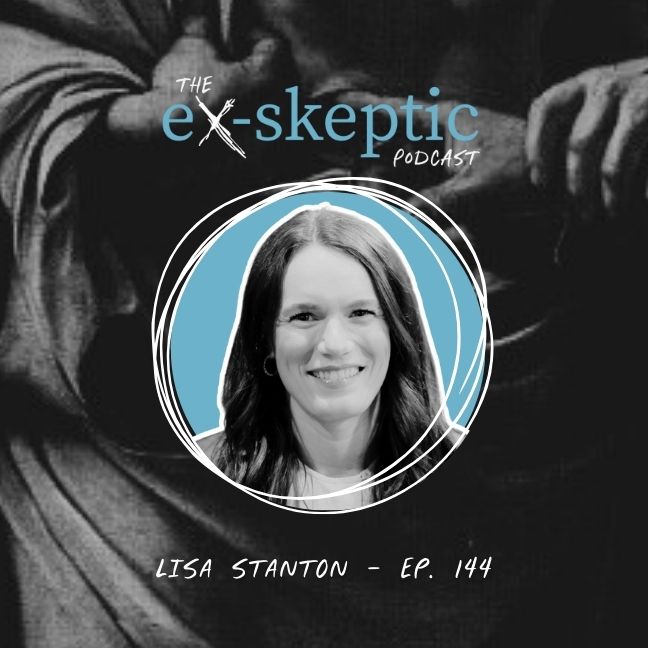

What if being brilliant, successful, and disciplined still isn’t enough to save you from fear, obsession, and self-destruction?
From the outside, Lisa’s life looked enviable—PhD, postdoctoral research at a leading medical school, and a rising career in behavioral health. But beneath the surface, she was unraveling: anxiety, eating disorders, addiction, and relentless obsessive fear followed her for years.
Convinced that intelligent, rational people didn’t need God, Lisa tried everything except faith. It wasn’t until desperation forced her to confront the limits of her own limits that she became open, reluctantly, to the possibility she might be wrong.
🎙️ Love the show? Support the mission and explore eX-skeptic merch here: https://ex-skeptic-shop.fourthwall.com/
Want to support this channel? Tax-deductible donations available here: https://givebutter.com/CB6WoH
Guest Bio:
Dr. Lisa Stanton is a social psychologist, researcher, and writer. With a PhD in social psychology and a career in behavioral health, she brings a rare blend of empirical insight and personal honesty to questions of identity, meaning, and human flourishing. Her recent work centers on her personal experiences in recovery from not only addiction, but also eating disorders, anxiety conditions, ADHD, irritable bowel syndrome, alopecia areata, and more. Lisa writes at drlisastanton.com, shares reflections on Instagram at @drlisastanton.
Resources Mentioned:
Lisa’s Resources:
• Website: drlisastanton.com
• Instagram: @drlisastanton
• Book: 52 Life-Changing Lessons I Learned in Recovery: A Journey Towards Sobriety, Honesty, and Radical Forgiveness
Lisa’s recommended resources:
• Alpha Course – https://www.alpha.org
• Bible Study Fellowship – https://www.bsfinternational.org
• Wes Huff, Christian Apologist – https://www.wesleyhuff.com
Atheists Finding God: https://exskeptic.org/atheistsfindinggod/
Connect with eX-skeptic:
Website: https://exskeptic.org/
Facebook: http://www.facebook.com/exskeptic
Instagram: http://www.instagram.com/exskeptic
Twitter: http://x.com/exskeptic
YouTube: https://www.youtube.com/@exskeptic
Email info: info@exskeptic.org
Chapters
00:00 From Skepticism to Freedom
00:06 Meet Dr. Lisa Stanton
03:03 Taking Her Faith Public
04:02 Growing Up Confused About God
08:25 When Suffering Made God Seem Impossible
15:47 Driven by Fear and Achievement
17:51 Faith, College, and the “God of Rationality”
21:42 How Academia Reinforced Her Secular Worldview
26:35 Anxiety, OCD, and Eating Disorders
29:00 Addiction and the Cycle She Couldn’t Break
33:25 Desperation Becomes the Turning Point
35:44 COVID and Drinking Around the Clock
38:32 The First Step Toward Sobriety
39:55 Trying to Get Sober Without God
42:24 The Recovery Meeting That Changed Everything
44:00 “I Need to Know Your Secret”
45:45 The Day She Surrendered to God
48:00 What Changed After Surrender
50:37 Finding Freedom Through Faith and Forgiveness
58:25 Is Christianity Actually True?
eX-skeptic transcript
Ep. 144 Lisa Stanton
May 08, 2026
Lisa Stanton
00:00 – 00:07
So very quickly I was like, hold on. If what they’re saying is true, I got a lot of things that I might need from this God that they’re talking about.
Jana Harmon
00:13 – 03:37
Hello and welcome to the eX-skeptic Podcast. I’m your host, Jana Harmon. This is where we explore real life stories of former skeptics and atheists who once rejected belief in God and then, often against their expectations, found compelling reasons to reconsider. If you’re a skeptic or seeker wondering whether there’s any good reason to believe in God, or a Christian who longs to better understand and love the skeptics in your life, you’re in the right place. Our goal is not to pressure, but to listen, to think carefully, and to follow the evidence of both mind and heart wherever it leads. You can find more stories, resources, and ways to connect @exsceptic.org including our conversational AI tool.
If you have questions, or if you’d like to find a story that wrestles with doubts similar to your own, you can ask the AI and it will point you to episodes that address those specific questions. On our YouTube channel, you’ll also find curated playlists organized by themes like suffering, other religions, science and faith, meaning and purpose, and more. So you can easily find stories that, again, speak directly to your biggest objections about God.
Today you’ll hear from Dr. Lisa Stanton, a social psychologist and clinical research scientist whose life looked incredibly successful from the outside. PhD postdoctoral work at a leading medical school, a growing career in behavioral health. But underneath, she was battling severe anxiety, eating disorders, and a long struggle with drugs and alcohol, all the while convinced that smart, rational people don’t need God. Lisa shares how, through desperation, recovery, and a serious reexamination of her own assumptions, she came to believe that Jesus is actually real, intellectually credible, and powerful enough to free her from obsessions she could never break on her own.
I hope Lisa’s story challenges your categories and opens up space for your own questions about truth, freedom, and and what it means to live a flourishing life. Now let’s step into Lisa’s story. If you’re skeptical of belief in God or you’re trying to understand someone who is, that might be why you’re drawn to the stories on this podcast. You may be asking yourself, what actually leads a skeptic or atheist to reconsider belief in God? What does that even look like? Before we started this podcast, I spent several years researching those questions. Through my doctoral study, I interviewed 50 former atheists, and through their journeys, I began to see patterns, patterns of why people resist belief patterns, of what opens them to the possibility of God, and ultimately why they believed Christianity is true and worth following.
That research became my book, Atheists Finding God. And those patterns and that research are really what shape the kind of conversations we have here on eX-skeptic. So if you’re drawn to these stories, this book is a way to go a little deeper. Atheist Finding God is now available in paperback wherever books are sold. I hope you’ll pick up a copy and read for yourself how and why atheists change their minds about God and the extraordinary change that can happen.
Welcome to the eX-skeptic podcast. Lisa, it’s so great to have you with me today.
Lisa Stanton
03:37 – 03:38
It’s so great to be here.
Jana Harmon
03:39 – 04:01
Oh, amazing. Tell me a little bit, Lisa, about perhaps what kind of work you’re doing right now. I know you’re very accomplished educationally and you’re both in research and clinical work and as well as you have a very public platform. Talk with me about the things that you’re doing and perhaps some of your educational background.
Lisa Stanton
04:01 – 06:12
Yeah, so I’ll start by saying at the moment I live in Medina, Minnesota, about 25 minutes west of Minneapolis, US on 10 acres, a little bit in the country. I always say we’re like the first house in the middle of nowhere though, because we’re only 25 minutes from downtown. I live here with my husband and my 10 month old golden doodle. I’m a clinical research scientist at a health technology company. I work on clinical research related mostly to type 2 diabetes. I have a PhD in social psychology and my whole background is in sort of like the psychology of health behavior changes. Um, I did a postdoctoral fellowship at Northwestern School of Medicine and Cancer prior to making the shift into diabetes. So that’s sort of my, like, academic life.
Um, and then starting in about late 2022, I decided that I would make a very private faith that I was carrying with me public. And at the time I actually had even shut off my personal Instagram for a year and a half. So I did emerged back into the world, but actually started my platform anonymously. I just called myself the Sober Essayist. And I was talking about finding a relationship with God and talking about my sobriety, which we’ll get into much later. But that platform started that way.
And then as it sort of started picking up speed, I felt, God was like you’re going to put your name on it. And I was like, but I am a research professional. I can’t put my name talking about God on the Internet. And God was like, no, you’re going to put your name on talking about God on the Internet. So I made that shift. I think it was in like mid 2023, about a year and a half after to my name being on the platform. In late 2024, I started my Substack and now those are sort of my two main ministries. And then I have a new version of a book that I had previously written coming out with a new publisher in 2026. So sort of Instagram, Substack author in the faith category and then by day a clinical research scientist.
Jana Harmon
06:12 – 06:16
So you wear a few hats, it sounds like and you’re very busy.
Lisa Stanton
06:17 – 06:40
Yes. I will maybe put a plug out there too. Just in the last couple of months, my husband and I started a nonprofit in the like, education and community, like support groups for people in recovery called the Unlearning Foundation. And we just got our 513C letter. So lots of things will be coming out of that soon.
Jana Harmon
06:41 – 06:56
Oh, that’s fantastic. That’s fantastic. And we will put all of those links in our show notes for anybody who’s interested in investigating all of those things. Yeah. Wow. Busy life, productive life, it sounds like in many regards.
Lisa Stanton
06:56 – 06:57
Yeah.
Jana Harmon
06:57 – 07:34
But you are sitting here as someone who is, you’re coming forward with your faith and you’re going public with it, but you were once not believer in God. You were very much a skeptic. That’s why you’re here, to tell us your story. So why don’t you start us out with your early childhood. Tell us about the family in which you grew up and was God part of your family life, your belief system. Was it something other than that? Walk us through that.
Lisa Stanton
07:34 – 10:33
Yeah. So I grew up in Lancaster, Pennsylvania. I was born to two parents who were married at the time. So like pretty well established, I think balanced at the time. But by the time I had one older sister who’s two years older, but by the time that I was about four, they were getting divorced during like, I can’t remember if I went to church or if I went to anything from 0 to 4. I don’t think so. And then after the divorce, my dad started taking us to Christian church a little bit, but my mom didn’t believe in God. We would occasionally go to Unitarian church at my mom’s house.
But I would say early on just a lot of confusion started. And not just confusion around God and religion and spirituality, but really just like, why don’t my parents like each other anymore? Why are they remarrying other people? Why does my dad believe in God and my mom doesn’t? It wasn’t until I was much older that I found this out. But actually my mom is 99% Ashkenazi Jewish and my dad is about half. So I’m 77% Ashkenazi Jewish. And that played a little bit of a role, like in my 20s when we’ll talk about the skepticism. But so looking back, it’s just my dad’s actually like 100% Jewish now. He goes to Torah study everything.
So we went to Christian church a little bit with him. But as you can imagine, it was not as though he had a strong relationship with God and especially not Jesus, given that he finds himself very Jewish at this point. So I think it was more like my dad’s attachment was just this, like he saw it as a moral compass. But I’m not sure that I ever witnessed a parent having a relationship of any kind with the Lord. And so my dad’s family kind of continued to go to church on Sundays, on and off. I bike raced on the weekends. So we would sometimes go, sometimes not. But I would say there was this like consistent presence of church. But one thing I’ve really noticed is like, unless the parent like really has a relationship and there’s fruits of that relationship, I’m not sure that like as a kid I was just sort of like, I don’t even understand what’s going on here. And I had a lot of questions that couldn’t really be answered.
So yeah, I think that’s how I would kind of describe growing up is more than anything, it was just confusing. And I think as a kid, I’ll also say you really like look to your parents for answers. So to have them in disagreement about this, I think from the beginning just produced this like, I don’t really know, sort of chaos that then as different events happened in my childhood started to like really destroy the foundation that by probably 12, I was sort of done with the God thing.
Jana Harmon
10:33 – 11:22
Yeah, I’m sorry. That I’m sure growing up as a child in a broken home with different parents who do things in a different way and you’re just really not sure and you’re not getting questions answered is hard, hard to formulate, you know, when you don’t have a foundation that of where to go. And you said you were asking questions, I’m sure about a lot of different things. And that by the age of 12 you were very skeptical. So were that were those questions, were they questions just about life. Were they questions about God? What were you receiving or not? And what finally brought you to the point of saying, I just don’t think that that’s true or God isn’t real?
Lisa Stanton
11:22 – 13:53
Yeah, I think a lot of it was. I don’t know if I would, I try to not use the word trauma, but that’s what it is. But a lot of it was sort of like, why is this happening? So this is so silly, but there was a series of break ins at my dad’s house. We had a detached garage. So it wasn’t as though someone was like burglarizing my home. They were burglarizing a detached garage. But there was a series of break ins when I was maybe like 9 and 10. And I feel like I struggled a lot, which is a very like adult struggle. But I was sort of asking these questions of how can God exist if my garage is being broken into?
And then in fifth grade, like Valentine’s Day of fifth grade, a very close friend of mine at school, his mom murdered him and then committed suicide, like shot him and then shot herself. And that was yet another like, how is it possible, I’m being told that God is love? How is it possible that God is love and this is happening and in a child’s brain, unless the parents, I think are really united and clear about how that’s possible, it just leads to this like disintegration. And then shortly after that, my mom was getting married to my stepdad, which is not inherently problematic, but my stepdad, this is all still like right around that same time, 2001, my stepdad’s ex-wife, not too long before the wedding, died of alcoholism.
So now like that mom died. And then my dad’s house, they were trying to adopt various children. My dad and stepmom were. And one of those children’s mom died of cancer like right around the same time. So it was, it was kind of like, I mean, big philosophical questions that were in my 9 year old head of all. To me, it was basically in there as all of the moms are dying. I also developed this intense fear that my mom was going to die. So I had all this fear that my mom was going to die. All these moms are dying. One mom killed herself. Like there was just too much and these break ins were happening and I just was like, there’s no way that God’s protect…God’s not protecting me, clearly. Look at the evidence in my life. And it’s just in such that like elementary way of if externally bad things are happening, then God must not be protecting me, which I know is not how that works today but in my nine year old brain, without anyone directing me, it was just like, I’m done.
Jana Harmon
13:53 – 15:06
Yeah. Whether you’re 9 or whether you’re 90, those kinds of sequential events would cause anybody to step back and question what’s going on. How could there be a God? Especially how could there be a good God in light of all of these events, especially in your case where you don’t have that, like you say, that kind of cohesive foundation of the parents coming alongside of you and trying to help you understand everything that’s going on. I can imagine that a lot of fear would be birthed through all of that. So. Wow. So you, you let go of the idea that there was a protective or good God, otherwise all of these things wouldn’t be happening. So you decided, I guess you had to do life on your own. In a sense. Your parents were not together, although they were getting remarried. It sounds like you were, you were getting some other support like that. But I’m sure, was there something in you thinking, okay, I’ve just got to brave this on my own? Did you have a sense of being alone in life that fostered some of those fears and how did that affect your perspective going forward?
Lisa Stanton
15:06 – 16:13
Yeah, I think one thing that sort of happened is that as a child of divorced parents, I think this is pretty common is that my, I sort of ended up in this place where I was like, I don’t want to make anyone unhappy. I see that unhappy people depart from one another. I don’t want to make anyone unhappy. So everything is fine. Right after John’s death, that’s the school friend, there was like grief counseling offered. There’s all this stuff and I’m like, no, I’m good, I promise I’m good, I’m good, I’m good. Right? This person dies. No, it’s okay. I’m good, I’m good. And I do remember I found this little, it has like cow-like spots on the cover of it. I found an old cow journal from around that time and I was writing to this day. Prayer journaling is a big thing of mine. But right around that time I was writing to God and being like, why is this happening? What, like, what’s going on? So there was kind of this like a relationship I was trying to hold on to until, until sort of the end there.
Jana Harmon
16:13 – 16:51
But yeah, so did you have this kind of sense sensibility or resolve even that if there isn’t a God who’s protecting me, I have to kind of move on my own in a sense and I guess when you mentioned this sense of almost protective shield or whatever, or presence that yeah, I’ve got this, I’m good, this sense of independence and self resilience. I’m going to make it on my own. Is that, was that a bit of a driving force in you?
Lisa Stanton
16:51 – 17:50
Yeah, I think so. I think it ended up in this place of, what’s interesting is that without God in my life, I had a driving force that felt like self-will, right? That felt like I did amazing in school. I have 14 varsity letters and there’s only 12 seasons, right, in high school because I was allowed to do soccer and track at the same time. Like I have one B plus in 9th grade, but the rest like are As, right? Like there was this thing that it feels like I’m so self-motivated, I’m so disciplined. However, it’s all driven by fear. Without God in my life, it’s not this lightness. Like if you ask me today, it sounds like I’m doing a million things, but I don’t feel like I’m doing a million things. I feel like I’m just waking up and doing God’s will. And that was not how it felt back in high school, back in college, when I was coming from this place of being driven to discipline but being driven by fear.
Jana Harmon
17:51 – 19:24
What does it look like to live out your faith in a world that often pulls in the opposite direction? If you’ve ever felt that tension between what you believe and the culture around you, you’re not alone this summer. Take a step back from the noise and get clearer on what it means to follow Jesus in your life. From July 12th through the 16th, just outside Chicago, the C.S. Lewis Institute is hosting its first Summer Academy. You’ll hear from speakers like Jerry Root, Kevin VanHouser and Andy Bannister exploring how to think clearly about today’s biggest questions and how to live with conviction and confidence. Registration closes on May 30th. To learn more and to reserve your spot, visit cslewisinstitute.org resources summeracademy. We hope to see you there. Yeah, so fear was the driving force, but it caused you, I guess, to accomplish a lot. It sounds like you were very gifted and talented in many ways as well. The question of God was not on the on the table at the moment. I guess you had put God in the rearview mirror. You didn’t need God. You were doing fine without God. I’m curious in terms of your, even your social group or your family, were there any Christians around you at that time? Were they trying to talk with you about God or were you just kind of like, ah, I don’t need that, thank you very much.
Lisa Stanton
19:25 – 22:26
My dad and stepmom continued going to church, but I don’t remember them, like we prayed before dinner, I think, but I can’t remember. I don’t remember anyone with like faith-based reasoning in my life, you know what I mean? Like, it’s one thing to go to church and pray before dinner, but I can’t remember anyone. Like when I had a problem or I had a question about a relationship or had a question about school. Like it was never if I’m nervous for a test, like, hey, why don’t you pray and turn it over to God? You know what I mean? Like, there was no, it was all, I call it agnostic reasoning today, which is like ways that humans reason when they don’t have faith. It’s funny, when I look back now, I think I can see a little more clearly.
I don’t think in high school there was really anyone around me who was like trying to preach any sort of, or like preach in a positive way or like share a gospel with me. In college, I think I knew like a couple Christians because I played or ran Division 1 track in cross country my freshman year of college. And there’s this whole like Christian athlete organization that exists I think at a lot of different colleges. And a friend of mine had invited me once or twice and I was like, I don’t really want to sing with strangers from other sports teams. Like, I just didn’t, I didn’t get it. And if you don’t get it, then you really don’t get it.
So I think there was a little bit of inviting and then really funny looking back now, when I went to graduate school. So I moved halfway across the country to Minnesota, moved in with two women that I had never met before who were also starting PhD programs in various versions of psychology. And one of them was very religiously Jewish and one of them was very Christian. And then I was like didn’t believe God existed. So we had really interesting like conversations at our countertop or at our dinner table. We lived together, I think three years, the three of us did. So Emily certainly talked to us about it.
But Emily being in like college and especially Graduate school are not environments that are very, like, welcoming of faith. So I think Emily, too, might have had, like, some fear about kind of like, I don’t want to lose these friends by over sharing what this is. I know she was like, trying to find a church, and I was like, why are you looking for a church? Like, why you have to go to church, I don’t understand. So I’m sure Emily was planting seeds, but other than that, I didn’t know that I knew any Christians. Now that I’ve sort of come out publicly, it’s funny, there’s a couple people who are in grad school at the same time as me have reached out and been like, I was a Christian the whole time too, but no one who felt safe, I guess, to share the gospel with me at that time.
Jana Harmon
22:26 – 22:49
Yeah. Now you have educational training in social psychology, which can be a highly secularized worldview, or they’re promoting a very secularized view of the world. And I wondered how that also shaped your view of yourself and the world around you.
Lisa Stanton
22:49 – 24:37
I think it shaped it enormously, but I didn’t even know it. Like, when I see people on social media talking much more today, or maybe I’m just able to hear it today about, like, the programming and conditioning of college classrooms, graduate school classrooms. But I think especially in that graduate school setting, because the professors in graduate seminars are put on such pedestals. So it’s like, if someone’s teaching me that this is developmental psychology, this is how it happens. I took a class on evolutionary psychology. This is evolutionary psychology. This is how evolution works. This is the only possible outcome. Even my personality class was, the professor was adamant about biological and cellular determinism. People don’t have free will. Everything was determined. And it was like, you have to write a paper where that’s the answer, because that is the answer to him. But I didn’t even know to disagree.
And I think I was being much more programmed in a secular worldview without even realizing that I was in. I mean, I took sociological theory in college and I was told that religion is the opiate of the masses. Right? That’s like old school Karl Marx. And I was like, ah, yes, of course it is. That validates everything I’ve been thinking the whole time. I wasn’t like, hey, is there something else going on here? So I think I was being brainwashed may be too strong, but, like, brainwashed. But I didn’t think that I was, because I already had that worldview. So I was in this constant confirmation bias, where I’m, all humans love finding evidence of beliefs that they already hold, right? So all I’m doing is going along in life. These professors are presenting me with evidence of the things that I think are already true. So I just carry on.
Jana Harmon
24:37 – 25:02
So did any of those ideas ever filter down to your life? Like, did you think, am I really not making choices for my own? Do I really not have free will? I mean, because that would be a hard way to live. So I didn’t know if it was just something that you were holding in the rational level or if it was seeping down into the more existential way of thinking and living.
Lisa Stanton
25:02 – 26:18
No, I think it certainly seeped down. I can remember my dad and I went to New York almost every year over Christmas, basically until I got married. And I can remember being on this really long subway ride with him because we got on the train in Queens and we were going all the way to the financial district. So it’s like a 45 minute subway ride. And the whole time I had just, I was in the midst of taking this seminar where this professor was arguing for biological determinism. And we talked the whole way about. It was me trying to convince my dad that life is predestined because my dad believed in free will. Right?
So then I did a 180 several years later, I was like, just kidding. Actually, everybody has free will. But yeah, it, like, really, I wasn’t just like, I have to write a paper about this. I really, like, took on these worldviews as like, this is what life is. And it makes it really interesting when you start thinking about like, addiction or the anxiety conditions. I was eventually struggling with, like, all these different things where I’m like, okay, are they predetermined then? Is my, like, is the therapy I’m taking also predetermined? Like, do I have any say in what’s going on here? So, yeah, it really kind of like throws a wrench in things and it makes. It made me think a lot. But I’m not sure that it was productive thinking.
Jana Harmon
26:20 – 27:10
Or it didn’t make you question it enough to may you wonder, I wonder if this is if this is actually right. Yeah, it’s interesting as so many times, you just move along and the authority knows and you just take it in, especially when you’re in an academic environment. So you got your PhD. Congratulations. It’s quite an accomplishment. And so, and even postdoctoral work with an NIH grant. That’s very impressive. So you were you were moving along, you were accomplishing. And now tell us about your life as you were moving through all those things. You talked about fear earlier in your life. Did that resurface? You’re mentioning some other things that started popping up for you that became problematic.
Lisa Stanton
27:10 – 31:55
Yeah. So there was a whole arc basically the whole time, starting around the break ins. I ended up actually being diagnosed with separation anxiety disorder because I was having like intense debilitating fear that my mom was going to die when I was not in her presence. And I see that as sort of one of the first obsessive disorders that I had in terms of like how psychologists diagnose mental conditions. Right? I’d like to remind people that this is not that the conditions that all of us are being diagnosed with are just symptom clusters. Right? That have names. They’re not like organically places that exist in people. But the symptom clusters that I have experienced, lots of them involve obsessive thoughts. And this was one of the earliest manifestations of that.
I also, even back to preschool, I had a sticker phobia. So, like terrified of stickers. They couldn’t be, if there was a paid thank you sticker. like from the 90s, on the milk, could not drink milk that week. Having my cereal with water. So like, those aren’t quirks. Those are like fear is already. So the way that I see obsessive conditions now is when I’m full of fear and I have no God to bring that to, I can’t just live in fear all the time. So my brain starts producing these obsessions that distract me from the like intense fear that I’m living in, from the anger that I can’t touch and figure out. So whether it was the sticker phobia, and then a separation anxiety disorder.
When I was 9 or 10, I started having more classic OCD so I was flicking light switches and I thought that my mom was going to die if I didn’t flick light switches. And all of that resolves itself basically only as I in like 9th or 10th grade developed a pretty severe eating disorder. So when I finished ninth grade, I was like 5’3″ and 115 pounds. So that was like maybe, and then by December of that year, I weighed 80 something. So it went like fast and furiously to like a skeletal state. I showed up to the first day of basketball practice and my coach was like, you’re not playing. Like, I don’t know why you’re not already being seen medically, but you’re not playing. They called my parents, I got sent to the nurse. I started after school eating disorder treatment.
And then basically around that same time, I had discovered alcohol. And the thing about eating disorder and alcohol and as I see them today, and drugs, painkillers, all kinds of things in high school eventually. But right around that, like 8th, 9th, 10th grade spiral, all of those things sort of like resolved. All the other things temporarily because they took over. So, like, I don’t have to flick light switches because now all I’m doing is obsessing about being skinnier. And when I’m not obsessing about being skinnier, I’m drinking. Like, I’m trying to get my mom to let me have alcohol when I’m in 10th grade as a means of like, curing the eating disorder. Because the only time that the eating disorder thoughts in my brain would stop was when I was blackout drinking, which is part of why I like blackout drinking so much, because then those obsessive thoughts would stop.
And truly that was from 10th grade up until 29 years old. Like, it was various manifestations. So that’s basically 15 years. Various manifestations of what that looked like. Sometimes it was anorexia, sometimes it was binge eating disorder, sometimes it was bulimia, sometimes I was blackout drinking, sometimes I was taking painkillers, sometimes I was smoking a lot of weed. But during that whole period, there was never a time where I was not like somehow in those obsessions, using them as a means that I understand now to get away from this stuff that I was not bringing to God because I don’t believe in God. So am I supposed to know to bring it to God?
But so this whole mountain of stuff is happening. I’m drinking, I have these eating disorders, I’m anxious all the time. I’m medicated for all of it, right? I need, I got an ADHD diagnosis in the middle of that. So I’m taking like Concerta for that. But then I’m getting too hyped up on Concerta and I need anti anxiety medications because it’s giving me anxiety. So it was just a ball of like physical, mental, emotional confusion that basically just kept swirling from 15 to 30 years old. But like you said, I also like got all A’s in college, played a Division 1 sport for a little bit, got a PhD during that time that all of that was happening. And then I would just sort of like devolve again. And then I would do some work and then I would devolve again.
Jana Harmon
31:55 – 32:22
That’s it’s, it’s really. I mean, I kind of sit in amazement at what you were able to accomplish in the midst of these incredible chronic struggles that you have. What happened? What was the breaking point? What caused you to stop and say, well, maybe there is a God, or maybe I need something different or something better or more or, you know, what’s going to get me out of this vicious cycle?
Lisa Stanton
32:22 – 46:40
Really, desperation is the short answer to that. But really what happened is I had been in years of therapy, different therapists, different kinds of therapy, different kinds of treatments for all these different things. And what’s hard is it’s like, well, should we treat the ADHD? Should we treat the anxiety, should we treat the bald spots? Should we treat the eating disorders? Should we be talking about substance abuse? Like, what’s the root problem here? Right? The root problem is they don’t have faith, but that’s not on the table as a root problem. And so basically by the time I was 29, the most outward problem was at that point, my drinking.
And so luckily that was kind of the thread. Like there had been a couple interventions over the course of my life that friends had done, mostly one near the end of college, a sort of one in high school, and some tough conversations during graduate school, mostly after I was hospitalized a few times from drinking and mostly like after those incidents. But it took a lot, I mean, and I don’t find God until 2021. And in 2017 I was locked in a psych ward because I was having a mental breakdown and needed to spend some time alone. And like only overnight. It wasn’t a long stay. But that didn’t lead me to be like, wow, maybe I need help. I was like, oh, well, if my friends had paid more attention then the police wouldn’t have had to find me on the road at 4am and put me in the psych ward. Right? There’s always this like blame of others because you can never look inward if God’s not there with his grace. Because it’s terrifying to look inward if you don’t have the grace of God.
So finally in 2019, I had moved to Chicago for this postdoctoral fellowship at Northwestern School of Medicine and started a day job there. And it was going okay. I was having a little bit of trouble showing up for a 9 to 5 because I hadn’t had to do that during graduate school. But I don’t think that was externally obvious yet. And then I had moved there in September and then in like late February, March of that year Covid started because it was 2020 and I didn’t have to go into work at all anymore. And I started drinking 24 hours a day and couldn’t stop. And that went on for all of March, for all of April, for like a little bit of May. And then I was like, I’m gonna die if I stay here. I mean, I kid you not, I did not sober up for two and a half months. I was just, like, waking up, drinking wine, walking to Trader Joe’s, getting wine, coming back home. I don’t know if I was eating. I think I was eating, but I have no recollection.
And so I woke up one morning in Chicago and was like, I’m gonna die here, living alone, and just started driving back toward Minneapolis with no plan about what I was gonna do when I got there. So I just started driving toward Minneapolis and ended up staying with an ex-boyfriend, which. So I always joke, like, this is not the turning point. I was not yet making great decisions, but ended up staying with an ex-boyfriend there. But when I went back that May, after a couple weeks of staying there, he was like, you cannot live like this. Like, you. This is insane. Like, I know that you used to drink a lot and you like to drink, but this is beyond. So I think I did what anyone who has a drinking problem would do in that scenario. So I left and went on a five day bender and hung out on boats over Memorial Day in Minneapolis and didn’t sober up for five days, and then finally woke up the Tuesday after Memorial Day. And I didn’t do any, like, big God surrender at that moment. And that day is not the day that I surrendered to God, but I woke up that morning and I knew that something had shifted.
And I can’t explain why that day. I’d been on five day benders before, but that morning I woke up and I knew that something was different. I don’t remember if I prayed the night before. It only recently came back to me that that spring, like January of that year, I had randomly, like, in sort of my desperation of, like, I am miserable and I know my drinking’s getting worse. I’d gone to two different churches, and at the church, a girl invited me to Bible study. And I went for like five weeks until Covid started. But every week for those five or six weeks, I would show up and be like, remember, guys, I don’t believe in God. I’m gonna have a lot of questions. And they were like, that’s fine. Like, stay. It’s all good. But I left that Bible study not believing in God.
But there had been like, some door had opened right early that year that I had even gone to church once or twice at just random churches that I googled in Chicago. And then that morning I woke up and a friend of mine was downstairs and was, it’s like 8 o’ clock in the morning, and he’s like, hey, do you want a glass of wine? And I normally would say yes to that 100% of the time and said no and just thought that I was done. Ended up calling a friend of mine from college whose husband had gotten sober about five years before and asked to speak to her husband, which she knew what that meant. And she was like, oh, we’ve been waiting for this day.
So her husband gets on the phone, and I was like, I think I’m really done. What do I do? And he was like, go to recovery meeting. They’re free. They’re everywhere. And I was like, I went to one seven years ago. They’re not for me. Not going. That’s not on the table. What else do you have? And he was like, I don’t have anything, but you should go. And after maybe 20 minutes of conversation, I ended up going to my first meeting. And that started basically seven months of trying to get sober without God. I did everything that I could to. I just thought that stupid people believed in God. I think that would really be, like, how to sum it up? The best is that people who had thought lives that I respected didn’t believe in God. That’s what I believed was true.
And so I was like, I’m not gonna do the God thing, but I’m okay to call it the universe. And what that brought me between just after Memorial Day June and December of that year was the realization that I was completely broken, even sober. So I was not drinking anymore. I was rarely using drugs at that point. I was still using the, like ones that I had been prescribed, which eventually God removes them from me too. But I mostly was not drinking or using illegal drugs anymore. And I was spiraling. So by December of that year, I was, like, fully back in my bulimia. I was binging and purging six times a day. I was having a panic attack every day. And I hope that you have never experienced that, but if you’re going to binge and purge six times a day and have a panic attack, there’s not much time to do anything else in the day. That really takes the full day is just mental illness.
And I kind of got to a point where I was like, I need to start drinking again or I need to die because this doesn’t make any sense. There’s no point in living and being sober if all I’m going to do is throw up and panic all day. Like I’d rather be drunk than this. And luckily had this like overnight panic attack Christmas Eve. I’d stayed in Minneapolis instead of going back to Pennsylvania because of the pandemic. Had this like overnight panic attack Christmas Eve. And God had been sending me little messengers that I didn’t think were God to go to this meeting that was early in the morning in part of Minneapolis that I didn’t think I should go to. And because I, and it was at 6:30 in the morning and I was like, I don’t go to north Minneapolis, I don’t wake up at 6:30 in the morning. I’m not going to that meeting. And I didn’t know that these people were kind of telling me like this is a life or death situation, you need the help of the people at this meeting.
But luckily, because I had this overnight panic attack, I went to the meeting because I was awake at six o’ clock in the morning when it was time. So I drive to this meeting Christmas morning of 2020 and walk in and that was like the beginning of the turning point of me surrendering to Jesus that I didn’t know that that’s what was happening that day. But it’s my home recovery meeting to this day. People are not embarrassed to say God instead of higher power. People were very clear about the message that they had. And I think I just saw the Holy Spirit on other people for the first time, like really on them. And people sure that God is what had had them recovered. And God removed the obsession. And I even like I’m quick enough that right away I was like, oh God didn’t remove the drinking. God removed the obsession to drink. Which maybe means God can remove my obsession of bulimia, my obsession of anorexia, my obsession, like my obsession, my self absorbed obsessions that are causing social anxiety.
So very quickly I was like, hold on, if what they’re saying is true, I got a lot of things that I might need from this God that they’re talking about. And it took about 10 days of me going to this meeting, listening to sort of like the elders in recovery who are in that meeting. And then I sort of got tricked honestly into turning my life over to God. There was one particular man who was in that meeting who just, like, was so joyful. And I asked him, like, I just need to know, like, what do you do? I need to know. I need the secrets. I don’t get it. And he was like, hop in the truck. I’ll show you. I was like, okay, let’s see what this is. And we pulled up to a church. We, in fact, pulled up to a daily mass at a Catholic church and, like, walked in, and this is, like, the day before I’m gonna turn my life over to God. And I listened to this whole Mass, and we walked out, and he was like, that’s what it is. And I was like, I don’t. Like, I still swore a lot at that time. And I was like, I’m sorry. The Catholic Church is your big effing secret? And he just started laughing, and he was like, it’s not the church. There was something deeper going on in there, like that priest isn’t going to save you.
But he was, like, mysterious but I was like, okay. And then he was like, come back tomorrow and I’ll show you. So we drove to a different church, and then he told me to walk inside, and we were, the program is based on the 12 steps, and the third step is turning your will and your life over to God. And the thing that’s funny about Catholic churches is this is not, like, a pitch to be Catholic. It’s just a fact. Jesus is hanging on the cross, right? Which is actually a little confusing because he’s not on the cross today, but that’s fine. So he’s hanging on there because you got to look at him. And Jesus was a particularly contentious thing for me at the time. Like, even calling the being God versus being like someone died on a cross to save me was contentious. And that was on January 4, 2021. I got on my knees, I turned around, and I was like, this is so stupid. And then got on my knees and said the prayer once in my head, once out loud. Got up, turned around, go. Nothing happened.
And it is true, in that moment, nothing happened. I did not feel warm. The sky did not open up. I did not meet Jesus. Like, none of those things happened. However, January 4th is my sobriety date, and God willing, I will have five years in a month. So something clearly was happening, even though I did not know something was happening. So that was kind of the beginning of my surrender, sort of to the overarching mystery of faith. And then from there, really started my journey into like, who is Jesus? What is Christianity? What does it mean to believe in the God I just surrendered to? What does it mean to confess to him? What do I need to look at inside myself? What does self examination mean? Like, I went on a whole big journey, but that was the beginning of that surrender.
And I would say the beginning of a surrender that that fall I had begun. I had prayed to God a couple times. There’s a couple cool stories actually from that fall of God answering prayers and then me being like, I think that was a coincidence. So like God was answering prayers even when I was like, not fully surrendered yet. But that January 4th was really the day where like, I feel like I didn’t know it was the Holy Spirit at the time, but the Holy Spirit was really like, okay, you invited me into your life. We’re like really going to go on this journey now.
And things started to change really fast. I mean, within days of that. I mean I never used illegal drugs or drank again. But within days of that. Was off my Concerta, I was off my other medication. My anxiety went away. The eating disorder took a lot longer to sort of sort itself out. Today I have zero symptoms of that though. My hair grows fine, right? Like, I’m not allergic to any foods anymore. I have, my stomach digests normally. Like all of that took longer to sort itself out as I actually developed a relationship with God and figured out what that meant. Started opening the Bible. But it all really started that day with really just finally saying, I might be wrong. Like I might be wrong that Jesus is fake. Maybe, maybe he’s not. Maybe he’s really there.
Jana Harmon
46:40 – 48:17
What a story. Oh my word. It feels like that there’s still, so I’m sure people are listening just as I am, like, okay, so there was a day of surrender. It was a little half hearted, but something took. You knelt before the person of Christ and you gave up your life to him, whoever he was. You weren’t really sure. You still needed to find out, but it was amazing how quickly things started taking hold. That you never drank or used illegal drugs again even from that day is quite phenomenal. That has to be supernatural, right, for that obsession or that craving to have been removed. But you said that you started on a journey to find out who Jesus was. You know, what this is all about, who you were, who God is, the whole thing.
So how did you go or walk into that journey where you actually found out who this Jesus is and how it is that he somehow had the power to break these obsessions in your life that you had tried for years to break on your own. How? I mean, I know a lot of this is mysterious, it’s spiritual, it’s supernatural, and maybe there’s no way to really explain it, but kind of try to walk us through some of that journeying.
Lisa Stanton
48:18 – 54:09
Yeah, I have some theories, but, so several things are happening simultaneously. One of them is I was beginning a walk through the 12 steps with someone who had the Holy Spirit present in them. So right after you turn your will and your life over to God, you make this list of everyone that you’ve ever, like, had any anger, frustration, jealousy, envy, they call it resentment. But you make this big list of all those people, and you think that it’s kind of like a grudge list. And then what actually happens is it’s your job to forgive every single one of them. And not only that, but to see that you holding that grudge is actually the biggest problem that you have.
So that was one of the first kind of big things was I had tried to do that without prayer. So I had tried to forgive people without God’s help. I tried to forgive myself rather than go to God for forgiveness for those things. And I can remember the experience of the first time, like, looking at a name on my list, having Kevin be like, pray. And I was like, I know I just turned my life over to God, but what difference is it going to make if I say this prayer? And I started praying? And then I would look at the person on the list and be like, I don’t hate them anymore. And I think Jesus gives people, or at least gave me the grace that those first few gone, right.
A lot of the other ones, it took many more prayers. And I don’t think that that was Jesus unwillingness to forgive me. I think it was I needed to pray until my heart actually changed. My heart actually softened. I think the second that was there, Jesus was ready to do so. But those first few, I think felt like I just felt the unforgiveness and resentment drop. And I think I needed that to be like, this really works and I’m going to keep moving in this direction. So my relationship started really by that experience of grace coming in. Wow. I, like, don’t hate these people anymore. I barely even remember what they did to me. I see how I caused what they did to me. I see, like, my fault that’s related to this.
And then God walking me through in the 12 steps, you go back and you basically take that list of people that you resent and you make amends to them. Because the theory is basically anyone that you’ve ever resented, you actually harmed. And what’s crazy is 99% of the time, like almost everyone on the list that I had resentment toward, I actually harmed either before or after whatever my issue with them was. And it takes a lot of humility that I don’t believe I would have had on my own to go back to people and not say, like, this is your part, this is my part, I’m taking responsibility for mine. But to just say I was wrong. And some of those people say I was wrong too, this is amazing. And others say, thank you, I’m so glad that you finally noticed. Right? Even if they were too.
So you have to be in this place of humility that only God can offer to leave that conversation with joy, whether or not they choose to take responsibility for their faults. And so the 12 steps really gave me this outline for the 10th step is basically a daily examination of conscience. Where could I have done better? Did I harm anyone today? Is there anyone that I need to like go back and make any amends to during the day? So that’s been, I still do that every single day today, just at the end of the day, scan back through my day, ask for forgiveness for anything. Step 11 is just participate in prayer and meditation, which of course if you’re doing all those other things is going to happen. And then step 12 is to carrying the message to others, which I’ve done basically since three months over. I sponsored, I don’t know, probably like 20, 25 women at this point who are now floating around in their own sober lives having found God and then started doing the same.
And there’s like a similar eating disorder recovery program. And then of course started talking about my faith online. But I will say simultaneous to that, I really started like, that’s one thing. But then how do I drop my prejudice around religion? Right now I’m developing relationship with God, but I think I have this special version of Jesus where I can still hold on my prejudice against religion, but like have my own personal relationship.
So it’s been really cool over the last several years to like take a lot of different classes. Like I took an Alpha class at a non-denominational church downtown. I took like OCIA, which is like a learn about the Catholic Church thing. I’ve taken, I don’t even know. I was just on a big seeking journey of like, what are all these different beliefs? I eventually started opening my own Bible. I joined Bible Study Fellowship, which I think is like a national Bible study. So really, any angle, any food that I could get that vaguely resembled anything in Christianity. And of course, I’ve eaten some not great food in the process of that, or food that wasn’t meant for me or whatever it was. But I’ve, over time, luckily, obviously, the Holy Spirit gives me discernment as well, and I can see what’s been fruitful, what’s not been fruitful, and how those things have changed over time.
So, yeah, I was just seeking all over the place. The 12 steps are sort of the original foundation. But it’s funny, in step 11, there’s a line that says, be quick to see where religious people are right? Make use of what they offer. So one of the biggest things is like, can I get to a place where I’m quick to see where religious people are right, and make use of what they offer? And I’m sure most people would consider me a religious person at this point in my life.
Jana Harmon
54:09 – 56:39
Yes, yes, It really is an extraordinary story, Lisa. What you have obviously been through, but also what you’ve been freed from. There’s no debating that. You’re sitting there as a joyful woman who is proclaiming what she has found. True freedom, true freedom in Christ to freedom from obsession, true freedom from self destruction, from fear. And you want others to know. It sounds like you went on a journey. I can imagine some people go, wow, that’s amazing. You know, it did, it worked for her. It worked for her.
Now, you kind of inferred that there were some biases there earlier that you, that you had to get over for the whole religion thing. What I’m hearing from you and I, what I want to ask about is that you grew up in a highly intellectual world. Your family are highly accomplished academics. You yourself are a highly accomplished academic. From an intellectual perspective, religious people were the stupid ones. So, yes, you pursued. You saw, you read the Bible, you read Scripture. There’s a sense in which it’s true because it works.
But there’s also a truth that it works because it’s true, that there really is something there. Ontologically real. Jesus is actually real, is existent, has power to break these things in your life. But more than that, that his word is true. You know, you, you were pursuing the Bible, all those things. How you inferred again, that as you were seeking and studying, that there was something about it that rang true. You said you were kind of discerning some things that were, some things that weren’t. But sitting there as an intellectual person and God is real to you in your life. Obviously, there. There’s the issue. I’m sure some people are asking, but is it true? Yeah, is it true? So how would you respond to someone who’s listening to your story and being a little bit skeptical about still the whole religious thing?
Lisa Stanton
56:39 – 59:36
Well, first, I will say there’s sort of two sides that came up when you were talking about that, and one of them is experiential. Sometimes God answers questions through experience, which I think is interesting too. So one of my biggest questions early on was this thing of like, how can all these bad things happen if God is real? God said he would protect me. And really interestingly, I get sober in 2021. I’m not sure if I’m going to have the dates exactly right, but basically, by the end of 2022, the last of my biological living grandparents, both of them died, and a close friend of mine committed suicide with fentanyl. And so it was almost like this. If you take, like, the friend and the two moms dying, like, early on, that it almost was like, God was like, I’m gonna take you through that same thing with me, right? A close friend died and two grandparents died. I’m gonna take you through that same thing with me, and you’re gonna get how it’s different.
And that was huge for me because I had internal peace that I couldn’t describe when lots of other people would have had grief. And it was like, almost like a reverse walk back out of the woods of like, oh, you never meant that you would protect me from the world as it unfolds. What you meant is you would protect my heart as the world unfolds. And so I got to experience that, like, in real. What’s funny is, early on, I was kind of in this place of, like, can I just lean into the mystery of faith and not have all my questions answered and just watch the questions get answered as they unfold? But I’m, like, very firm in my faith now.
And so, like, probably the last year or so have been on much more intellectual exploration of why this is truth. Wes Huff is someone I listen to a lot. He is a scholar who looks at, like, really, like, papyri, really early biblical texts. I think I’ve listened to, like, most of everything that he’s put out on the table behind me, there’s like a 300 page Bible commentary. I’m close with like a guy who oversees liturgy at a parish downtown that I like, sit down and I’m like, okay, I need you to explain to me, like, what, what do these numbers mean in the Bible? What does this mean? So I’ve really dove into like, what are the connections between the Old and New Testament? What is the evidence that this is actually true? How did we choose the books of the Bible and how do we know that those are true? Like, all of that? Because eventually I got to this place. I think I was worried early on that if I looked too far in that direction, I would like spook myself for something. But like you said, it’s actually really just made me so much more firm in this is true.
Jana Harmon
59:36 – 01:00:56
So it’s just, I’m sitting here again amazed at what you’ve been through, but because of what you’ve been through, it makes you such a powerful spokesperson for the truth in every sense of the word of Christ. Yeah, what a beautiful, beautiful ambassador you are. I’m thinking about those again who are listening, who are looking at you and looking at your story and thinking, wow, you know, if Jesus can do that for her, you know, maybe he could do that for me. Or maybe it is true. If someone is listening and they really want to find freedom, they want to find truth, they want to find fullness of joy in life and living, so much so that, you know, they’re willing to tell other people about it. How would you, or what would you say? How would you guide someone? You had, yeah, the Lord really ordered your steps, but you had reached a point of desperation before you were willing to kind of take that step forward. I mean, hopefully people aren’t as so desperate, but sometimes that’s what it takes to say, well, maybe there’s someone, something different.
Lisa Stanton
01:00:57 – 01:02:44
I think the advice that I would give to someone in that position is really to not be afraid to be wrong. I think that was one of my biggest fears, was that if God is real. That’s so embarrassing, right? That is so embarrassing because I’ve been fighting so hard, right, intellectually to show that I’m so smart and I know that He’s not right. I think of all the arguments that I had had over the course of, of life, all of the professors living in my head that I was going to let down my parents, I was going to let down somehow, like intellectually and to let go of all of that and be like, maybe it’s okay to be wrong. Maybe there’s something on the other side of wrong that is going to be the coolest thing that I’ve ever found out.
And what’s crazy is even after the surrender, that willingness to say I was wrong and to see the world differently, right? Because I functioned as if I can blame somebody else for the problems in my life, everything will be better. Right? And today I know that freedom comes from taking responsibility for the problems in my life and then going to Jesus for grace for them. Right? Which is a completely like 180 from that. So, beginning with just like, is God real? It’s okay to be wrong. And life’s actually going to be a lot more peaceful. And then even as, like, God starts to work inside of you, like, keep letting it be okay to be wrong, be okay to see the world differently, be okay to see how you think about yourself and others differently. Because I think that’s really what it took is as long as I was gonna live my life stuck in the fear of being wrong, I was never gonna get there.
Jana Harmon
01:02:45 – 01:03:20
Like you said, you kind of fought against all of this for a long time. And there are a lot of people who listen to these stories and they have people in their lives that they love who seem so resistant and so disinterested and even angry. You know, if you bring it up or you know, do you have any ideas, thoughts, advice for Christians who are walking through or longing for people that they love in their life who just seem so resistant.
Lisa Stanton
01:03:20 – 01:04:32
So I think just really, I guess the two pieces of advice are sort of like, if you’re going to directly evangelize the way that I have to, if I want to help people get sober, which is maybe a little bit more like aggressive than most people’s day to day evangelism is just to be like slow and thoughtful and not create any pressure. It’s sort of a joke. People are always like, if you sponsor me, do I have to be Christian? And I’m like, no. But 100 of them have ended up that way. So it’s up to you. And no one’s ever said no, but. So they sort of have it in the back of their mind from the beginning.
But from the beginning, like, there is no rule that you have to pray to the God that I pray to. I just say, like, let’s just keep working together, see where you end up. There’s no pressure on where you end up. It’s. It’s all going to be fine. If you keep praying to God, God will send you in the direction that you need to go. And that’s how I, like, speak to them. And then I think really the second part of what I was going to say is like, if you, if you’re doing the work yourself, if you’re having a relationship with God yourself, people, eventually, I think 100% of them have ended up Christian because eventually they’re like, wait, why are you peaceful when that happens? And I’m not? And I’m like, I don’t know. Try Jesus. Up to you, though.
Jana Harmon
01:04:32 – 01:04:37
That’s right. That’s right. Yeah. So from what I, what I hear from you, you just have to be patient.
Lisa Stanton
01:04:38 – 01:04:38
Yeah.
Jana Harmon
01:04:38 – 01:05:32
Investing, valuing, being patient. Yeah. Wow. What an incredible story you have, Lisa and I think when you sit back and listen to a story like yours, all you can do is sit back in awe. Because the way that you described your life prior to coming to Christ, it seemed like there was an inevitable end to it and it wasn’t going to be good. But yet I’m seeing you here, this beautiful woman of God, full of peace, radiating joy and wisdom, and you would never think, I’m sure looking at your former self, you would never think that you are where you are now when you’re in your moments of darkness and now you’re sitting there in this beautiful light.
Lisa Stanton
01:05:33 – 01:05:33
Yeah.
Jana Harmon
01:05:33 – 01:06:36
And I know that so many people are gonna want to come and learn from you, to listen to you, and I’m so glad that you have these public platforms where people can continue to learn from you and grow and you can continue to guide and I pray God’s blessings over the work that you’re doing, because obviously there’s nothing more powerful than a life that’s been changed, especially as much as yours has. So thank you so much for coming on, being so vulnerable and transparent, but yet I don’t think if we didn’t know the depths of your darkness, we wouldn’t understand what Jesus had done for you. And so I just really appreciate not only you’re coming on, but your life, your bold witness and really your desire for others to find life and healing and freedom like you have that you’re so public about it now. Thank God for that and for you.
Lisa Stanton
01:06:37 – 01:06:43
Thanks. Thank you so much for making the space for me and others like me too, to do this. So that’s huge.
Jana Harmon
01:06:45 – 01:08:14
What an extraordinary journey Lisa has shared with us. From fear-driven obsessions to a life of freedom and grace in Christ. Her story reminds us that it is possible to be at the top of your game on paper and still be inwardly collapsing, and that Jesus can meet us there in both our questions and in our desperation. I hope it is an encouragement to you that change is possible. There is always hope if you look in the right direction. The eX-skeptic podcast is a ministry of the C.S. Lewis Institute, and we rely on the generous support of listeners like you to keep bringing these unlikely stories of belief to a wider audience.
If you’d like to help us continue this work, please consider making a donation by visiting our website exskeptic.org and following the links to support our ministry. If you’re listening on Apple podcasts, Spotify or YouTube, it really helps when you raise, rate, review and subscribe. And when you share this episode with a friend, your simple actions extend the reach of these conversations far beyond what we could do on our own. And special thanks as always to our producer Ashley Kelfer for her excellent work behind the scenes, and to you for joining us and being willing to think deeply and honestly about God, doubt, and the possibility of real change. Thanks for listening to eX-skeptic. We hope to see you again next time, where we’ll hear another unlikely story of belief.