
Is Christianity true because it works, or does it work because it’s true?
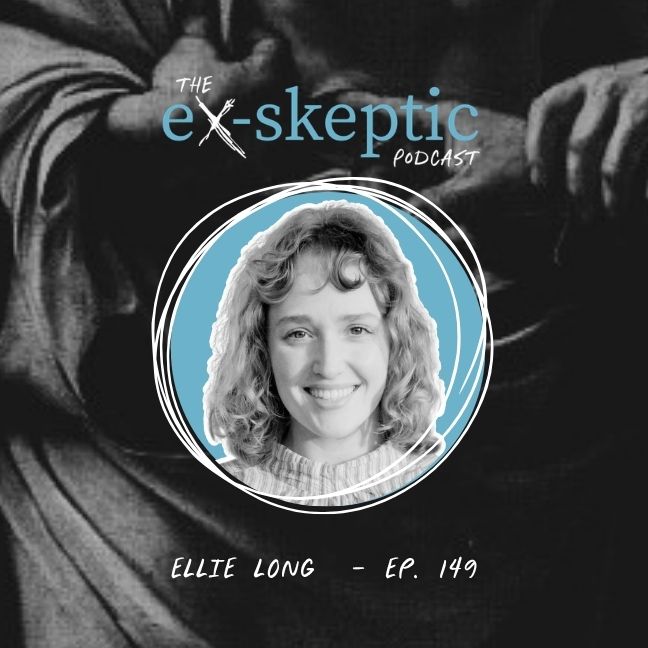
For years, Ellie Long was convinced that Christianity was nothing more than a story people used to cope with life. Raised in a secular environment and embracing atheism at a young age, she wrestled with despair, depression, and the belief that life ultimately had no purpose beyond birth and death.
But when she began encountering Christians whose lives were marked by joy, authenticity, forgiveness, and hope, a question emerged that she could no longer ignore:
Was Christianity merely helpful, or was it actually true?
🎙️ Love the show? Support the mission and explore eX-skeptic merch here: https://ex-skeptic-shop.fourthwall.com/
Want to support this channel? Tax-deductible donations available here: https://givebutter.com/CB6WoH
Guest Bio:
Ellie Long is a young missionary from Allentown, Pennsylvania. She grew up in a post-Christian culture and did not have experiences with Christians in her everyday life. She unexpectedly encountered God halfway through her time at the University of Alabama, and after a period of hesitancy and questioning, believed and began working in a local church and pursuing the mission field after her graduation in 2024. She recently spent time in Southeast Asia, working with an unreached people group in a Muslim culture, and is now considering where she is going to bring the gospel to next.
Resources Mentioned:
eX-skeptic Guides: https://exskeptic.org/bookstore/
Ellie’s Recommended Resources:
• Wes Huff (www.wesleyhuff.com) on Joe Rogan’s podcast: https://www.youtube.com/watch?v=HwyAX69xG1Q
• Gavin Ortlund, Truth Unites (https://truthunites.org)
• Book: Seeking Allah, Finding Jesus, Nabeel Quereshi
Connect with eX-skeptic:
Website: https://exskeptic.org/
Facebook: http://www.facebook.com/exskeptic
Instagram: http://www.instagram.com/exskeptic
Twitter: http://x.com/exskeptic
YouTube: https://www.youtube.com/@exskeptic
Email info: info@exskeptic.org
Chapters
00:00 Is Christianity Helpful—or True?
05:15 Meet Ellie Long
06:02 Becoming an Atheist at 10
08:35 Growing Up Without God
10:56 The Hopelessness of Atheism
14:01 Wishing My Life Away
16: 04 Finding Hope in an Unexpected Bible Verse
19:00 The Church Experience I Couldn’t Explain
23:28 Seeing Christians Differently
25:00 Why Do They Love God?
30:27 Searching for Freedom in College
34:30 Returning to Church
35:46 Accidentally Joining a Bible Study
38:57 Trying Christianity Before Believing
45:08 Asking God to Prove He Was Real
48:20 When Christianity Became True
49:24 What Is the Gospel?
53:33 How Jesus Changed My Life
55:41 Evidence for the Resurrection
01:02:10 Advice for Skeptics Searching for Truth
eX-skeptic transcript
Ep. 149 Ellie Long
July 17, 2026
Is Christianity Helpful—or True?
Ellie Long
00:00 – 01:03
I was reading in Luke about Jesus being born as an infant. And for the first time, my mind just like clicked together that this story is like a historical account of something that was true and really happened. Like God really became, like really came down to earth in the form of an infant baby and grew and lived a sinless, perfect life. And there’s historical evidence that is reliable for Jesus really existing and for Him being crucified on a Roman cross 2,000 years ago. And even though the resurrection is kind of debated, I’m coming to a point of looking at all this information of like the best possible explanation for what I have read, for what I have learned, from what I’ve heard and from what I’ve experienced. Is that Jesus rose from the dead, and that is there has to be a God then. He has to be who he said he was if this whole story is true.
Jana Harmon
01:10 – 03:03
If you enjoy these conversations, I’d also like to encourage you to check out our growing series of eX-skeptic Guides. Each booklet centers on a question people often ask about God, faith, or Christianity, bringing together 10 stories of former skeptics along with reflection questions and practical advice from those who made the journey. Whether you’re asking, Is it rational to believe in God? Can I believe again? Or what if my spouse doesn’t believe? Or simply walking along someone who is asking these questions, these guides are designed to help you continue exploring. Visit exskeptic.org/store to browse the series and find the guide that’s right for you. We hope you’ll take a look.
Is Christianity true because it works for people, or does it work because it’s actually true? Some people see belief in God as something people adopt because it brings comfort or purpose or community. But what happens when someone experiences the benefits of Christianity but yet still isn’t convinced that it’s true? Welcome to eX-skeptic, the podcast of unlikely stories of belief where we have conversations with former atheists and skeptics who once rejected God but eventually came to believe that the Christian story is not only true, but it makes the best sense of life and reality.
I’m your host, Jana Harmon. My guest today is former atheist Ellie Long. She found herself living in that tension. She began to see that Christianity seemed to produce something good, hope, community, even a better way to live. But for someone who had long rejected belief in God, that raised a deeper question she couldn’t avoid: was Christianity simply helpful, or was it actually true? Because if it’s only helpful, it might improve your life, but if it’s true, it changes everything.
If you’re listening with questions or doubts of your own and would like to talk with someone who has wrestled through these same questions, reach out to us at info@xskeptic.org, and we can connect you with a former guest to begin a conversation. You can also explore your questions on our conversational AI tool found on our website at exskeptic.org, or take a look at our curated playlists on YouTube organized around big questions like, Is there more to life than this? designed to help you in your own journey. All right, let’s step into my conversation with Ellie. Well, welcome to eX-skeptic Ellie. It’s so great to have you with me today.
Ellie Long
Hi, thank you so much for having me. I’m super excited.
Meet Ellie Long
Jana Harmon
03:47 – 04:09
I am too. My daughter Jordan introduced us, and she just told me what a fantastic story you have and an amazing story of transformation. And I’m just so excited to get to know you and to hear more of your story today. But before we do that, can you tell us a little bit about who you are and the kinds of things that you’re doing and pursuing at the moment?
Ellie Long
04:09 – 04:31
Yeah, absolutely. I am 24 years old. I just graduated from college 2 years ago and am now pursuing a career in the missionary field. So hoping to move overseas when I finish some training that I’m doing right now in the next few months and go and preach the gospel to the ends of the earth.
Jana Harmon
04:33 – 05:14
Wow, that’s following the Great Commission, as they say. The thing what Jesus really wanted us to do is to help everyone around the world know who he is and the good news of Christ. So let’s get back into your story because this is, seems to me from what I know, a pretty far distant path from where you once were. So let’s start at the beginning. Ellie, tell us a little bit about how you were raised, where perhaps you were raised in the U.S., what that looked like in terms of your home, your family. Was religion, the talk of God or Christianity or church or the Bible, was that part of your background?
Ellie Long
05:15 – 08:13
Yeah, so my parents both were brought up in religious backgrounds. My mom, I think, hopped around a little bit within Protestantism between her divorced parents. They would bring her, I think, to kind of different church gatherings in Virginia. And my dad grew up near Pittsburgh, very Catholic. And so when they got married and had us, at that point my dad had already walked away from the Catholic Church entirely. And my mom still had a little bit of the culture of her Christian upbringing, but neither of my parents believed.
So when my parents moved us to Allentown, Pennsylvania, which is like 45 minutes outside of Philadelphia, we would go to church sometimes, but there was never any talk of the gospel being true, like historically true. There was never any conversation about praying or knowing God or the person of Jesus or the stories of the Bible. It was really just if we wanted to open our Christmas presents, we had to go to church Christmas Eve because that was the tradition. And I think that led me to believe probably that Christians didn’t actually believe in the gospel and that everyone was just kind of doing this sort of culturally created ritual when certain holidays came around or when Sunday came around for the people who were, you know, really dedicated to this story, which was what I thought it was, merely a story.
Becoming an Atheist at 10
And so when I was about 10 years old, I grew up in my mind very quickly and was always very independent. So by the time I was like 10, I had looked at the world around me and I had looked at the very little of what I had seen of church and of Christianity and said that I don’t believe in any of it. And I believe in, like, nothing. I’m an atheist. And my parents didn’t— honestly, I don’t remember it being much of a conversation. I don’t remember there being much, like, pushback. I just was like, hey, when you guys, if you ever go to church, I don’t want to go. And it was like, no big deal.
And I remember just even in middle school, like, proselytizing atheism to, like, my classmates and being, like, 12 years old, just sharing in, like, English class or, like, in homeroom about different philosophies and, like, secular humanism and things like that. Like, from a very young age, I was really enthralled with certain philosophical and spiritual questions. And for some reason felt confident that Christianity was one of the answers that I could rule out.
Jana Harmon
08:16 – 08:34
So yeah, you, you’re young thinking about philosophy and those kind of bigger questions. Who informed your atheistic worldview? Do you remember? Were you doing some reading, certain books, or what were you listening to? Where were you getting this sense of secularized humanism?
Growing Up Without God
Ellie Long
08:35 – 10:03
I think just from the world around me. Where I grew up, it was very post-Christian. There weren’t really Christians that I overlapped with in my everyday life. I can recall maybe one person I graduated with who was a Christian. I graduated with like 1,000 people. It was really not part of the world that I lived in. Everyone around me was um, teaching and talking about and learning about evolution and like other explanations for humanity aside from religion or creation or there being a God. And I think I just kind of slowly along the way absorbed that.
It wasn’t necessarily something that I set out to look for and really intentionally researched. It was just even at 10 years old, I would hear the way that people would talk about, you know, life or what happens after death and big questions like this. And I would be slowly informed by a whole lot of— I’m sure they were informed by a huge well of resources, but I was just kind of slowly taking in little bits and pieces of what they were sharing that they believed, and it wasn’t Christianity, and it wasn’t that there was one God who created everything.
Jana Harmon
10:05 – 10:55
So you knew you didn’t believe that, and that religion was a ritual, and it was just something that people did. And it sounds like you were kind of by osmosis, by culture, by education, you were absorbing this secular worldview. Did you really think, as a thinking child and thinking about secular humanism, what that really meant for you or for your life or for the world? I mean, if, if there is nothing but matter and nothing but nature and we are nothing but dot dot dot, did those concepts, were they something just abstract that you accepted, or did that influence the way that you viewed yourself, the way that you lived your life?
The Hopelessness of Atheism
Ellie Long
10:56 – 13:15
Yeah, it definitely impacted the way that I interacted with myself and my thought life, the way that I interacted with other people, with the world around me. Because that’s a really hopeless way of perceiving the world. That, you know, just we’re born one day, we live purposeless lives aimed at maybe some particular goal or passion that brings fleeting satisfaction, and then eventually you die. And I think that, yeah, just led me to be really hopeless and depressed and just to look around at how evil the world was. And think that there would never be justice, that there was no justice, that there was no hope, there was no light.
And even in thinking that way and acknowledging that feeling, it almost pushed me deeper into atheism because I was wrestling out with all of these things, and I knew they stemmed from my lack of a belief in some sort of faith or God. But then it just made me think that people who do eventually come to faith or believe in religion are those who are mentally weak because they can’t withstand carrying the burden of the world being so broken. And so I would kind of come to a cycle. I was like, well, if there was a God, then there would be hope. If there was a God, there would be justice. And I was like, but I can’t just conveniently make up that I believe in a God so that I can just feel a little bit better about myself and about the world and start looking at things through rose-colored glasses. I felt like that was really unrealistic.
And so I kind of found myself in this cycle of like doom and there could be hope. But if I believe because of this reason, then it’s not really belief, it’s just like hopeful, optimistic, deluding myself. And so I wrestled with that for years and years and years. And it’s something I still think about. A lot, this concept of coming into faith in it from a place of vulnerability or like rock bottom, which I think a lot of us experience.
Jana Harmon
13:15 – 14:01
So when you, you have this view of reality that seems hopeless and despairing, which a lot of the honest existential atheists will admit it is a despairing view. It can be very dark. There are some who just say, well, you know, let’s eat, drink, and be merry until we die. You know, this is life, and then accept it, and we are the courageous, sober-minded adults in the room. But I think over time, like you said, it’s not an easy view of reality. It’s not an easy way to live your life. You said you lived that way for several years. What did that look like for you on a daily basis? Living out that, that atheistic view of reality?
Wishing My Life Away
Ellie Long
14:01 – 15:39
I think overall I was tired. I was really exhausted, because I was always thinking about just the world, just about brokenness, about myself and what I wanted but felt like was out of reach. Not in terms of faith, but just in terms of life and friendship and family and success and all of those things. And I think day to day for most of my adolescence into college was really, yeah, despairing, like really lacked hope. I woke up most days like, all right, there’s another day that we just have to kind of get to the end of.
And I feel like I really wished away a lot of my life in this hopelessness that I had fully surrendered myself to, of just thinking that death would be better than to be alive. I think I was really depressed, struggled a lot with like suicidal ideation and thoughts of self-harm or suicide for a lot of my life because of this worldview that I had attached myself to, at a really like young, malleable age in my life. And it started to produce really rotten fruit from the time I was like 11 years old.
Jana Harmon
15:40 – 16:04
And you said that you really didn’t have any other Christians really around you. You mentioned one person that you graduated with. So belief in God or a way out, at least from that perspective, did not seem like a viable option for you. What happened that caused you to think, well, maybe there’s something different, something more, something I should consider that I hadn’t?
Finding Hope in an Unexpected Bible Verse
Ellie Long
16:04 – 19:05
I think there were a lot of things throughout. Now looking back throughout my life, I, as an adolescent in middle school and high school, I always was really interested in reading. Like, once I had gotten to the stage of thinking about these concepts and just hearing from other people, I was like, I think to read even, even classic fiction, I think speaks a lot. I even believe that now speaks a lot to the state of humanity and like the state of the world and can explain issues of justice and the way that we relate to one another and all these things. And so I was fascinated with literature and poetry and different forms of art like, like that.
And I even look back now and I remember I had all of these little cards, like note-size cards on my wall that had quotes from different literary sources that I thought were really beautiful and they were the source of hope that I had when life kind of despaired. It’s like, yes, life might be really hard and the world very wicked. But, there’s like a small glimmer of hope in the fact that through all this pain and wickedness, someone has produced something beautiful, to comment on it or to try to remedy it or try to explain it. I found so much beauty in that. And since I didn’t believe in Christianity or God or the Bible or like the historicity of Jesus I also didn’t believe that the Bible was a spiritual authority or even really a spiritual source, but I saw it as a piece of literature.
Ancient literature was super interesting to me. And so I just remember reading Jeremiah and the verse Jeremiah 29:11 hung over my bed as I slept at night almost throughout my entire high school years. And At the time, I don’t know why it comforted me because it says, “The Lord has plans for you to give you hope and a future.” And I don’t know why I was so comforted by that because I didn’t believe that there was this God who was making this promise to me. I didn’t believe that He existed. But something about it to me was still very comforting. And over the years, I would read that verse and I would say, you know, I now am despairing of life and I am hopeless and downtrodden and depressed. But I, in some part of me, know that this is not the end of the story, the end of my life, that this is not the best that it’s ever going to get. There’s going to be prospering and plans and future and hope. And I clung to that.
The Church Experience I Couldn’t Explain
And a few years later, I ended up at a church And just kind of sat there through the message. I don’t remember what they were talking about, but I remember just kind of silently tears just streaming down my face.
Jana Harmon
19:05 – 19:22
And I think I just— Can I interrupt you for just a moment? Yeah. How did you happen to end up at a church? That’s an interesting juxtaposition. Yeah. How did you even get there to begin with?
Ellie Long
19:23 – 21:02
I think my dad took us. My dad, this is kind of an interesting side story, but my dad, when I was maybe a junior or a senior in high school, he didn’t tell me about this until years later, maybe a year ago from today. He had a dream one night that he met Satan face to face or something very fearful like that. Like, he was in hell or had had a conversation with Satan and was convinced that the way that he was leading our family was to lead us down the path to hell. And so he kind of woke up really with a fear of the Lord.
And he had stopped going to church before I was born. So I had never known my dad to be a spiritual person or to pursue spiritual knowledge or fellowship or anything like that. And so I think it was soon after this, which at the time I didn’t know about what was happening with him internally, but at some point I think he brought us to this church and was like, “We’re all going to go to church today.” And it was really strange because my dad, it was really a thing for him that he did not want to ever go to church.
And yeah, so I think all of this was happening in his story and he ended up bringing us to church one Sunday. And I remember just crying, like sitting there listening to this and being very embarrassed that I was crying and not wanting anyone to know. So just kind of like, you know, all right, that was fun. Where are we going to lunch? Pretending that it didn’t happen to me, you know?
Jana Harmon
21:03 – 21:03
Right.
Ellie Long
21:04 – 23:12
Yeah, so went to that and I went a few times, actually. My dad pursued that path for maybe a few months and then kind of fell off. And my family, he didn’t bring us to church anymore. But there was something about being there with people who believed in the morning, worshiping God, learning from a teacher who had wisdom, even if it you know, was from a source that I didn’t necessarily subscribe to, I was really intellectually open to listening to a lot of different people’s kinds of wisdom and teaching. And so I thought it was super interesting.
And so I would go after I got my— I had, I think I had just gotten my driver’s license, and I would drive by myself to church. And I would, I would try to sneak out of the house to go to church because I didn’t want my parents to know that I was like gonna go, because I didn’t know how to talk about spiritual things. I didn’t know what to say. I didn’t know what I thought or why I wanted to go. I had no idea how to engage in the conversation. So I would try to wake up before they woke up and leave for church. And then when I got home, I could be like, oh, I just went to church, it’s not a big deal, and try to brush past it.
But, I did that for a few weeks, and then COVID happened and everything kind of shut down. And I honestly forgot about God. I forgot about church. I forgot about the Bible. I forgot about any experience that I had ever had when I was there for 3 years. Like, I genuinely did not remember. It was wiped from my memory. I completely forgot that that part of my life existed until I had already come to know the Lord for about a year and I was sharing my story with somebody and it just kind of came to me and I was like, oh my gosh, I forgot that I’d had this experience. But yeah, so that was kind of the first time that I was exposed to real, real Christians who believed in the Bible, who taught it, who worshiped God and felt an emotional connection to it.
Jana Harmon
23:14 – 23:27
Can I ask you a question? As someone who really— as someone who never had really attended church all your life, talk with me for just a moment about what you anticipated and what you actually found when you enter in that first time?
Seeing Christians Differently
Ellie Long
23:28 – 27:30
So I had been to a Lutheran church several times, and so I had gotten sort of accustomed to the, the liturgy of the pews and like the stand up, sit down, kneel, stand up. And, you know, on Christmas we would go and we’d open the hymns. And so I had gotten kind of numb to that experience and yeah, what my external judgment about Christian people was that they all came to do this ritual that was really separated from their real beliefs of their mind and heart. Um, because it was— the experiences that I had had before were just very bland, I guess, which I hate to say that about a church experience, but that’s what it felt like growing up. It just felt very bland. It felt like everybody was there kind of faking it. Oh, we all believe this story, right? Like, yes, totally, I do too. And I just felt like everybody was faking it.
And when I went to this church as like a 17-year-old, 18-year-old, I saw people really worship the Lord, like emotionally and authentically. I saw people singing songs to God, not like under their breath, “I hope no one’s listening to me.” Like people who could not sing well at all, like shouting to the Lord, like in front of other people. People who were shouting out things out loud that weren’t the words to the song, like, “Just praise you, Jesus. We love you.” Just shouting things out, lifting up their hands. Like just actually engaged with the worship and not just reading the lyrics because this is part of the ritual that we do.
Why Do They Love God?
And that was really intriguing to me that I was like, okay, this idea that I’ve had of Christians all my life, that they are all pretending that they believe this story, that none of them actually, um, believe in God— loving God was not even a concept that I had in my mind really, it was just about belief or unbelief. And so I was like, none of these people actually believe in God, and all they want to do is use Christianity for some sort of power or cultural order or political gain or something like that. All kind of started to crack when I was like, okay, seeing these people come together and worship God and fellowship with one another and be so kind and friendly and loving and seeing people pray together and see people cry together and people laugh together made me think, okay, my question about these people is not anymore, do they believe in God? But it’s how do they love God like the way that they do? And what makes them love this God that they believe in?
And I think I still had a lot of like preconceived notions about— it was also 2019 or 2020, so very politically dense, like high-strung, very politically intense climate. And so I still had a lot of ideas about Christianity and people just like using the Bible for political purposes to accomplish an agenda. And that was still something that I was really skeptical of, but there was a real experience that these people were happening— that, that these people were experiencing that I was seeing happen. And I couldn’t deny that or explain it away because I was witnessing it like right in front of me. And so I think that really opened up the door for me to think more seriously about if the story was true.
Jana Harmon
27:30 – 28:24
And I would imagine too, what you experienced in terms of your own life of kind of darkness, despair, depression, as compared to perhaps some joy or, like you say, sense of love or belonging or— care for each other might have felt a little bit different. Not that that makes anything true. Like you say, you were still concerned with, is this story true? But experientially, you might have encountered something attractive, I would imagine, in the lives of those who seem to be pouring out their heart in such an enthusiastic way to God and the way that they loved him and the way they loved each other. Would that have opened you up as well?
Ellie Long
28:25 – 30:12
Absolutely. It definitely felt like the outside world was— I just picture like gray buildings and cracked sidewalks and like one of those cartoon storm clouds that follows the protagonist of like a show around. And I felt like that was the way that I was living my life was just everything is broken, everything is ugly, and there are a few little pockets of something that’s beautiful or intriguing, um, or interesting. But mostly, like, I’m just walking around, everything is broken and ugly. And in there, it felt like the sun shone, and it felt like— I don’t know, it felt like a garden. Like, it just felt like it— this space was full of people that were full of new birth and life and happiness.
And it was just a really stark difference from what I was experiencing in my life and what it looked like was kind of happening within the four walls of this building across town. And that also made me be like, even if I don’t necessarily believe what you guys believe, I still kind of want to be part of your inner circle, because I really like the way that you guys care for each other and spend time together and have really real deep conversations about, um, philosophy. It didn’t matter to me that it was, you know, mostly strictly Christian philosophy. I just— this was a kind of people that I wanted to be around. And so that also definitely opened the door for me to hear more of what they believe and take it more seriously.
Jana Harmon
30:13 – 30:27
And then COVID came and, and, and caused you to step back, caused a lot of people to step back from at least an institutional, you know, churchgoing kind of routine.
Searching for Freedom in College
Ellie Long
30:27 – 33:14
Yeah. 2020 was the year that I graduated from high school. So I, was preparing to kind of leave Pennsylvania and go to the University of Alabama already. But once I had something else to look forward to down the road, I kind of shifted away. And so when COVID hit, then I entirely wasn’t really looking into it anymore. And I went to the University of Alabama because it was the number one party school in the country 10 years running, and they were great at football. And I was like, I’m gonna go to college and I’m gonna have a great time because our team is gonna win. And we did win the national championship that year is great. But I was like, I want my football team to be good because I want the games to be fun and I want to party and I want to be whoever I want to be. Like, I want to be able to just like start fresh.
And I was convinced that the root of my struggles were that I didn’t have like full independence or full freedom. I was always kind of wrestling with my parents. My parents are amazing, but I always wrestled with them. I always was the, the kid that wanted to see like how much they could get, how far they could push, like where was the line, if I could just step over it. And then I was pretty good at debating, so I could kind of haggle with them over, over boundaries and rules. And I always wanted like more freedom. I always wanted more autonomy. And so I was convinced that if I moved 1,000 miles away from where I grew up, from where my parents lived, and was at this school just with roommates, dorms, doing whatever I wanted, I would be happy. And for a little while, that did kind of work. I had a lot of fun for like 3 months.
And then I went home for Christmas break that year and was just talking with one of my best friends from high school. And I was like, you know, I thought, I really thought that this was going to do it. Like, I really thought this was going to be the thing. And for a while it really was. But I’m still me. Like, I took me just to a different place, and I’m still me, and I still have the same struggles, and I can’t actually outrun or actually reinvent, recreate myself to be this thing that I want to be and find happiness in that. And so kind of again, I was back at the place I had been for most of my life. With, I have no answers to all of these questions and I don’t have much hope that things will get better. And so I was kind of just like, I am going to do the best that I can and have really low expectations for what that looks like as far as having joy or hope in the world.
Jana Harmon
33:14 – 33:26
Did you ever consider, well, you know, those Christians seem to have something, you know, maybe I should try that again. What happened? How did you re-engage with the idea of God?
Ellie Long
33:27 – 35:43
So the University of Alabama is a much more culturally Christian place than the place that I grew up in. So, you know, right in the middle of the Bible Belt, like, people are going to church every week. It’s a really big deal. Easter is a really big deal. Christmas is a really big deal. All that stuff. And me and a couple of my friends that I would party with, like, none of us were believers in Jesus, we were like, what if we went to church for Easter? None of us were from the South. We were all from like Chicago or Pennsylvania or, you know, different northern places that aren’t as Christian. And so we’re like, this will be our experiment in Southern culture. We’ll go to church and make it a whole event for us.
Returning to Church
And so we went that Easter and I had still not remembered that I had been to church before. Just completely blocked that out of my memory. And same thing happened. I just like sat on the row with them and I have no idea what they were talking about, but I remember just kind of like silently tears streaming down my face and not knowing why and just thinking, you know, maybe there is there’s something to this. Like, again, is seeing all the people interacting with each other and praying together and crying together and laughing together and worshiping God and seeing the same thing that I saw before, but like I saw it for the first time and just thinking, what, what is happening here? Something is happening here that I do not understand, that I don’t even have the questions to ask. Like, I don’t even know what answers I’m looking for. I just know that this is something that is foreign to me but that is moving me to tears. Like, words that they are saying, things that they’re doing that I don’t even understand are causing me to have this like deep emotional and like identity-related reaction in response to it and that was when I probably first really started to step towards the Lord.
Jana Harmon
35:44 – 35:45
So what did that look like?
Accidentally Joining a Bible Study
Ellie Long
35:46 – 38:48
I had ended up at a Bible study that I did not know was going to be a Bible study. It was me and some friends, and I was kind of interested in Christianity as a philosophy, as a way of living, not necessarily in who Jesus is, but because I was seeing other people’s lives be so much more successful and joyful than mine, I was like, “I can ascribe to what they ascribe to and implement those things into my life.” Me and my friends, we would go party together. One night, she was like, “Hey, this girl I went to high school with is having some girls over to her house tonight. We should swing by. I told her I’d go.” And we were like, “Sure, we’ll go.”
And so we get to this girl’s house and it’s a women’s Bible study, and I’m just like, Okay, all right, I don’t really know what to do here. I’ve always been very teacher’s pet, kind of always wanted to like do well in class, and this was not a formal class, but I still felt this like the person who is leading this Bible study is in charge and she is talking to us. But I was just trying to blend in and I was like, this is fine, everyone’s really sweet. They’re all talking about at the end what they’re struggling with in their life and and somebody prays for them and there’s snacks and it’s fun. And all these girls seem to really care about each other and they’re all very different people, but they all come together and are all united and they really care.
And so I ended up going back to that small group like 3 or 4 times after that without my friends that brought me, just because I was so intrigued by these people’s lives. And I was so intrigued by the way that they thought about things and the way that they cared about each other. And the way that these stories that they would tell, because they would tell a story of a different woman in the Bible every week, and they would talk about how the story can be applied to their life, how the story can speak to their identity, how the story can speak to a situation they’re going through now. And I was so enthralled by the fact that they really believe in this story having power and having answers and having, giving guidance to our lives. And I thought that was really fascinating and was not something that I had really seen in action before— people really believing the word that strongly that they would change their life because of it, make different decisions because of it.
I really didn’t believe in Jesus at this point. I don’t know that I even believed that there was a God, but I was so intent on finding the secrets to unlock life, to unlock this wisdom that they seem to have, this decision-making capability that they have and also the community that they had, where I was just struggling with feeling isolated and hopeless, and I wanted I wanted my life to look like theirs, and so that’s what kept me coming back.
Jana Harmon
38:48 – 38:55
Were you reading the Bible and doing the study, or for yourself, or just participating or listening?
Trying Christianity Before Believing
Ellie Long
38:57 – 40:12
I don’t think so. I may have read just the, like, one verse in Galatians as we were going through it, but I don’t know that I was particularly drawn to really learning about the Bible or learning about Christian belief. I was interested in it just as kind of an intellectual, like, craft but I really just wanted to know, okay, what is the input that I need that I need to put in to get the output that you guys are getting? Like, tell me the formula so that I can— okay, stop. Okay, you’re not supposed to drink. Drunkenness is not something that you guys do, and you’re happier because of it, because you sleep better and you don’t do things that you regret and then feel ashamed. Okay, I’ll stop doing that and my life improves a little bit.
And those were really the things I was looking for from them. Not so much the ‘Oh, our God wrote a book and we believe in it.’ I was like, ‘Okay, sure, that’s fine. You guys can think that. Just give me the other things that I want. I don’t really care about that.’
Jana Harmon
40:14 – 40:30
So you were seeing Christianity as a formula, something that could help you with your life so you continue to invest in it, I imagine. What did that look like? And did you move from that place of, ‘Oh, this is a good formula for my life,’ to something more?
Ellie Long
40:30 – 49:24
Yeah, I would say the amount of time that I spent involved in a Bible study or the church before I believed in God or believed in Jesus was probably a year and a half or 2 years of this process. I was the whole time kind of flying under the radar, saying, “Sure, yeah, I believe whatever you guys believe. Give me the secret formula.” And honestly, I was getting the secret formula. They were telling me what they were supposed to do. Hey, I’ve been doing this thing. Do you— what do you think about this? Like, what do you think about premarital sex? And then telling me about how this is damaging to the body and to the spirit, how it inhibits your relationships, how all these things. And I was like, okay, sure, yeah, I’ll do that.
And so before I was even a believer, I was like committed to waiting until marriage because I was like, I believe that this is something that is philosophically and relationally producing a benefit for a future in my life if I want to be married one day and I want to have a family, which is just like a basic human desire. And so I was like, cool, that checks out, I’ll do that, I’ll stop drinking, I will, I’ll try not to lie, I’ll try not to cheat, but I’m also in college and AI is new, so I’ll probably cheat a little bit and I’ll probably drink a little bit, but not like I used to. And, you know, I was just kind of playing the game for a long time. And there were a few moments where I really encountered God intimately throughout that whole time of just kind of faking it. Where I was like, okay, wait, God, if you are real, will you like show me? Like, will you give me a sign? Will you do a thing? And there were maybe 3 or 4 of those.
I remember one specifically. I had been dating this guy. This was my sophomore year of college. I was dating this guy, great guy, love him. We’re still great friends. He’s awesome. I listened to our college pastor teach about dating one night, you know, classic college teaching. And he was talking about how if you’re going to be a Christian, you should only date other Christians. And even saying it now, it’s like, right, of course. But at the time, it was revelatory to me. And I was like, okay, wait, if I’m like doing this Christian thing, my boyfriend is Jewish. And I was like, so how does that work? That’s really interesting. If we had kids, what would we do? And I started to think about the little baby Bibles that we had in the nursery. And I was like, oh, if I have kids, I would give them a little baby Bible and that’d be so cute. And I was like, hmm, maybe there’s something to that. Maybe I shouldn’t be doing this. That’s so interesting.
Asking God to Prove He Was Real
And so I remember praying at the church this day saying, ‘Okay God, I don’t know if you are real, but if you are real and all of this is true, I’ll just go with that assumption, then the relationship that I’m in is not what you would have for me. You would have something that would be more for you, like more in line with what you desire for relationships and for marriage.’ And I was just kind of saying this out loud, maybe to a wall, you know, in my mind, I’m like, am I just babbling right now? Or am I praying? I’m not really sure. And I’m like, if this is all true, then this is not what you have for me. And I want what you have for me. And I just told the Lord, ‘I really love this guy. And I am not going to walk away to kind of gamble for this thing that I don’t really believe in. When I know for a fact and have experienced tangibly this guy who’s awesome and I love. I’m not just going to roll the dice on that.’
And so I remember asking the Lord, “If this is your will, you need to take him out of my life.” And the very next day, my boyfriend came to me and was like, “I do not know how to explain what I’m feeling, but I just woke up today and I just feel differently, like, I just need some time. Like, we need to take a break or something.” And we had never fought. We had never had— everything had always been so easy and great. And I just knew that him saying that to me was God giving me this window to be like, hey, I’m real and you’re right, I do have something better for you. And so when he was like, let’s just take a break so we can kind of process some things, I was like, nope, no break. Like, it’s over, we’re done. And even after that, I remember being like, okay, God, that was cool, but I’m still not totally convinced. I don’t know.
And so I did that a couple of times, just kind of trying to get some evidence that felt real to me and not other people saying things. I was really skeptical of any kind of supernatural story that people told me. I always had a way of ‘Oh, your brain and you have a psychosomatic experience and no one can really know if that’s true.’ And I was looking for something that I couldn’t deny, and I really couldn’t deny that. And I just had a few moments like that over the next, like, year after that of still being like, ‘God, if you’re real, I’m still not sure. Show me something’ and he would. And eventually I got to a point where I felt like my life was as good as it was going to get with the formula. I have done everything that I have been told to do, and I still feel like I am powerless against my mind and against the broken world around me.
When Christianity Became True
And I just really simply remember reading in Luke— this was maybe the first time I had just of my own volition read the Bible— I was reading in Luke about Jesus being born as an infant. And for the first time, my mind just like clicked together that this story is like a historical account of something that was true and really happened. Like God really became, like really came down to earth in the form of an infant baby and grew and lived a sinless, perfect life. And there’s historical evidence that is reliable for Jesus really existing and for him being crucified on a Roman cross 2,000 years ago. And I’m coming to a point of looking at all this information of like the best possible explanation for what I have read, for what I have learned, from what I’ve heard and from what I’ve experienced is that Jesus rose from the dead. And that is— there has to be a God then. He has to be who he said he was if this This whole story is true.
And I just was like, “Wow, God, okay, well, since you’re real,” you know, I wasn’t like doing the “if you’re real” anymore. I was like, “Since you’re real and this is true, then I believe what everyone has been saying about you. And I believe what the Bible says. And I believe that you have given us your Spirit to dwell within us, to give us authority and to give us power. And as much as I try as hard as I work, as much effort as I put in, I’m never going to accomplish freedom or overcoming sin or temptation or addiction. I’m never going to overcome any of this apart from the power of your Spirit.” And I just was like, so I need that power.
And I remember in that moment just feeling recreated, like just feeling like, I had been wearing a very heavy jacket my whole life, and I just felt like I took it off. I felt like everything that I was fighting so hard, like white-knuckle grip, just trying to make it through, suddenly just was easy. Like, I didn’t have a temptation from that point on to drink to use drugs or to go out partying or, you know, casually date and hook up with boys or any of these things that were things I was mostly succeeding in abstaining from, but was suffering through and struggling through because I was just doing what I could do. And having that moment of being like, I need the power of the Spirit of God on me right now, or I’m not going to make it changed everything for me.
What Is the Gospel?
Jana Harmon
49:24 – 50:02
So that was at the point where you were saying, I can’t, but you can, only with you and through you. And you were willing to lay down your own will, your own life, to trust in, I guess, the person of Jesus. You had mentioned early on, even in your introduction, you talked about the gospel. For someone who doesn’t understand what that is and what might have happened at this moment of what you call conversion, can you describe just briefly what the gospel is and what you came to believe as both true and good and real.
Ellie Long
50:02 – 52:59
Yeah, for sure. Yeah, the gospel is the story of Jesus and it doesn’t start at his birth. It starts before the world. And God created a perfect world that was beautiful, where we were near to him and we were in perfect relationship with him. And in our humanity, we turned away from God, and we kind of bruised and broke the relationship that we had with him. And because of that, there were so many consequences that we see in the world now. That’s why our world is so broken and dark, and why there is death and addiction and pain and depression and all these things. And the story of Jesus is the story of humanity trying to rectify this brokenness that we brought into the world into God’s perfect world as he intended it.
And we just see over and over again throughout the history of humanity We are looking for a response or an answer or a solution in kings, in governments, in relationships, in success, in military power, in all these things and God knew that none of those things were ever going to satisfy us, and he knew that the only way for us to be joined back to him was through a perfect sacrifice. And so he sent his son Jesus to be born of a virgin, a miraculous birth, and to grow up as an infant child, to be tempted in every way that we ourselves are tempted, but to never fall into that temptation, to never fail. He lived a perfect life, and he was willingly crucified on a Roman cross.
And all of the people who followed Jesus thought that the story was over and they went back to despair and back to their lives the way that they were before they met Jesus. But three days later, He was resurrected from the dead and conquered death and sin and hell for all of us, so that if we would only turn to Him and trust in Him and allow Him to make us righteous as He is righteous, we can be restored to Him and live forever and have no fear of death or of the future. And after Jesus resurrected, he ascended back into heaven and sent us who he called the Helper, which is his Holy Spirit that now comes and lives and dwells tangibly, uh, within all of us and empowers us to live as long as we might in the broken world that exists around us and to bring light to it, bring light to a place that’s very dark.
Jana Harmon
52:59 – 53:32
Yeah, that’s beautiful, Ellie. And it’s available to anyone. You obviously lived a very different kind of life. You were craving something more. You saw it and you participated in a way that allowed you to come and see until you eventually came to the place of belief. How would you say your life has changed now? How would you describe your life now as a Jesus a follower, that someone who now not only believes that it’s good, that it works for you, but if it’s actually true?
How Jesus Changed My Life
Ellie Long
53:33 – 55:41
Very healing and very fulfilling. I think knowing that this gospel is true, knowing that Jesus, Jesus sacrificed for my mistakes and my sins and my brokenness, and all of my shame and all of these things, knowing that that is true, I think there is a lot of healing that comes from knowing that and a lot of freedom in my life to just do the best that I can and receive mercy and find grace from the Lord. And I think it’s much more fulfilling now to do something that is good or successful because I know that it’s not fleeting. Whereas before, I would really strive to accomplish something, but once it was accomplished, I didn’t have much of a sense of victory or fulfillment because I was just like, well, this is just another thing I did, and the nebulous space of time between birth and death. But now it’s like to work towards something, to accomplish something, to see success, to see fruit in something is beautiful because I know that God receives glory from and that it matters in so many ways, especially how we love people, how we treat people, how we’re kind to people. I always thought that that was important, but now I see the way that we interact with others as sort of a window into how God as a loving Father interacts with us. And that gives a lot purpose and fulfillment to even just everyday conversations.
Evidence for the Resurrection
Jana Harmon
55:41 – 57:06
Yeah, it seems to me that your life has transformed quite a bit from a despairing view to the hope-filled view of reality. Actually, it’s not just a view, it’s a reality that you now, you now live and hold. You mentioned that you’re doing some reading because the, the crux of the truth, or the history— you speak of historical truth of Christianity, as Luke so well lays out, so that we can be certain of the things that we believe. He laid out a historical case for the person of Jesus. And of course, as Paul would say, our faith stands and falls on the historical resurrection of Christ, that those claims that Jesus made as God and the ability to forgive and give life is all stands and falls on, on this resurrection that is claimed in the, in the biblical text.
Can you point to perhaps some people, or who might explain the historical depth of reality, or the perhaps the minimal facts, or whatever, that could help somebody who’s thinking about that go, well, that’s an extraordinary claim, how can I find out more about that, that pivotal event, the resurrection. Can you point someone in, in a good direction to do that?
Ellie Long
57:09 – 59:25
This one is pretty easily accessible and blew up a few months ago, so I wouldn’t be surprised if a lot of people have seen it. But Joe Rogan had a man named Wes Huff on his podcast a few months ago, and Wes does really amazing work. He’s a Canadian and he does mostly textual criticism and analysis, and he does a lot of work with the original, original manuscript of the Bible. And yeah, kind of tries to dissect it and see if it is historically credible. And a lot of his work is really well done. I also would say that Gavin Ortland is a teacher who does a lot of really fantastic work on a lot of different topics. I think he has potential answers to a lot of questions that I had and still have. He’s a really wise and I want to say unbiased. Obviously he’s a Christian, but he does a really good job of laying out many different viewpoints and many different explanations or answers to a certain question aand that oftentimes is comforting to me because I don’t feel like I’m being forced or kind of pigeonholed into one specific point of view.
So he is a— he does a really good job of answering questions like that. Yeah, I would definitely recommend those. I also thought that even though I didn’t come from a Muslim background in any way, shape, or form, I found Seeking Allah, Finding Jesus to be a really powerful story of a man who was born in the Middle East and grew up a Muslim, trying to kind of dissect all of these questions about who Jesus is and the resurrection. And, yeah, I think that those are all really, beautiful and fantastic and well done resources for people who are interested.
Jana Harmon
59:25 – 01:00:05
Yes, and we will certainly include all those in the show notes. Wes Huff, Gavin Ortland, and Nabeel Qureshi, I think you were referring to, is the one who wrote Seeking Allah, Finding Jesus. Yes, those are fantastic resources. You also kind of ventured into the Bible and, and were able to again see it not only just spiritually speaking but historically grounded. And if somebody’s interested in, in taking a look, a closer look at the Bible, where would you recommend that they start to read? Would it, would it be the Book of Luke? Because it is, it does set itself out as a historical—
Ellie Long
01:00:05 – 01:01:13
Yeah, maybe. I have a, a personal connection to starting in, in the Book of Luke, obviously. But yeah, I think starting in the Book of Luke could be really helpful if what you’re looking for is, yeah, to learn about the life of Jesus and the things that he did and kind of where he came from and things like that. But honestly, I’m hesitant to recommend a place to start because it’s all wonderful. I think if you have your hands on a Bible, you should read something that you think is beautiful about it, or something that is interesting to you. And ask God, like truly in your heart, ask God to reveal Himself through that because I think the temptation is to read the words on the page. And at least for me, for a long time, it was to read the words on the page and see some of the historical arguments and just not be intellectually honest with myself about what I was consuming.
Jana Harmon
01:01:14 – 01:01:38
Yeah, that is a good word for those who are truly curious, is to seek, like you say, kind of with an open heart. You prayed several times in your journey. God, if you’re real, basically show me. And, and that was from a place of sincerity. You really wanted to know, and I think God honors that.
Ellie Long
01:01:40 – 01:01:41
Yeah.
Jana Harmon
01:01:41 – 01:02:10
And of course, you entered— you were willing to enter into just to go and see at a church or even a small group. You opened yourself up to to the people of God, essentially. Is that something else you would recommend, or anything else for the curious skeptic to actually meet or converse with a Christian, or open the Bible, or whatever, go to church? Anything else in that regard?
Advice for Skeptics Searching for Truth
Ellie Long
01:02:10 – 01:04:56
Yeah, I think going to a church, or even asking someone that’s in your life that you know, a co-worker that’s like in the office next to you, um, what to share with you, what they believe. I think, just like with anything, there is a lot of power in a person’s story. And whether their story is one like this about coming to know Jesus, or it’s about, you know, how they met the person that they’re married to 20 years ago, or about how they struggled struggled through a battle with cancer. Listening to a person give an account of something that happened to them and was real in their life is very powerful. And even if it doesn’t lead you to believe in God, or you don’t— you don’t feel like your skepticism is tamed, you will have listened to another person. You will have heard and known more about them. You will have fed that kind of hunger for human connection that we all, we all are experiencing. And you’ll walk away with a relationship and probably more compassion for someone in your life.
And so I would honestly just recommend, ask someone to tell you their story. And to the Christians, who might be listening to this who have a story, share your story with people. I wish that somebody had come up to me and said, let me tell you this story about my life, let me tell you this story about Jesus and who he was. Because for years and years of my life, I was searching. And I think, yes, I was skeptical, yes, I was hesitant, I had a lot of questions, I had a lot of different philosophies and things that I was testing Christianity against, but I wish that someone had come and said, “Hey, I see that you’re interested in religion, that you’re interested in philosophy, that you are searching for something.”
And I wish that someone had been bold enough to not mind, because maybe I would have been offended. I’m sure I would have told somebody off at some point. But I wish that somebody would have been bold enough to not care and to come and tell me this story that is the only path to life. So yeah, if you are, if you are a Christian, you do have a story to tell. I would encourage you just to start sharing it, um, because I think what you’ll find is that people are much more receptive and much more interested in engaging with you about your story than we think that they will be in our minds when we view that just through this lens of fear.
Jana Harmon
01:04:57 – 01:05:05
And I can imagine too, just thinking back to your story, that when you did encounter Christians, they had a quality of life that was palpably different.
Ellie Long
01:05:06 – 01:05:06
Yeah.
Jana Harmon
01:05:06 – 01:05:11
And, and you characterize them as somewhat more authentic.
Ellie Long
01:05:11 – 01:07:13
Yeah. I think it’s really important that we are visibly transformed by knowing Jesus. I think it’s important for our own flourishing in our lives, for God to get glory, but I also think it is so important for when you get to a point of sharing that story with someone, that someone has watched you in your life and maybe, maybe not intentionally observed you, but has been around you, has seen your character, has seen you in moments of suffering or stress or conflict. I think those things do a lot to kind of set the stage for when you are going to share your story with someone. It gives you a lot of credibility when your words and your life kind of match up.
And I think honestly, the number one thing that I think sets us apart from the world is the way that we engage in conflict in our interpersonal relationships. When we engage with someone in love and in patience and in forgiveness, and we are not bitter and we do not gossip and we do not slander. But we choose to look at that person who has hurt us and say, I am going to choose today to be wounded instead of to turn around and inflict wound. I’m going to choose today to bear patiently with the failings of others because that’s the way of Christ. I think that is a beautiful testimony of Jesus’ love for us and of the Gospel. That is very strange to the rest of the world, to have someone wrong you, like, you know, not— it’s not super nuanced. It was wrong. What they did to you was wrong. And you still turn around and you are forgiving and you are loving and you pursue a continued relationship and friendship with that person. That is, that is an authentic Christian life, I think.
Jana Harmon
01:07:13 – 01:08:31
Ellie, you are sitting there as a young woman, but you seem to have wisdom beyond your years. It seems that the Lord has really taken hold of your life, so much so that you, you’re wanting to give your life so that others could know the gospel. You’re willing to go across the world, and we may not have talked about that, but it’s your heart’s desire to go across the world and for people who haven’t heard the gospel of Jesus to hear it. And that’s so reflective in your manner, in your words, in your attitudes. You can tell that you have spent time with Jesus. And I pray that those who are listening would be drawn to Jesus because of your testimony, that they would turn and go and find out for themselves that they too can have the kind of faith, love, and life grounded in truth that you have. Thank you so much for coming, for being a beautiful example of a life changed, one on purpose with God, and one that is really just a shining light in your generation. I just really appreciate I appreciate your story and I appreciate you. So thanks for coming on.
Ellie Long
01:08:32 – 01:08:33
Yeah, thank you so much for having me.
Jana Harmon
01:08:35 – 01:09:52
Ellie’s journey brings us back to the question we started with: Is Christianity something people embrace just simply because it works, because it offers meaning, community, or hope? Or does it work because it’s actually true? For Ellie, that tension couldn’t remain theoretical. At some point, she He had to decide whether Christianity was simply helpful or whether the claims at its center—the life, death, and resurrection of Jesus—were real and worth believing. And that same question is one each of us eventually faces—not just whether Christianity might improve our lives, but whether it might actually be true. If this conversation has raised questions for you, we’d love to hear from you. You can reach us at info@exskeptic.org, and we can connect you with a former guest who has wrestled with many of the same questions I’m sure you are wrestling with. You can also explore more stories like Ellie’s on our YouTube channel, where you’ll find curated playlists around big questions like, Is there more to life than this? Thanks again for listening to eX-skeptic. It’s a podcast of the C.S. Lewis Institute Podcast Network, produced by Ashley Kelfer. We hope to see you next time where we’ll share another unlikely story of belief.