
What if the biggest barrier between you and God are the quiet lies you’ve believed about Him your entire life?
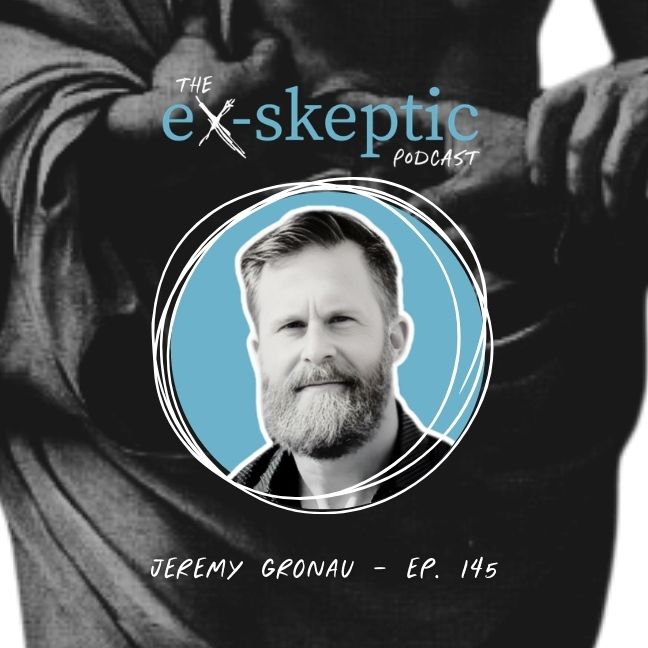
Jeremy Gronau carried those lies for years, formed through trauma, loss, and a lifetime of trying to prove his worth. After growing up without a clear understanding of the gospel, Jeremy built his identity on achievement, strength, and performance, ultimately serving as an Apache helicopter pilot in Afghanistan. But beneath the surface were deeper questions about suffering, identity, and whether God could truly be good. In this conversation, Jeremy shares his journey from shallow, cultural Christianity and skepticism to a life transformed by a personal encounter with God.
🎙️ Love the show? Support the mission and explore eX-skeptic merch here: https://ex-skeptic-shop.fourthwall.com/
Want to support this channel? Tax-deductible donations available here: https://givebutter.com/CB6WoH
C.S. Lewis Institute Summer Academy: https://www.cslewisinstitute.org/?event=global-event-c-s-lewis-institute-summer-academy&event_date=2026-07-12
Guest Bio:
Jeremy Gronau is a former U.S. Army Apache helicopter pilot who served nearly a decade in the military, including a deployment to Afghanistan. After leaving the military due to severe physical injury, Jeremy pursued a Master’s degree in Pastoral Counseling from Liberty University, specializing in crisis and trauma intervention.
He is the founder of Warriors in Christ, a Christian counseling practice dedicated to helping veterans, first responders, and individuals navigate trauma, restore relationships, and discover their God-given purpose.
Jeremy is passionate about helping others experience healing, identity in Christ, and the transforming power of the gospel.
Resources Mentioned:
Jeremy’s Resources:
• Website: Warriors for Christ – https://warriorsinchrist.one
• YouTube Bible study: https://www.youtube.com/@Warriors-In-Christ
Atheists Finding God: https://exskeptic.org/atheistsfindinggod/
Connect with eX-skeptic:
Website: https://exskeptic.org/
Facebook: http://www.facebook.com/exskeptic
Instagram: http://www.instagram.com/exskeptic
Twitter: http://x.com/exskeptic
YouTube: https://www.youtube.com/@exskeptic
Email info: info@exskeptic.org
Chapters
00:00 Jeremy Gronau’s Story
01:15 Introduction
05:13 From Apache Pilot to Christian Counselor
07:17 Losing His Mother at Two Years Old
10:29 Trying to Prove His Worth
12:30 Building an Identity Without God
14:50 Was Christianity Actually True?
16:18 Facing Death as an Apache Pilot
17:58 “God, If You’re Real, Reveal Yourself”
19:15 An Ambush in Afghanistan
22:00 The Prayer God Answered
27:16 Losing His Identity After the Military
29:17 “I’m Going to Lose Everything”
32:00 Reading Matthew Changed His View of Jesus
33:18 The Crash That Nearly Killed His Family
41:21 A Song Before Surgery Changed Everything
42:57 Jeremy Surrenders His Life to Jesus
45:32 The 7:07 Moment He Couldn’t Explain
49:00 What the Cross Really Means
57:05 From Performance to Surrender
58:54 How to Approach Suffering
01:03:08 What Should a Skeptic Do Next?
01:06:40 Being Effective Ambassadors
eX-skeptic transcript
Ep. 145 Jeremy Gronau
May 22, 2026
Jeremy Gronau’s Story
Jeremy Gronau
When I die and they lay me to rest I’m going to go to the place that’s the best, when they lay me down to die, going up to the spirit in the sky and I am thinking, this is probably the worst song to play before somebody goes into a surgery where they may lose their life. I’m like, yes, I don’t know if somebody thinks this is a joke, but this is not a good song to play. And I’m thinking that. And right as I’m thinking that, one of the staff, the doctors that’s in the room, there’s probably 10 people in the room, they’re getting ready for the surgery. And he looks at me right as I’m thinking that, and he says, perfect song for an Apache pilot. I’m like, wow. And it kind of settled my soul there for a second. Really drew my attention back to the song.
I’m going to go to the place that’s the best. Prepare yourself, you know, it’s a must. You got to have a friend in Jesus.
And that’s when I knew this is not a coincidence, that this song came on, that this is divine intervention, that this is my opportunity for grace. A hand out from the Lord above. And I just started to talk to him and pour out my heart for him.
Introduction
Jana Harmon
Hello and welcome to eX-skeptic. I’m your host, Jana Harmon, and I’m so glad you’re here. If you’re new to the podcast, eX-skeptic is a place where we explore the stories and wisdom of former skeptics and atheists, people who have wrestled deeply with the questions of identity, suffering, meaning, and God, and who ultimately found more than they expected in Jesus. This is a space for curious skeptics sorting through their own questions and for Christians wanting to walk wisely with those who are questioning.
As always, you can explore more through our resources. We have 11 curated playlists on our YouTube and our website that follow life’s biggest questions. We also have a conversational AI tool at exskeptic.org that helps you search through questions through real stories and apologetics answering those questions. You can also contact us directly if you want to talk with one of our former guests about your own doubts and questions, email us at info@exskeptic.org and we’ll get you connected.
If you’re skeptical of belief in God or you’re trying to understand someone who is, that might be why you’re drawn to the stories on this podcast. You may be asking yourself why? What actually leads a skeptic or atheist to reconsider belief in God? What does that even look like? Before we started this podcast, I spent several years researching those questions. Through my doctoral study I interviewed 50 former atheists, and through their journeys, I began to see patterns. Patterns of why people resist belief, patterns of what opens them to the possibility of God, and ultimately, why they believed Christianity is true and worth following.
That research became became my book, Atheists Finding God. And those patterns and that research are really what shape the kind of conversations we have here on eX-skeptic. So if you’re drawn to these stories, this book is a way to go a little deeper. Atheist Finding God is now available in paperback wherever books are sold. I hope you’ll pick up a copy and read for yourself how and why atheists change their minds about God and the extraordinary change that can happen.
Today’s conversation centers on something many people experience but rarely name the quiet effort to manage life on your own. Your identity, your pain, your purpose, while also trying to make sense of death, loss, and tragedy without a clear picture of God. My guest, Jeremy Gronau, a former U.S. army Apache combat pilot, knows that tension firsthand. His story touches deeply on the questions we ask about who we are, what makes life meaningful, and how we navigate the moments we can’t control. And woven throughout his journey are the deeper questions that emerge when death and tragedy intersect with a worldview that doesn’t yet have a place for God’s presence, goodness, or grace. Jeremy’s story isn’t one of running from the big questions. It’s a story of trying to carry them, manage them, and solve them on his own until the weight of life and the reality of mortality forced a different kind of honesty.
It’s often at the intersection of life and death, where clarity breaks through, where our assumptions unravel, and where some people begin to see God differently than they expected. Jeremy’s journey is a powerful picture of how God meets us when we’ve run out of ourselves. If you’ve ever felt the pressure to hold your life together without knowing what to do, or coping with suffering or loss, or if you’re walking with someone who is, this conversation may be helpful and encouraging for you. I hope you’ll listen in. Welcome to the eX-skeptic podcast, Jeremy. It’s so great to have you with me today.
Jeremy Gronau
Thanks, Jana. Good to be on.
From Apache Pilot to Christian Counselor
Jana Harmon
Jeremy, you have a wonderful life, a wonderful history, and an amazing work and ministry that you’re doing. Why don’t you introduce us first with a little bit about yourself and the kind of work that you’re passionate about these days.
Jeremy Gronau
Sure. Yeah. So my name is Jeremy Groau, and I started my career shortly after leaving college in the Army. I was a helicopter pilot in the army for just under 10 years. I served as an Apache helicopter pilot, went to Afghanistan, deployed to Afghanistan in 2016 through 2017, left the military, went into software development and a couple of other industries for a little while. But then the Lord led me away from that pursuit and into Christian counseling.
So over the past three years, two years was in my master’s degree program at Liberty University, working on my master’s degree in pastoral counseling, focusing on crisis and trauma intervention. But over the last year, I’ve started my practice, Warriors in Christ, which is a Christian counseling practice that offers Christian counseling to veterans, first responders, and really, really anyone who is seeking a deeper relationship with the Lord or working on the relationship, whether it’s with their spouse or other people in their family, and then figuring out what is the purpose that you’re on this earth. So that’s really what I’m passionate about and what I’ve been focused on over the last year is helping people grow in the Lord, grow in their relationships and walk out their purpose, their divine purpose.
Jana Harmon
You have had quite a life. I’ve listened to your story. There’s a lot to it, and I’d like to get started back in your childhood. Let’s shape the early days. Paint for me a picture of what your early life looked like, whether or not there was any religious belief, any belief in God, what your story in your childhood revolved around.
Losing His Mother at Two Years Old
Jeremy Gronau
Well, that’s a great question. And going back there, I think the first place I like to start is my mother. She had breast cancer, actually, when she was pregnant with me. And so already in the womb, I was battling with an external force that was out of our control, out of my control. And so coming into this world, my mother was battling breast cancer. And unfortunately, she lost her life. When I was just before my second birthday in 1991, she lost her battle to breast cancer. And so I grew up wrestling with the questions about, you know, where is my mom? If there is a God, why would he take this woman from me?
I grew up in a home that I would say if you ask the question if we were Christians, we would all say yes, culturally. But we never went to church. We never talked about Jesus. We didn’t read the Bible and the name of Jesus wasn’t openly discussed. And so I never really, number one, I never understood the Gospel. I didn’t understand the love of God and the love of our Father who is in heaven. And so for me, it was a lot of questioning. I think there was a part of me that really wanted to believe that my mom was in a good place, that she was somewhere good. But I could never figure out how to get there, you know, why she was taken at such an early age.
And so I was, I was really trying to form an identity at an early age of who God was, who I am. What is this world about? Why is there so much trauma? Why is there so much grief at such an early age? You know, at under two years old, you don’t have the verbal capacity to process the trauma at that age as well. So I would say that was kind of the early identity that was forming in me, in the identity of God that I had was questioning the goodness of God and why is there so much suffering, why is there so much chaos in the world and so kind of developing forward. I grew up in my father’s home and I was raised by him and my stepmother. And like I said, it wasn’t a Christian environment. I think they both did the best that they could. They both came from some pretty harsh family environments to begin with for themselves.
And so as far as, you know, parenting strategies and, you know, how to deal with the trauma and the grief, there wasn’t really any, I didn’t really have any coping mechanisms. I didn’t really have a way to talk about it. Fortunately, I did spend quite a bit of time with my mom’s mother, my grandmother, and she was really kind of filled that void that was left from my mother not being there and tried to really communicate as much as possible who my mother was. But it was kind of a double edged sword because the more I knew about her, the more I realized how good she was. I heard great things about her. She was a social worker, she wanted to be a counselor herself. My grandmother was a social worker. She’s been counseling. So I’m actually a third generation counselor.
Trying to Prove His Worth
You know, moving forward throughout, in life, I really started to seek out how do I prove myself to the world, how do I, how do I make a name for myself, so to speak? And I think that’s ultimately what led me to joining the military. When I left home, it was kind of to go prove that I was valuable, to go prove that I was worthy, to go prove that I had the strength to be able to, you know, do something good, do something amazing. And that’s when I joined the military. I had played sports growing up my entire life. And when I went to college, I wasn’t playing collegiate sports, had played through high school, but it wasn’t playing at the Kennesaw State University where I went to school. And I felt like a big part of my life was missing in that being part of a team. I was kind of on my own and wasn’t part of a team. Didn’t really have any stability outside or structure outside of that.
And so I was drawn to the military, the stability. And honestly, there was a part of my childhood of growing up in a little bit of a chaotic environment that seemed familiar for me in joining the military, joining the army, and so going into the military. Fortunately, I got to select aviation as my branch in the army and got to go to flight school at Fort Rucker, Alabama, which was a great experience. Got to meet my wife while I was finishing up flight school there and that was a blessing as well. And then after flight school, I was stationed at Savannah Hunter Army Airfield. And that was again, the beginning stages of this new identity that was starting to form, that I was carrying the weight of the nation on my shoulders in my own mind and kind of proving that I had value and that I can contribute to society.
Building an Identity Without God
Jana Harmon
Can I ask you, was this an identity with God in the picture or without God? And how did that identity, how would you have labeled yourself with regard to your understanding of who God was?
Jeremy Gronau
Yeah, that’s a great question. I would say it was an identity formed without God. I think there were parts of me that believed that I was doing this for God. There were parts of me that believed that this was a way to earn God’s favor. If I went and did these good things, I remember even thinking while I was in Afghanistan, well, you know, if I did lose my life, at least I’d lost my life sacrificing for a nation, sacrificing for something greater, and maybe that would be good enough to get me into heaven.
Jana Harmon
What does it look like to live out your faith in a world that often pulls in the opposite direction? If you’ve ever felt that tension between what you believe and the culture around you, you’re not alone.
This summer take a step back from the noise and get clearer on what it means to follow Jesus in your life. From July 12th through the 16th, just outside Chicago, the C.S. Lewis Institute is hosting its first summer academy. You’ll hear from speakers like Jerry Root, Kevin Vanhuser and Andy Bannister exploring how to think clearly about today’s biggest questions and how to live with conviction and confidence. Registration closes on May 30th. To learn more and to reserve your spot, visit cslewisinstitute.org/resources/summeracademy. We hope to see you there.
So you would have called, you would have still called yourself a Christian even though it was a bit of a remote, more of the cultural understanding of Christianity?
Jeremy Gronau
That’s correct, yeah. I mean on my dog tags I think one year I had Catholic, another year I had Protestant. I had no idea what the difference was. But you know, just put the label on there, identify with it and you’ll be good with God. That was, I don’t know, looking back on it, it’s pretty silly. But yeah, I didn’t really have a solid foundation or, or grasp of what the true gospel is.
Jana Harmon
Okay, but you hadn’t rejected God altogether because of the trauma or the loss of your mom in your life?
Was Christianity Actually True?
Jeremy Gronau
I would say in the military I had not. When I was in college, I was wrestling with the question, is God real? There was a couple of documentaries, there’s a couple of people that I’d spoken with where I think I was a little bit more agnostic. I believe that there was a God, but this, the story of Jesus from a cultural perspective seems silly. This really nice guy who had a baby on his lap and was carrying a lamb. My view of who Jesus was was completely adopted from culture, not anything out of the Bible. And I think I watched the movie by Bill Maher Religious which completely skewed that view even further.
And then I think when I got into the military, I was more confronted with the reality that I could lose my life serving. And so that’s when I started to re approach that question again. Is there a God? And if there is a God, which one out of all the religions is actually true? If one of them is true. And so I think by the time I had left flight school and gotten into my career in the military, I was approaching Christianity with an open mind and less closed off than I was when I was in college.
Jana Harmon
Walk us through what happened to you and your understanding of life and reality as you were facing these very difficult circumstances in the military.
Facing Death as an Apache Pilot
Jeremy Gronau
Yeah, well, number one, aviation is not a light hearted career. It’s especially, flying helicopters is one of the most difficult things that you can do in the military. And unfortunately there are a lot of mishaps, whether due to pilot error, mechanical error or deconfliction. As we’ve seen over the past few years in aviation, it’s it’s pretty high risk. And so as you understand those risks, again, you’re, you’re faced with the reality of I could lose my life in this career path pretty easily. And so I think that was always in the background context, but it had never come to the front of my mind to where I was willing to really deal with it and get to the bottom of the issue.
And so I would say the blessing was I got to deploy to Afghanistan. I got to volunteer and deploy. I was in 317 Cav at Hunter Army Airfield. And it was going there for the first time, flying in a combat environment, seeing combat, seeing, you know, ground to ground fire, ground to air fire, people shooting at me. It was really wrestling with that, that it really forced me on my knees. There’s one time where I had gotten back from a combat mission where, you know, I saw ground forces just literally get evaporated off the earth. And I get back and, you know, your adrenaline’s going, everything’s fine, but then when you come back home and everything starts to dip and you start to lay in your bed and you start to wrestle with, what did I just see? Where did these guys just go? They were here and now they’re gone.
“God, If You’re Real, Reveal Yourself”
I had this nagging, I don’t know if nagging is the right word. I had this urge, this urge that I needed to pray. And I’m wrestling with this. My thought pattern is, I don’t know how to pray. You’ve never prayed. You don’t pray. You’ve never been on your knees and prayed. But then there was another part of me, you need to get on your knees and pray. And fortunately I had submitted to that voice that, that prompting which I know now was the Holy Spirit. But at the time I didn’t, I was like, what is this that’s going on? And finally got on my knees and I, you know, asked God, I said, God, if you are real, can you please reveal yourself to me, whoever you are, I’m open minded. I’m okay with this. I just, I need to know if you’re real or not.
And the other ask that I had is, and if you are real, can you get me home to see my daughter be born? Because at the time my wife was probably about six, seven months pregnant with our daughter, our first daughter, and she was back home in Savannah. And so that was my prayer. I’m on night shift in Afghanistan, so I prayed this prayer probably at 6 in the morning, go to sleep, wake up for a 6pm shift.
An Ambush in Afghanistan
And later that day, we go into the cruise shack, which is where we do our mission briefs and where we prepare for our flight for the day. And one of the guys that just came off of day shift, he said, hey, we saw some strange activity up in this valley to the north. And we think you guys should do a reconnaissance mission up there, because, you know, they were pointing at us, they were flagging us down. They seem to be doing some unusual activity. And honestly, there’s a lot of stuff like that over there. So we didn’t really think much of it. So we prepared and we launched. And we got up in near this valley. And as we enter into it, I see these, what I thought at the time were muzzle flashes in the distance a couple kilometers away.
So I’m talking to my wingman, we start to go into the valley to see if we’re getting shot at. We didn’t see tracer fires, but we saw all these flashes. And we go deeper into the valley. Well, turns out that wasn’t muzzle flashes. It was a strobe light that they had set up to set up a complex air ambush. So they were trying to draw us into this valley. And then there’s probably about four to five different fighting positions that just started opening fire on us. And I see all these, this red tracer fire coming at us. Everything got slow.
And again, it’s that prompting voice that I felt like I needed to quickly break our aircraft to the right to avoid air fire. And I just broke right as hard and as fast as I could in the aircraft. And I’m seeing tracer fire all around us. And we realized quickly that we weren’t going to be able to find these enemy fighting positions. They were pretty dug in. And so we broke contact and went back to base. But that was the first time. This was probably a month or two into the deployment. This is the first time where it was ground to air fire. We’d seen ground to ground fire. But this first time it was directly at my aircraft.
And so, you know, we land, and I’m thinking about, man, I just prayed this prayer a couple of hours ago. And here I am facing life and death for the first time, like, as close as it can possibly get. We searched the aircraft. There wasn’t a single bullet hole in the aircraft to search for, you know, 15, 20 minutes. And, you know, we just high five and check it off. And in my mind, I thought about it, but then wrote it off as a coincidence. And so as the deployment progressed, we, you know, we continued with a pretty kinetic deployment as far as we were facing the Taliban. The Haqqani, the ISIS was in different areas of Afghanistan as well, beginning to form there.
The Prayer God Answered
22:00
And at this time a little bit further in deployment, my wife was eight months pregnant and I get a Red Cross message that my wife is in the hospital, that my mother in law had passed away. But because of the situation with my, my wife being hospitalized because her amniotic fluid got low and the loss of my mother in law, my commander said, hey, you got two weeks, I’m going to send you back home, but we’re going to need you back in two weeks.
So I go home, fly back and I’m with my wife. You know, she’s processing a lot after losing her mother. Fortunately her amniotic fluid came back up and she was in normal ranges. We go to the doctor and we’re coming to the end of the two weeks and the doctor says, hey, legally we can’t induce your wife because she’s 38 weeks. I know you got to go back to Afghanistan next week, but I’m sorry, we’re not going to be able to induce her and you’re not going to be able to be here for the birth of your daughter. And you know, I was glad I got to go home, but I was, you know, pretty disappointed that so close and then I was going to lose that opportunity and you know, God had other plans.
But Hurricane Matthew comes in and cancels all the flights, throws a tree on our home, another tree gets thrown down right next to our home, nearly crushes our house. But we weathered the storm. We actually, my wife and I had to flee in inland because we lived out on Whitmarsh island at the time. We had to go stay at a one of our friends who was deployed house that was more inland to weather out the storm. But after the storm and all the, all the chaos, the piece in the middle of it was that there was no flights out for the next couple of days and we got to go back to the doctor and she was 39 weeks. Just a couple of days before I was going to go back to Afghanistan. So they were able to legally induce her and I was there for the birth of our daughter Cora. And so that prayer that started as a cry for help, a cry for understanding got answered and that was starting to lay the groundwork, I think, from the Lord’s perspective of that his timing is always perfect and he knows what he’s doing.
Jana Harmon
And so you were seeing that as more, more than just coincidence.
Jeremy Gronau
I think that was the first time when, when I, when I saw the fact that, you know, everything had to be in place perfectly for me to be there for my daughter. That was the first time where I started to think maybe there’s somebody on the end of this prayer, maybe there’s somebody listening here that has a little bit more control and authority than I understand.
Jana Harmon
Yeah. And it’s a little ironic though too because you suffered harm at the same time with the, you know, the damage to your house and all the things, but yet you were able to somehow make a connection that this is a good thing.
Jeremy Gronau
Yeah and allowed me to stay and to be there for my wife and my daughter and you actually just connected something for me that I never thought about. The fact that a tree seems to come up periodically throughout my story. So, you know, with the chaos and the understanding of God, the tree fell on her home. And as we’ll get through my story, there’s another encounter with a tree a little bit more disastrous. But, but that was the first time where some destruction happened.
Jana Harmon
Yes. Wow. So at this point then you had prayed that kind of agnostics prayer, God, if you’re real and you didn’t suffer harm in that ground to air attack, no bullet hole in your plane, which is, that’s miraculous honestly. And then you were able to stay there, you know, with another prayer. So you, I guess then you were turning your attention towards God.
Jeremy Gronau
Yes, slowly, I will say slowly.
Jana Harmon
Very slowly. Okay.
Jeremy Gronau
Yeah, I wish I could say that that was enough for me but you know, I had a lot of, a lot of lies that I had believed about God that were hard to get rid of. And so anyways, go back to Afghanistan, finish the deployment, come back and I was in actually pretty severe pain at the time at this point. Career in baseball and football, career in the military, which is not easy at this, I think eight years in at this time, a couple of hard landings and just, I think genetically didn’t have a good neck.
And I started to have my spinal cord being pinched by the time I got back from Afghanistan. Had severe spinal stenosis in both arms, had some radiculopathy and a lot of nerve pain and started to see a physician who basically told me, listen man, if, if you keep flying number one where you’re at now, you need a three disc fusion, but if you keep flying after you have the three disc fusion, you’re probably going to need another fusion above and below the disc. And so he was like, if you can, the best thing that you can do is to stop flying, to take the helmet off.
Losing His Identity After the Military
And so I heeded his advice and decided to let go of the career that I had no plans of letting go of because of my health, because of the pain. And that was another thing that I had to struggle with, with this threat of identity, this identity that I adopted of, you know, I’m an Apache helicopter pilot. I’m here to carry the weight of the world on my shoulders. When I had to let go of that, I didn’t realize how much of that was ingrained in me and how much of that had become my identity. There’s anybody who’s been in the military, there’s a part of you that is so excited to get out of the military your entire career. Like, you dream about that, but at the same time, you don’t think about the consequences that come with taking off the uniform and losing that part of your identity.
And I think everybody wrestles with that, whether I think, you know, anybody who’s been in a career field for a little bit of time. When you step away from that career, it’s who you are, it’s what you’ve adopted as your identity. And stepping away from that, you have to go back to the drawing board of who you are. If you don’t have a foundation in Christ, you know, I think there’s absolutely a way to avoid some of that. But for me, that was the only thing that I was, you know, is what I over 10 years building up to this point.
So 2018 is when I got out of the military and started wrestling with those questions. Who am I? Why am I on this earth? What is my purpose? And I think my wife could tell that I was really searching. Really, really searching. I was at this point where I didn’t know who I was. I kept talking to her about purpose. And she had been a Christian since she was 13, and numerous times tried to get me to go to church with her, but I didn’t want to. I thought, you know, I need to figure out my own way to solve this problem again, because I was alpha male, a type personality, I’ll solve the problem. I don’t need anybody else’s help. I don’t need your pity. But it was my stubbornness and my rebellion that kind of pushed that away.
“I’m Going to Lose Everything”
But I think finally in 2019, I started to see my relationship with my wife and my kids start to be torn apart to the point where I think I was like, I’m going to lose everything if I don’t figure this out quickly. And so I think I heard the gospel message for the first time on Easter of 2019, and I was like, oh, my gosh, I have it completely backwards. It’s not based off of what I can do. It’s what he has already done is what Christ has already done on the cross. And that was really the first time for me that I was like, I have it way wrong. I have it completely backwards. But I still hadn’t. That wasn’t enough for me. I still didn’t give my life to the Lord. I was wrestling with that.
Fortunately, I did take a step further in my faith journey and went to a Bible study at the church that we were going to in Georgia. And coincidentally, my guidance school counselor from high school was the group leader of this Bible study. And so it was pretty cool to have that connection. There was another person that I went to high school with that was there the first day I went to the church, opening the door. So again, little community starting to be formed there. As I’m coming into the church and felt, you know, I think for me, what I was so afraid of going into the church was, there’s no way God can love me. I’m not good enough. I’ve done terrible things in my past, did terrible things to other people. You know, I’ve taken the lives of men on the battlefield. How could a God love me when he has a commandment that thou shall not murder? I’m a murderer. I’ve taken the life of another man and really wrestled with the question of, I mean, if God’s got a scorecard on me, I’ve got a pretty low score, and there’s no way that he would accept me.
So I think that was the biggest resistance. I would never verbalize that, but it was in the back of my mind of, I can’t fit in here. And so, again, it’s that skewed view of what the church is from the outside. You gotta be perfect to go into the church. And the reality is, no, it’s a hospital. You know, anybody who needs a physician is somebody who is sick, not somebody who is well. And so started to lay the groundwork, actually, in this Bible study. The guidance school counselor, he told me, he’s like, I told him a couple of times, I’m like, I have such a hard time reading the Bible. And he’s like, what are you reading? And I was like, well, I start to read from the beginning like you do with every other book. And he’s like, no, man, you got to read from Matthew. You got to go to the gospel first. And I was like, okay, all right.
Reading Matthew Changed His View of Jesus
And so I was on a flight to Montreal for work to Canada, and I read the entire book of Matthew on the flight, and it was earth shattering because this version of Jesus that I had adopted throughout my life in this version of Jesus that’s narrated in the book of Matthew are completely different. The character traits that I saw of this man in the Bible were so beautiful and is somebody that I would aspire to be. I didn’t believe he was God, but I knew that whatever is being described here is somebody that has good character and is somebody worth emulating in the world. These character traits are worth analyzing and adopting and started to wrestle with that a little more.
I think there was a part of me that was wanting to be baptized, and I had even reached out to somebody at the church to be baptized. But again, falling back on the question of what is my family going to think of me if I’m that weird Jesus guy that goes and gets baptized at the time, at 30 years old, I can’t do that in front of this big audience. I can’t do that in front of all these people. They’re going to think that I’m crazy. That was in the back of my mind and kind of talked myself out of fully committing to the Lord and being baptized.
The Crash That Nearly Killed His Family
And so obviously I wasn’t ready because I was still hanging on to that and actually decided to plan a trip to North Carolina with my wife and my kids to go on a ski trip. This is towards the end of 2019, and we go on the ski trip as we’re coming back from the ski trip. This is December 23rd, so this is two days before Christmas. We’re driving home, and my wife loves Christmas ornaments. We drive past this Christmas ornament shop in Marion, North Carolina, and I turn around, go back to the Christmas ornament shop, and there’s thousands of ornaments. It was probably most ornaments I’ve ever seen in a store. And she’s looking around, she walks around, and she picks out this little angel and wrap it up, we get it, and we’re walking back to the car, and she looks at me, she goes, Jeremy, do you want me to drive? And I said, no, I got it.
I get in the driver’s seat, start going down the road. In about five minutes down the road, I start the hydroplane going about 50 miles an hour, 50, 60 miles an hour hydroplane. And it was misting. It wasn’t raining, it was misting. I was driving too fast. I think it was a 45 mile an hour speed limit. Definitely going too fast. With my wife and my kids, I had this attitude, you know, in the military there’s that motto, hurry up and wait. I think I just had the first part nailed down. Right, Hurry up. That was my attitude. Just hurry up, hurry up, hurry up, get to the next place, get to the next thing, do the next task.
And so I’m just rushing home for no reason. Two days before Christmas in hydroplane. And again I start to drift. I can’t try to correct the vehicle. Overcorrect the vehicle. We drift off the side of the road and head on impact with a tree. So another encounter with a tree, but this time to a devastating degree. And we were all crushed in the vehicle. I was completely unconscious. And I’m telling you bits of the story that my wife has told me because I don’t remember some of this, but my wife woke up, she had broken both of her hands. She had glass lacerations all over her body. Body bleeding profusely from the glass shards that were in her. And my son had broken a rib from the seat belt. My daughter, the airbag, side airbag went off and hit her in the head. And she had brain bleeding and a brain injury.
And it just so happened that there was this gentleman that was working at this stone quarry, quality stone, he was working there two days before Christmas, only God knows why, grabbed an axe, broke out the back window of the Chevy Tahoe that we were in and pulled my son out of the car and called the fire department and paramedics came and they quickly got my kids out of the car. They had to use the jaws of life to get my wife and I out of the car. It took them about 20, 30 minutes to pry me out of the vehicle. And I just remember when I finally came to, I remember looking out of the driver’s side window and looking at the paramedic who was giving me assistance and giving first aid to me.
And I woke up and it’s what I call the look of death. He looked at me like, there’s no way this guy’s going to survive. How is this guy even, even alive? And that was really the first time I had stared death right in the face. And fortunately they got me out, they get me to the hospital. My right foot was completely dislocated my tibial plateau. The bottom of my knee joint was shattered in pieces. My left shoulder was broken and separated, collarbone broken, four broken ribs. My scapula was broken, had a collapsed left lung in a brain injury from the airbag as well, or head injury and excruciating pain.
I get to the hospital, the doctor comes to me and he says, hey, listen, I know you have a lot of injuries, but the primary chief concern right now is your tibia. It’s in pieces. We don’t have a doctor here in this facility that can put your leg back together. And that’s where, really, the first time, the weight of this experience started to weigh on me. And not understanding what was going on, I said to him, how long is it going to be before I can run again? I’m a very athletic person. I’ve ran my whole life, played athletics my whole life. And what was on my mind at the time is, when am I going to be able to run again? And he’s like, listen, I don’t think you understand. You’re going to be lucky if we can save your leg and if you’re going to be able to walk again. And that’s when it really hit me of the severity of this situation that I’m in.
And he said, listen, he saw my tattoo on my arm. I have an army tattoo. And he goes, where? Where did you serve? I told him about, I served in the military, served in Afghanistan. Him and I had actually been at the same base in Afghanistan, FOB Shank, at different times. He was a Air Force surgeon prior to his civilian career as a surgeon, and had that briefing connection, which wasn’t random at all. And he looked at me, he says, I know the director of Orthopedic trauma at Grady Memorial Hospital, which is probably the best trauma hospital to go to. I’m going to give her a call. I did some type of schooling with her. I forget which school he went with her, but he had trained with her before. And he said, she’s probably the best person that I know that could actually put your leg back together. Mara Shanker is her name. And so he gives her a call, and fortunately, he got me in a couple weeks to see her.
But as I, you know, progress through this, it was about two weeks, I had to get transferred to three different hospitals. Two weeks in the hospital, finally get to Grady, and I meet the doctor, and we have the surgery scheduled. She comes to me and she’s like, hey, listen, I’m going to do my best to put your leg back together, but this is probably the top five worst tibial fractures that I’ve ever seen. And so I’m preparing you for the worst case scenario. I’m going to do my best to save your leg, but you need to prepare for a pretty severe surgery that we’re going into. And so, again, it’s, you know, I’m just thinking about the fact that I have this huge mountain that I’m about to climb, and I don’t really understand the severity of the situation that I’m in.
So that’s, I would say, throughout this hospital stay is really when I started to cry out to the Lord again. You know, God, forgive me. Look at what I’ve done to my family. I can’t believe, you know, all of these things have happened by my own hand. And really wrestling with the fact of the guilt that I’m carrying for my wife and my kids, you know, what I did to myself, let alone. And the day of the surgery, I’m waiting to go into the operating room. This is early in the morning. And they made sure, like, hey, listen, you. You can’t drink anything. You can’t take any medication, can’t have anything. So I’m just waiting there. At this time, I don’t have anything to hinder the pain. So I’m in excruciating pain and crying out for help. And for some reason, I just had another prompting to take a picture, to take a selfie. And I’m not one to take selfies, but I have this thought in my mind of, you know, this could be the last picture that you ever take. If this surgery doesn’t go well, this is going to be the last image that your kids ever see. And it was heavy on me. I took a picture and put my phone down, and the nurses and the staff, they come back and they say, hey, they’re ready for you in the operating room.
A Song Before Surgery Changed Everything
They wheel me into the operating room, and right as they push me through the doors of the operating room, I notice some song playing in the background right as they push me in. And it’s a familiar song. It’s a classic rock song called Spirit in the Sky by Norman Greenbaum. I’m listening to it. I know the song, and I start to hear the lyrics. And it’s the first time that I really paid attention to the lyrics of the song. I probably heard the song maybe 50 times. It’s the first time I paid attention to the lyrics. When I die and they lay me to rest I’m going to go to the place that’s the best when they lay me down to die Going up to the spirit in the sky. And I am thinking, this is probably the worst song to play before somebody goes into a surgery where they may lose their life. I’m like, I don’t know if somebody thinks this is a joke, but this is not a good song to play.
And I’m thinking that. And right as I’m thinking that, one of the staff, the doctors that’s in the room, there’s probably 10 people in the room, they’re getting ready for the surgery. And he looks at me right as I’m thinking that, and he says, perfect song for an Apache pilot. I’m like, wow. And it kind of settled my soul there for a second and really drew my attention back to the song. I’m going to go to the place that’s the best. Prepare yourself, you know, it’s a must. You got to have a friend in Jesus. And that’s when I knew this is not a coincidence, that this song came on, that this is divine intervention, that this is my opportunity for grace. Hand out from the Lord above.
Jeremy Surrenders His Life to Jesus
And I just started to talk to him and pour out my heart for him and confessed all the terrible things that I had done, the fact that I’d get gotten myself in that situation and that I can’t carry the weight of this anymore. And I said, Lord, if you save my leg, if I wake up from this surgery, I pray that I wake up with Jesus in my heart that I would never be the same and that I give my life to you and I’m going to serve you the rest of my life. If I wake up from this operation and I felt this complete peace come on me right as I’m saying this, just flood of peace. I’m completely sober, no medication, just supernatural peace come into this moment. And I felt the presence of God come upon me.
And right then, this beautiful nurse looks at me. She grabs me by the hand, just holds my hand. They put the gas mask on my face, tell me to count down from 10. Right as I’m counting down, the song is coming to an end. Gonna go to the place that’s the best. And the song comes to an end right as I’m passing out. Last thought I had was, did they rehearse this? Because it was so perfect the moment I entered into the room. The beginning of the song to the moment I’m passing out is the end of the song. And, you know, there’s that beautiful song, Reckless Love. Before I said a word, you were singing over me. And I think that was exactly what was happening. Before I even entered the room, he was singing over me.
You know, there’s a beautiful verse in Zephaniah, says the. The Lord your God is in your midst, a mighty one who will save. He will rejoice over you with gladness, and he will quiet you by his love, and he will exalt over you with loud singing. And I had never read the verse at the time. I would read that later in life. And I was like, that is exactly, exactly what he did. He came and saved me, and he sang over me, and he offered me grace.
The 7:07 Moment He Couldn’t Explain
And so I woke up from the surgery, looked down at the end of the bed, two feet. Best thing I’d ever seen. Waking up seeing two feet at the end of the bed. I was so excited. I knew I had two legs, I had two feet. And is, you know, medications wearing off, pains increasing. But I hear that still voice go, look at that. That picture that you took. And I went and I looked at the picture, and the first thing I saw in the background of the picture was a clock right up above my head. And it said 7:07. And I knew instantly I needed to go to the book of Matthew. And I pulled up chapter seven, verse seven, and I started to read. And it says, ask and it will be given to you. Seek and you will find. Knock and the door will be open to you. For anyone who asks receives. And the one who seeks finds the one who knocks, it will be opened. Which one of you, if your son asked for bread, would give him a stone, or if he asked for a fish, would give him a serpent. Though you are evil, you still know how to give good gifts to your children. How much more will your Heavenly Father give good gifts to those who ask him?
And I just started. I just lost it. Just completely lost it. He answered my prayer. It’s the first time the red letters just came to life. And I knew that he was with me. I knew that I was in his time and everything was going to be okay. I still had a long road ahead, still had a lot of trauma. I had to relearn how to walk. It was four months before I could even start learning how to walk because the bone had to heal. There’s 30 screws, four metal plates, and a steel rod to put my tibia back together like Humpty Dumpty. Took a whole team to put me back together. And fortunately, the Lord showed me grace throughout that whole time. And so, yeah, that was the encounter that changed everything for me.
Jana Harmon
I will say that the theme of the tree. I think there’s a third tree in your story, and that is the tree at Calvary. Because you have mentioned a lot of the word, the gospel, a lot, and your sense of identity and trying to make it on your own. You mentioned that you had absorbed some sense of lie about perhaps who God is, who Jesus is, what the church is, how to be good enough in death. And there were a lot of these presumptions about earning your way, you know, but yet the tree stands, the tree at Calvary where the cross of Christ stands in the middle of your story, the gospel. And you found that beautiful grace and love of God poured out upon you. It took a while for you to reach that point of surrender.
What the Cross Really Means
But thank God for those moments. I’m sure looking back, you can thank God for all of the difficulties in your life because it’s what brought you to the cross. For those who are listening, and they may not have really, you mentioned kind of a little bit about the gospel, but I would to love for you to explain it a little bit more fully for people who are struggling in their own life, wondering about death, wondering what comes next, wondering about their own identity, wondering who Jesus is, how this all kind of comes together. Can you just lay out the gospel for us so that anyone who’s been listening and can see that there’s something different, there’s something special about it, something counterintuitive to our own human instincts sometimes trying to make it on our own. Can you, can you explain the gospel and what the cross really means?
Jeremy Gronau
So I’m going to take us back to an Old Testament story that I feel like connects with my stories in such a beautiful way. If anybody knows the story of David, King David, he was anointed by God. He’s the true first king of Israel, let’s say, although Saul was the first king that the people picked, Saul had a son whose name was Jonathan. And Jonathan was a good man. And I think Jonathan understood the anointing on David’s life, the fact that he killed Goliath, the fact that he had a heart for God, Jonathan, I think, understood that.
And we see in first Samuel as Jonathan comes to this understanding that the kingship is not going to pass down to him from Saul, that is going to be passed to David. He makes a covenant with David, Jonathan makes a covenant with David because usually when a new king takes over and reigns, they will wipe out the line of the previous throne so that no one can make a run, so to speak, at the throne and dethrone them. So in this culture, it would have been right for David to kill Jonathan as a descendant or any descendants of Jonathan, so that no one could take the throne back.
But as we see, David makes a covenant and their souls, it says in the Bible that their souls are tied together. If you go to Second Samuel, I believe it’s chapter nine, where David goes to honor this covenant that he had made with Jonathan, because David loved Jonathan and they were really good friends. Jonathan had died at this point. He died in battle with Saul. But David is ruling over Israel and wanted to honor the covenant that he made with Jonathan. And so he sends out his servants to go look for the descendant of Jonathan. Ziba, I think, is the servant. And I think in this story, Ziba is a representation of the Holy Spirit who is sent out by Jesus to look for the son that would receive this grace. Now the son, Ziba, comes back and says, hey, there is one heir left of Jonathan. Mephibosheth, I think is his name. I could be saying that wrong, but he was a crippled man, yet his feet were crippled.
And Ziba comes back to David, tells him, hey, he’s a crippled man. And David doesn’t care about it and says, I want to bring him back and I want to honor him at my table. And so the servant comes back with Mephibosheth, and Mephibosheth just lays at the feet thinking that he’s going to receive judgment. Here’s my time. I would imagine he’s thinking, here’s the time that David is going to fully destroy the line of Saul and I’m going to be wiped out. And he goes before the king, and the king actually offers him grace and says, I’m going to give you a seat at my table, and I’m going to give you the land that was Saul’s, and your descendants are going to inherit this land, and you will always have a seat at my table.
Here’s the beautiful imagery, is a king’s table has beautiful linen covering it. And when the crippled man comes up to the table and is seated at the table, his crippledness is covered by the linen, by the garment, okay? And so he is equal to the brothers at this table, though he’s not equal to the king. He always has a seat at the table and his crippledness is covered. And I I read that for the first time, and it just blew my mind. That that was what is extended to me in that hospital bed, was the Lord had extended mercy to cover my sin, to cover my crippledness, to cover my barrenness, that he offered me a seat at the king’s table.
That, to me, is the true gospel. When God the Father looks at the cross and he brought judgment and wrath and justice upon the cross, he sees us. And when he looks at us, he sees the righteous covering around us of His Son. And he sees our Son when He looks at those who believe in His Son, in the covering that was offered. And so nobody earned that garment that Christ wore. Nobody earned that righteousness that he deserved. But it is a gift, a gift of mercy, a gift of grace that is extended to us. When God the Father looks at us, he sees the covering of Jesus. And that is what is extended to us. Not by anything we did, but just because we put the covering of our righteous brother upon us. And now we stand before God in boldness, knowing that we’re wearing the covering of Christ and that our deeds and our sins and everything that we’ve done wrong is covered by the linen. That, to me, is the best explanation of the gospel.
Jana Harmon
Yeah, that’s beautiful. That invitation to come to the king’s table is for everyone. It’s for everyone who will receive, who will come and receive like you did.
Jeremy Gronau
Yes.
Jana Harmon
And I’m thinking about your story and how you’re a man’s man and you had suffered greatly the loss of your mother from the very beginning. You’re tough, you’re resilient. You were going to make it on your own. Your identity was wrapped up in the things that you could do and who you could be. And being the Apache pilot, which is honestly, from all human standards, quite impressive, you know, that is quite an identity to hold.
But that was not enough right to solve a lot of brokenness and to remedy the question of death and identity. All the big questions. But yet here you are. You’re still a man’s man, but you’re a man of God first and foremost. And I wondered how those larger questions are, in a sense, resolved or fulfilled as you sit here now being wrapped in the robes of righteousness, you know, cleansed, made pure, made whole in Christ, made a new creation in Christ. Can you talk a little bit about how your perspective has changed? All those things that you struggled with so much through so many years until you finally surrendered?
From Performance to Surrender
Jeremy Gronau
Well, I’ll say this. I would say my worldview couldn’t be any different from a performance based mentality to a surrender that has already been accomplished. I mean, I still have days where I feel like I need to do more, I’m not doing enough. And everything in my story has shown me that anytime I get back in the place of I need to do more, I need to figure this out, I go back to that place in the hospital and I remember that I brought nothing to this. I’m the crippled man that sat on the bed and just received the gift. So all of our striving, all of our wanting to put the pieces together, all of our wanting to make a name for ourself, I draw back to that moment in the hospital and just remember that it’s all in God’s hands. When I die and they lay me to rest, I’m going to go to the place that’s the best because of Jesus, not because of anything that I’ve done.
Jana Harmon
And one more I think very difficult question, and that is how you started your story, and that was with the loss of your mom at a such a early age. I mean, even while she was pregnant with you, she was battling cancer. And the question that’s so common is how could there be a God, a good God, and allow these things to happen? And you’ve seen a lot of loss, not only, you know, and a lot of tragedy through your own family, through your time in the military, some of which you haven’t even talked about, that I’m aware of. I mean, just incredible loss with friends and whatnot. How can we reconcile the difficulties of loss and tragedy with a good God who’s there and who cares?
How to Approach Suffering
Jeremy Gronau
That’s such a big question and such an important question. I’m glad you asked it. Number one. I think a good place to start is, I think it’s fair to assume in how we approach suffering that we don’t see the full picture. And so anytime we get to a place where we think we’ve seen the full picture, I think that tells us we’re in a state of pride. Okay, so let me go into the story a little bit. God in his love and his grace, decided before time that it was better to give us a choice, free will and a choice than to make us robots who just have to obey. Right? And so for him, from his perspective, the fact that he even gave us free will to begin with is kind of astounding. Because if he is good, he understood that there were going to be ramifications and there were going to be consequences of giving us the option of free will.
And the reason I think he gave us free will is because I don’t think you can force love. I think it has to be a choice. I think we have to be able to choose. Otherwise that’s slavery. Otherwise that’s a ruler saying, you must obey me. And so the fact that God even gives us a choice to begin with is amazing to think about that he, in his love, gives us the option to choose him, so it can’t be forced.
The second point I would go to is the fact that I’ve examined a lot of different religions. I don’t see any other religion where the Creator or the God leaves his kingdom, leaves his riches, and comes down into a body and suffers with us, joins us in that suffering. And we see at the beginning of the Bible when the Spirit is hovering over the chaos, it’s almost as if God is drawn to our chaos, is drawn to our disorder to bring about a reordering, you know.
And so I think those are the two points that I like to start from, at least in counseling. Now, it doesn’t justify ever. Every suffering experience that we go through, but if we can go back to the fact that we know God loves us, he’s given us free will and he’s joined us in the suffering. And so if we can take a moment to understand that first, maybe we can look at our suffering through his eyes, through the lens of his eyes and ask him, Lord, what do you want me to know about this? What do you want me to do with this experience? What are you trying to teach me through this? What can I gather? What can I learn from this? How can I adopt your character, the character of Jesus in the midst of his suffering? He never disobeyed you, he never sinned. He never cursed your name. Yes, he struggled. Yes, he wept in the garden and sweat and cried out to God and wanted a different way, pleading for another way. But he was obedient.
And I think the temptation of the enemy, it’s the same temptation that he offers to everybody, which is a shortcut through the suffering. And I think that’s honestly the challenge we all face is do we want the shortcut or do we want to be obedient to what God has called us to? And there’s different levels of suffering, and there’s sometimes that, man, it just doesn’t make sense. And maybe it won’t make sense here, but we have to submit to God, resist the devil, and then he flees as we see in that picture, Jesus does that perfectly. He submits to God each time time resist the devil and then he flees.
And then ministering angels come to Jesus right after that to minister to him. And I think the same is held true with us when we walk through those desert periods. God is with us, the Spirit is hovering over us and he’s sending his ministering angels to guard us during that time period. More so when than when the times are good, He draws near to the brokenhearted and those who are suffering and in pain.
What Should a Skeptic Do Next?
Jana Harmon
That’s a beautiful response and I’m sure reflecting on your own life, you are grateful for the tragedy that he’s brought you in and through because you wouldn’t be sitting here as this man of God with wisdom and compassion, no doubt for the suffering. As we’re closing, Jeremy, you are a counselor again, a man of wisdom. And there are those who are listening, who are curious, skeptical, but curious enough to move in the direction of God. And I wondered how you would advise someone like that to make a step or take a step forward. Would it be to pray that agnostics prayer. Would it be to open the Bible?
You actually were willing to go to church when you said you believed a lot of lies about God and church and Jesus. And those lies started falling once you actually entered into the experience of it or you know, when you opened yourself perhaps to the possibility of it being something different or better or more. And how would you encourage someone to take a step forward?
Jeremy Gronau
Well, that’s a great question. And I think as you alluded to, my journey wasn’t overnight. It was a lot of revelation. Honestly, looking back on it, it’s so silly to me that I didn’t do it earlier, but I think that’s the reality of faith. When you look at the, when you look at the apostles, when you look at the disciples, there’s not really a point in time where you can point to you and say, now they’re a believer. Yes. You know, Peter himself confesses that Jesus is the Messiah and you know, he’s acknowledged for that. But there’s not really a point in their walk where you can say ah, right there. That’s the time when they fully believed.
And you know, I would say this. God meets you where you’re at. What is the one step? Maybe you don’t have to jump in the pool today, but maybe you can take a little bit of a step towards the edge. Maybe you’re 20ft back from the pool. Is there one step that you can take today, for me, you know, at different moments throughout my, my life, there was, there was an opportunity to take a step towards him. He didn’t ask me the very first time to just fully jump in. There was these little encounters over years that finally led to me surrendering my life.
And I think a lot of people are like that. And so I would say, ask the Lord, what step of obedience, what step can I take towards you today, whether it’s a prayer, whether it’s reading the Bible, whether it’s joining a Bible study, whether it’s reaching out to a counselor, whether it’s crying out for help from a hospital bed, whatever it is, take that step, take another step, keep enduring, keep moving towards the Lord. And every time you take that step, he’s faithful. You can’t out surrender God and just take little steps. That’s okay, you know, follow the breadcrumbs and eventually you’ll get to the promised land.
Being Effective Ambassadors
Jana Harmon
You’ve kind of alluded, I think, to some advice to some Christians or to Christians who are really wanting to encourage people along in their own spiritual journey because we’ve all been in that place of need and need to surrender that sense of resistance. And sometimes that just doesn’t go away. But we want to be effective ambassadors for Christ. And I think sometimes we do have this misconception, oh, if I just say the right words, you know, they’ll come, become a Christian on the spot. And that absolutely doesn’t happen.
And somebody’s going, whoa, you know, hey like you say, hey, I’m 20ft from the pool. I don’t even, you know, I don’t even want to put my toe in to see if it’s warm or not. So patience, I think, is probably something that Christians could probably learn from your story or your wisdom. But how else can we counsel Christians in terms of engaging with, with those who may or may not be looking towards Jesus?
Jeremy Gronau
Well, I think an interesting question, right, most people think about as Christians, what did Jesus do? And let me just emulate what he did. I think that’s a great place to start. But if you want to take it a level further, a question you could ask is, how did Jesus know what to do? How did he know what to do? Because he didn’t do the same thing every time, right? He spat on the mud and put it on somebody’s eyes and they were blind from birth. And then they saw he did it differently, a different time.
And so I don’t think there’s a cookie cutter formula that we should follow when it comes to evangelism. Sharing the gospel, sharing our testimony, sharing our faith. I think we really have to yield to the Spirit. And we have to ask Holy Spirit, where are you working in this person’s life? Where are you tilling up the rocks? Where are you gardening, master gardener? How can I join you in this field that you’re already working in? Because the reality is you don’t need me working in this garden. You invited me to work in this garden with you. So how do I yield to you?
And I think another hurdle that maybe Christians wrestle with, and I wrestled with this too at first, was I don’t know enough. I don’t know enough about Jesus. I don’t know enough about the Bible. But man, if there’s anything that my story has told me, if you look at the Book of Acts, Jesus doesn’t call us to be theologians. He calls us to be witnesses to Jerusalem, Judea, Samaria, into the ends of the earth. And that, that is enough. You don’t have to be, you don’t have to memorize the entire Bible. You don’t have to know everything about that. But you can ask the Lord, what is it about my story that you as the author and the finisher of my faith, what is the story that you are trying to tell? And how do I share that in a way that gets other people to think about their own stories?
Because God is a great author and he’s writing a story differently for everybody’s life. And at the same time, your story is intertwined with every other Christian. And you may read the Bible and you’ll see different characters in the Bible and your story in their story. And you may resonate with this character or this character, but the reality is he’s given everybody a testimony. And we’re called to share that testimony, whether we know a lot about the Bible or a little. And I think that God can use in a way, mightier way than we can ever understand or expect.
Jana Harmon
Like you said, you don’t do anything half hearted. You have taken on your role and responsibility as a man of God and you’re sitting there. I love the name of your ministry, Warriors in Christ. You are a man of God who is contending for the faith, but you’re doing it with such love and such grace. And it’s obvious that the experience of God in your life and through your life has made you this very wholly formed, not only wholly W H O L L Y but holy H O L Y formed man in such a short period of time. I believe you said it’s been seven years. What an amazing transformation in such a short period of time. It really speaks to the seriousness of your faith and that when you gave your life to Christ, it was all, you know, it was everything.
And I know that people listening, if they’re curious about God or what a true witness of God or, you know, we do believe lies about who Christians are, what the Bible is, what the church is, we have false conceptions about Jesus or God. But anybody who has sat and listened to your story, honestly, some of those stereotypes and caricatures have gotten to be broken down because you are sitting there presenting an authentic view of faith, someone who’s actually really surrendered in spite of great pain and difficulty, even because of it. You’re sitting there as this beautiful witness for God. And I just want to thank you for coming on and inspiring, hopefully, Lord willing, seekers and Christians alike. So thank you so much, Jeremy, for coming and sharing your story.
Jeremy Gronau
Absolutely. Thank you for the invitation on your podcast. Love what you’re doing, and I pray that the Lord would continue to use you in a mighty way and use this podcast in a mighty way to share other testimonies because I know there’s so many powerful testimonies on here. So thank you for surrendering your life to the will of the Lord and allowing a platform, your platform, to be a place where people come, could come and witness and share their testimonies of the Lord. So I’m honored to be on here and thank you, Jana, for everything that you’ve done and what you’re still doing. So it’s been an honor and it’s been a pleasure to be on your podcast.
Jana Harmon
Thanks for joining me today for this conversation with Jeremy. His story is a powerful reminder that many people, maybe even you, carry quiet, unspoken lies about God, Jesus and the church. Lies formed through pain, misunderstanding, or simply never having heard the real story. But as we’ve heard in Jeremy’s story, everything changed when he finally opened himself up to see and experience the truth. And the truth didn’t just shift his thinking, it reshaped his identity, his relationship, relationships, and the entire trajectory of his life. If you find yourself wrestling with your own assumptions about God or if someone you love is navigating those questions, I hope this journey encourages you towards deeper honesty and openness.
Take a look at Jeremy’s ministry at Warriors in Christ, where he helps people find their way or participate in his Bible study streamed on YouTube. We’ll include those links in the show notes. If this podcast encourages you or someone you love, please consider making a donation. Your support helps us share more stories and offer more resources to those who are questioning or seeking.
We hope you’ll leave a review or rating because it helps others discover the the podcast and gives us the opportunity to reach more curious skeptics around the world and share this episode. If someone came to mind as you listened today, send it their way. You’ll never know how a story might meet someone right where they are. Reach out anytime. You can contact us at info@exskeptic.org we love hearing from our listeners, whether you’re exploring faith, wrestling with questions, or wanting to connect with their former guest.
eX-skeptic is a podcast of the C.S. lewis Institute and we’re grateful for the opportunity to bring these stories to you. Special thanks to our producer Ashley Kelfer for her work behind the scenes. Thanks again for being with us. We hope to see you again next time when we’ll hear another unlikely story of belief.