
What happens when a brilliant researcher, once convinced God was nothing more than a cultural artifact, decides to take a second look?
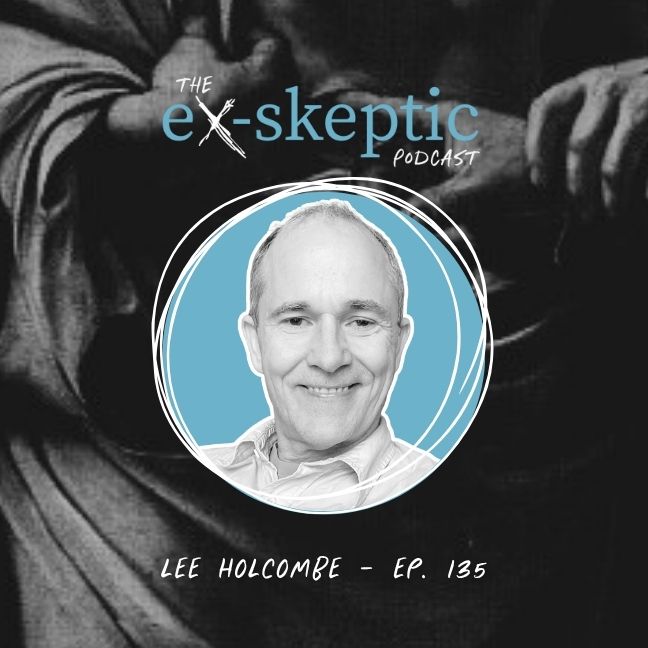
In this episode of eX-skeptic, Dr. Lee Holcombe shares his remarkable journey from faith in childhood, through skepticism and intellectual dismissal of Christianity, to a surprising return to Christ. With a career spanning electrical engineering, education policy, and high-level research, Lee applied his analytical skills to life’s biggest questions. His pursuit of truth took him from Alaska to Morocco, Harvard to Texas, and ultimately to unexpected encounters with God through both reason and experience.
In this conversation, we explore:
- How childhood faith gave way to skepticism and intellectual rejection of God
- The role of the Peace Corps, education, and tragedy in shaping his worldview
- Why near-death experiences, philosophy, and cosmology opened him to the possibility of God
- Powerful dreams that challenged his materialism and drew him to Christ
- How God is now using his expertise in education and data-driven strategy in global missions
If you’ve ever wondered whether faith can hold up under the weight of tough questions—or whether God still meets skeptics on the path of truth—Lee’s story will encourage and challenge you.
Visit exskeptic.org for curated playlists on science, suffering, meaning, and God’s reality, along with resources from past guests.
Guest Bio:
Dr. Lee Holcombe is a researcher, educator, and missionary whose career spans engineering, education policy, and international missions. After earning his undergraduate degree in electrical engineering from Rice University, he worked on advanced defense technology before serving in the Peace Corps in Morocco. He went on to earn a doctorate in education from Harvard and served in leadership and research roles at the University of Texas and Texas Higher Education Agency, bridging the worlds of research and policy.
Resources Mentioned:
America’s Christian Credit Union (ACCU): https://americaschristiancu.com/Jana/
Gary Habermas – Minimal Facts Argument for the Resurrection
C.S. Lewis Institute – cslewisinstitute.org
Research on near-death experiences (University of Virginia Division of Perceptual Studies)
Lee’s recommended resources:
• William Lane Craig on the Kalam Cosmological Argument
• Thomas Nagel, Mind and Cosmos
Connect with eX-skeptic:
Website: https://exskeptic.org/
Facebook: http://www.facebook.com/exskeptic
Instagram: http://www.instagram.com/exskeptic
Twitter: http://x.com/exskeptic
YouTube: https://www.youtube.com/@exskeptic
Email info: info@exskeptic.org
Episode Transcript
Lee Holcombe
00:00 – 00:38
I’m in this with a sincere heart, and I’m really trying to get to the bottom of this. So I guess that’s what I’m going to do. So I did pray. I prayed it. I don’t know. This is the silliest thing I’ve ever done as an adult, you know, because I put Jesus with Santa decades ago. In my mind, he was as real as Santa, right? And so I felt like I was, might as well have been praying to Santa. But, you know, if you’re there, you need to show me you’re there. Otherwise I’m going to die an atheist. And I mean that.
Jana Harmon
00:45 – 03:29
Hello and welcome to eX-skeptic, where we explore unlikely stories of belief. It’s for curious skeptics and thoughtful Christians who want to take steps truth seriously. I’m your host, Jana Harmon. Have you ever found yourself wondering if the version of God or faith you grew up with was too small, too narrow to make sense of the real world? Maybe you’ve stepped away, chasing bigger ideas through education, work, or life experience. Perhaps you’ve even dismissed Christianity as nothing more than a cultural artifact. Today, you’ll hear from someone who did exactly that. Dr. Lee Holcomb was an accomplished researcher, moving in elite intellectual circles, confident that God was unnecessary to explain life. But then he turned his research expertise towards the question of God itself. Could truth really point in that direction? Would the evidence be strong enough to change his mind? In this conversation, we’ll follow Lee”s journey from reporting to the Pentagon to the Peace Corps in North Africa, from a Harvard PhD to the LBJ School of Public Policy, and back to the question he thought he’d left behind. As you listen, perhaps ask yourself, what would it take for you to pursue truth wherever it might lead? Could there be more to life than meets the eye? I hope you’ll come listen to his story. You may find that some of the questions he asked about God are yours as well. In a world where money often feels disconnected from meaning, it’s refreshing to find a place where your savings can actually reflect your faith and values. That’s why I want to share an opportunity with America’s Christian Credit Union. Right now, new members can lock in the nation’s top 12 month certificate rate, 4.75% APY on deposits up to $1 million. And you can get started with as little as $1,000. It’s called a term share certificate, and it’s a safe and secure way to grow your savings. But here’s what makes it so Much more than a financial product. Your money doesn’t just sit in an account. It helps fund Christian schools, strengthen churches, support adoptions and uplift pregnancy centers. Real lives, real families, real faith in action, all while your savings grows. This isn’t just banking. It’s stewardship, it’s impact. But it’s only available for a limited time, so don’t wait. Visit AmericasChristiancu.com/Jana to lock in your rate today. America’s Christian Credit Union is federally insured by the NCUA.
Speaker 2
03:31 – 03:34
Welcome to eX-skeptic, Lee. It’s so great for you to be with me today.
Lee Holcombe
03:34 – 03:36
It’s just real pleasure to be here. Thank you so much.
Jana Harmon
03:37 – 03:50
Wonderful. I’d love to know a little bit more about you. Can you tell us some of your work, your history of education, some of your passions, maybe even where you live?
Lee Holcombe
03:50 – 07:28
Well, yeah. So I’m here in Austin. I have worked at UT Austin, LBJ School before in and so I’ll let me go ahead and start from the beginning, though. I got my undergraduate degree in electrical engineering from Rice University and I went to work for doing. I was an electronic warfare engineer for the F16 and F22 fighter planes. Coming out of that and then, and then I just had sort of a major change of focus in my world and decided I was too young to be doing something like that, working at a desk. I had an actually very, very interesting job, would go to the Pentagon on regular occasions and you know, it was actually very sort of exciting to talk about. But at the time I thought I was just too young for that. So I decided to do something really adventurous after a couple years on doing that job and I joined the Peace Corps and I went to Morocco and I spent two years in Morocco, came back and decided I wanted to get into education and I wanted to get an education because I felt like that was where micro and macro development met. And so I started teaching in a very difficult and challenging high school, was widely considered one of the most challenging high schools in the state of Texas and did that for a few years. And then I decided I wanted to go on and get my advanced degrees. So, I got my doctorate in education from Harvard Graduate School of education in 2002 and then went from there to working at the LBJ School of Public Policy at UT Austin and worked in education and education in the workforce, relating the two. One of the things I really focused in on when I was at Harvard was the economics of education. I’d always been sort of quantitative guy, sort of a left brain quantitative person. And so that was sort of a natural fit for me. And then I, after a few years at the LBJ School, I went to work at UT Dallas and I worked at the Green Center under Dr. Kane. So, I worked as assistant director under him. And then I came back to Austin to work at the Texas Higher Education Agency. I was the bridge between research and policy and, and the expansion coefficients on either side of those were very, very different. And it was kind of oftentimes stretched me and not so pleasant ways. But, and then I came back to Christ and I did all that in most of my adult career as a non-believer, even though I was raised Christian. But I came back to Christ and then Christ called me into the mission field and that’s what I’m doing now.
Jana Harmon
07:29 – 08:09
Okay. Okay. Wow. There’s a lot there. You obviously are someone of a brilliant mind who is very comfortable with intellectual ideas. You’re sitting there as someone who calls himself a Christian enough to be on mission for Christ. So I’m very curious about your journeying especially. It sounds like it was not always that way, that you had wandered away from what faith you grew up with. So why don’t we start there. Why don’t you tell me about your home and the kind of faith that inhabited your home or your family life as you were growing up.
Lee Holcombe
08:10 – 10:15
Well, I was raised by a single mother. My mom was an amazing woman, very strong Christian, dedicated Christian. She was an educator, she was a teacher. So I gave my life to Christ as an 11 year old and was quite genuine and sincere about it all the way through college. Now, you know, I did have epics of rebellion in there. I never had a crisis of faith in my youth. After I accepted Christ when I was 11, I did have in a, periods in a time when there was, it might have been difficult to know that I was a Christian based upon my behavior, but I always took it seriously that whole time. And, and then I graduated from college and I kind of had time for God after college. Right. And got really involved in a church. And then I guess a couple years after I graduated I went on a, on a trip, on a vacation to Alaska in which I spent basically two weeks in the middle of nowhere in Alaska. And this is a place where no human had been for 11 years prior. Right. So we were, I was very, I was out there in the middle of nowhere and really that was my first sort of visceral experience of God in nature. And that was so different than my experiences as a Christian in church and youth and now, you know, in church, it was so different. I began to question whether or not they were the same thing.
Jana Harmon
10:15 – 10:30
When, when you were growing up, was it a presumed belief? Like, you didn’t question it. This was the form and the way, the function of religion and belief. And this is what it looked like and this is what it felt like.
Lee Holcombe
10:31 – 12:01
I think there was a couple of different factors going on there. Number one, the people who I respected most of my life were Christians. So it was like, you know, I wanted to emulate them. And number two, there was a bit of chaos in my upbringing. And so, you know, my attachment to God I think was a way to sort of steer through the chaos. Right. And so, and even though I was genuine in my faith, it never was really sort of intellectually my own. Right. I never really entertained any sort of questions that I might have had at the time seriously. Right until after I got back from that two week exposure to the beauty of nature and the power and the awesomeness of nature is when I started really asking questions. The typical questions, you know, I mean, sovereignty of God and, you know, questions about, you know, the problem of evil and, and exclusivity, you know, justice issues and that sort of thing. And so that I just needed to sort of take a time out in life and I decided to go into the Peace Corps.
Jana Harmon
12:02 – 12:17
Can I pause for just a moment? It’s interesting to me that you had this enormous experience in nature and somehow it didn’t enhance your belief in God so much as cause you to question it. Why do you suppose that was?
Lee Holcombe
12:22 – 13:14
I think they just, they were just, even though I had, you know, genuine experiences of, of feeling, you know, the Holy Spirit while I was at church, just that, all that seems so superficial after I returned. Like they’re trying to like put God in a box. And the God that, whatever I experienced, whatever I experienced in Alaska, it was just, it was really beyond description. And it was beyond the inability the human to try to put in a box. And I think I resented that box. And I resented it so much that I felt like it was trying. It had turned into something different.
Jana Harmon
13:14 – 13:32
If that was God, you know, God was so big and so grand and so majestic in terms of what you experienced. And this was, seeming so like you say, superficial kind of small, synthetic, small yeah, yeah, yeah. So if you were trying to figure out whether or not it was even the same God.
Lee Holcombe
13:32 – 14:28
Yeah. It just raised all these questions, you know, about the formality of the theology. It was a Baptist church. I was raised Baptist, Southern Baptist, I remember. I just so happened to catch a small booklet by Thomas Merton, the father as a Catholic theologian. And he was very much about beauty and sort of the phenomenology of spirituality. Right. And it really resonated with me. And just so all that just seems so different than what I experienced in the church. And so I think that was just my impetus to sort of, like I said, call timeout and go off and do something completely different. And so that was the Peace Corps.
Jana Harmon
14:28 – 14:32
The Peace Corps, yeah. That’s pretty dramatic shift from an engineering degree.
Lee Holcombe
14:33 – 14:36
I call it my shift from the War Corps to the Peace Corps.
Jana Harmon
14:36 – 14:38
Right, okay. Okay.
Lee Holcombe
14:38 – 15:02
And I. And I say that really sort of tongue in cheek, and I, you know, I understand the need for the defense industry. I, you know, the world is, we have to have a defense industry. So I don’t want to come across as someone who’s debasing the need for a defense industry. But it was just my personal journey decided that really wasn’t for me anymore.
Jana Harmon
15:03 – 15:17
So you felt like you were longing for something different, a different kind of experience, something that was more satisfying or just more adventurous. It sounds like going to Morocco with the Peace Corps is quite a different life.
Lee Holcombe
15:18 – 16:12
I think, you know, I’m a bit, I do like adventure, and so I think that, you know, sort of ticked that box, and I think that, you know, a big part of the sort of the yearning was I just had these deep questions that were fresh in my mind and deep in my heart. And, you know, the conversations I was having with the people that I respected religiously, spiritually, in my church were very unsatisfying. They were very unqualified to answer my questions. And so I started wondering about, you know, why is it these people who seem to be so learned and so in constant in their walk with Christ, they’re so unprepared to respond to my questions.
Jana Harmon
16:13 – 16:18
Were they the questions of the sovereignty of God or of exclusivity or the problem of evil like you discussed earlier.
Lee Holcombe
16:19 – 16:28
The typical kind of typical questions that erupt when you start having questions about your own faith.
Jana Harmon
16:28 – 16:45
Yes. Yeah. Okay. And they seemed inept at the time. So you went on a journey. What was that experience like? And what did you find in terms of religion or answering your questions, or did it deepen the questions or confuse or enlighten or clarify?
Lee Holcombe
16:45 – 16:55
I think over the two years, I’d become comfortable with my sort of intellectual apostasy from Christianity.
Jana Harmon
16:57 – 16:57
Right.
Lee Holcombe
16:57 – 18:00
I just decided, okay, you know, this, this just isn’t for me. It doesn’t make any sense. I, and really, I mean, I just decided religion in general doesn’t make any sense, you know, because, you know, as dogmatic as the Muslims were about their religion, you know, obviously a lot of the same questions of justice and well, not really the same questions of justice, but the same questions of exclusivity, etc, you know, apply to Islam as much as it applies to Christianity. Right. And so, you know, just, I chalked it up to, you know, I guess some of the, you know, the neo-atheists would refer to as, you know, just, you know, you accept the religious dogma of your upbringing, and it’s as simple as that. And it’s just a cultural artifact. Right. So I subsumed the spirituality to a cultural artifact and nothing more.
Jana Harmon
18:01 – 18:26
So. Yeah. So you left Christianity behind. You really did. So the questions that you had then, I’m curious, with the profound experience that you had in Alaska, did you still think, well, is there something more? Because that was so grand and majestic, or but you said that you dismissed religion really basically altogether. So, how did that tension play out?
Lee Holcombe
18:26 – 19:27
I think that I, so I think I felt betrayed by Christianity. Right. And so my sort of anger at that betrayal, you know, my two years in the Peace Corps were, you know, basically I was licensed to live for myself for the first time, because as a Christian, you’re not living for yourself, you’re living for Jesus. Right. So it’s okay. It’s a license to be selfish. Right. And so, okay, being selfish was, is a lot more fun in the short run. And I was young, I was around a lot of other people, young, youth, young Americans in the Peace Corps who were of the same mind. And so that was part of the, you know, a cultural artifact of the Peace Corps experience. And so that was part of my experience as well.
Jana Harmon
19:29 – 19:40
Betrayal is a strong word. Did you feel like you were duped into something that wasn’t true? Is that the sense of betrayal?
Lee Holcombe
19:40 – 20:19
Yeah. You know, this is something that people do. Again, it’s a cultural artifact. Right. Which is something very different than truth. And so, you know, here I was raised in this, you know, cultural artifact where, you know, now that I got some distance from that cultural artifact and a very different existence, it’s, you know, it’s just not true. And I felt betrayed by that. Right. And, anger, angry at myself for being duped by it.
Jana Harmon
20:20 – 20:30
So you mentioned the neo-atheists or the New Atheists. Did you, did you adopt that kind of mentality or philosophy around that time?
Lee Holcombe
20:31 – 20:58
Well, this was before the, you know, the New Atheists became a thing. This is just sort of my thinking. Right. And so when the New Atheists came down the pipeline at the time, I’m like, yeah, I think they’re all pretty much spot on. That was sort of pointing me in further the direction of atheism. When the neo, when the New Atheists came out.
Jana Harmon
21:00 – 21:05
You found a worldview that sounded like home for you in terms of your intellectual thinking.
Lee Holcombe
21:06 – 21:38
Yeah, yeah. And, you know, it’s very difficult, you know, I’m sure for people who are listening to this, it’s very difficult to walk away from God. That’s a very difficult decision. It’s painful and there’s a lot of work you have to go through. Right. And so I think that’s what happened during those two years. It gave me the distance needed in order to sort of walk away from the whole idea of God, theism in general.
Jana Harmon
21:38 – 22:06
Yeah, I’m sure. I, actually just read a book on walking away, deconstructing, and it sounds like it’s, it’s extremely difficult, actually. It’s all you’ve known, it’s the people, you know, it’s the ideas you’ve embraced. It was your home and you left it behind. It’s not only intellectual, it’s experiential, emotional, social. It’s all that. So I can imagine. Yes.
Lee Holcombe
22:07 – 23:41
One of the ways I describe my Peace Corps experience is a rebirth. Right. And I, and I, I, I talk about that mostly culturally. Right. Because you really are. I mean, you know, one day, you know, we’re in DFW airport, and the next day, you know, you’re in a completely different land. Everything is foreign. You don’t know anybody, you can’t understand a word anybody’s saying. Everybody looks different, everything smells different. Right. And, you know, especially when I went off, you know, into my village after my training, I was the only American in the village. And you don’t know anybody. You hardly can speak the language, you know, and it’s just a rebirth. And because everything that you’ve known, everything, everybody that you’ve known are gone. And it’s basically, you have to recreate your life. And I think part of that ethos, interestingly, you know, was I used sort of the Christian, you know, being born again. I was born again and in a sort of a bigger sense of the word. Broader. Not bigger, a broader sense of the word culturally. And part of that being born again was into leaving Christianity into atheism.
Jana Harmon
23:41 – 24:32
So you entered into this, or you left kind of this God in a small box behind, and you were born into this new way of living, of thinking about reality, into this grander view. I would imagine you would, it would be somewhat enlightening to you to move beyond this kind of small religious box into you were a citizen of the world. You had experienced and lived outside of even the United States, and you were encountering other ideas, not only religious ideas, which you dismissed as a cultural artifact, but also ideas beyond religion. So talk with me about what your life then was like, living in this time and space, it sounds like, for quite an extended time, without any kind of faith or religious belief.
Lee Holcombe
24:33 – 24:35
Yeah. After I returned from the Peace Corps.
Jana Harmon
24:35 – 24:35
Right.
Lee Holcombe
24:38 – 28:25
So, you know, what’s interesting is, even though I had left Christianity behind, right. I retained. I was very Christian culturally in the sense that I felt like my purpose was to help people. Right. And so, you know, that’s what you are supposed to do in the Peace Corps. That’s what the whole point of the Peace Corps. And that was very much the energy was the impetus of the Peace Corps. And so I thought, well, I’m going to get into education when I get back. And, you know, that was a good fit for me because education is a secular adventure. Right. It’s not at all spiritual. Right. And it’s rhetoric. Right. I mean, obviously, all real education is spiritual, but it is a secular venture. And so that fit me. Well, the secular. Because it was a secular venture that was intended to help other people. Right. And so I accepted a very challenging teaching position because I kind of wanted to, you know, again, I think I’m sort of adventurous. I wanted to be put into the fire. The school that I taught at was in El Paso, and at the time, the DEA estimated that well over 50% of all the cocaine in America was coming through the neighborhood in which I taught. And, the war drug cartel was in control of all that. And all the gangs that were in our neighborhood were basically controlled by the war’s drug cartel. And so it was a very, very challenging, very violent experience and heartbreaking. Very dark. Very dark. I can look back on it now and see how dark it was spiritually, not just because of the gangs, but there was also a lot of Satanism practiced in the gangs and even outside of the gangs in that culture. I don’t know. You know, a lot of people are aware of this, but, you know, the whole war’s drug cartel, that whole, there’s lots of satanic overtones undertones to the cartels. And that was certainly evident in the neighborhood and the school that I was teaching. Of course, at the time, I didn’t, I didn’t take any of that very seriously. Right. And so I just thought it, again, it was just a cultural artifact. Right. And so I did that for a few years and decided that I needed to go off and, and, and empower myself with an advanced degree. And so that’s what I did. And I was accepted into the doctoral program at the Harvard Graduate School of Education. And so I moved up to Cambridge and spent two years there. This is where I met my wife. It’s the best thing that happened when I was at Harvard. I met my wife.
Jana Harmon
28:25 – 28:26
Yes, of course.
Lee Holcombe
28:26 – 28:36
Yes. And fellow Texan. So in some ways, I felt more out of place at Harvard as a Texan than I did in Morocco.
Jana Harmon
28:36 – 28:44
Right, interesting. Well, yeah, you know, you’re culture hopping, aren’t you? I mean, very, very different cultures everywhere you’re finding yourself.
Lee Holcombe
28:46 – 31:03
And so, yeah, and I came back to do my dissertation while I was working full time as a researcher at the LBJ School. And I was very comfortable. You know, I was very uncomfortable at Harvard. The secularism at Harvard, that was very reinforcing. I don’t remember encountering anybody who was very explicit or about faith. Faith was never part of the conversation at Harvard in any shape, fashion, or form. So then, you know, we came back to. We came back to Texas together, and I ended up at LBJ school. Again, that was very secular and was very comfortable there. And one thing that I did. I did realize and didn’t learn to layer was that, of course, my wife was praying for me the whole time. Right. But we never spoke about anything. Right. And, my mother in law too. My mother in law is an amazing woman of God and so she was, you know, she’s a prayer warrior. And so she was praying for me all along too. But you know, other than that, my hope, I was very comfortable in the secular environment, although I was always a defender and an apologist for Christianity even within the secular environment. Right. Because I always again, you know, the Christians, the people who were closest to me in my life and growing up and of course my, you know, my wife and, and folks, people obviously I loved very much, have tremendous amount of respect for and had respect for their faith. Right. And understood, respected and understood the Christian roots of Western civilization. Understood the necessity of Christianity. Right. Not the truth of Christianity. Right. Again, because it’s a cultural artifact. Right. So, you know, just, that’s where I was spiritually.
Jana Harmon
31:03 – 31:44
So there wasn’t any question in your mind. Did you think of the implications of your worldview in the sense of the grounding of it or how it informed anything in terms of your own self, your own or you know, things like dignity, you’re working in education, it’s purpose driven, things like that that may not have a grounding within a purely secularized or atheistic worldview. Did any of those tensions come to the fore or you were just kind of moving along?
Lee Holcombe
31:44 – 33:18
I think it was my shallowness, really. I mean, yeah, I mean, in retrospect, you know, I mean, I had a purpose in life. My purpose was to help education be as effective as possible. And I was defined by that purpose. Right. And I wasn’t examining sort of the philosophical roots on that purpose or, you know, I wouldn’t, I was not examining that at all. I will say though, that I skipped over a very important part soon after I got back in the Peace Corps. I had a very visceral and personal experience with the problem of evil and that my nephew was born with a congenital heart defect and he had a very difficult life for a few years and then died. Right. So my intellectual distancing from Christianity over the course of my Peace Corps years then came after that came a very visceral. Sort of a heart, I mean, personal rejection of Christianity, you know, at a heart level that created anger there, you know, but so I think that was a big part of what was going on with me as well. You know, I refused to believe in a God because why would God let that sort of thing happen? It’s a great, pretty typical story yeah.
Jana Harmon
33:18 – 33:56
That is important because, you know, disbelief is for so many reasons. Right. It can be intellectual, but oftentimes it is at the heart level when difficult things happen. So I’m sorry about that, but I can see how that would cause you to even feel more betrayed in a sense, if there was a God, that he would not allow this to exist. So you’re going along and you’re perfectly happy in your intellectual pursuits and in education. And so what caused you to perhaps turn the corner or reconsider if all was going well?
Lee Holcombe
33:57 – 34:41
Well, so the, the only reason why my wife married me was because I agreed to raise our children in the church. And I felt that was important because I wanted my children to make their own minds up about God and not, not follow me or the culture. I wanted them to have more information and more objective information than I had growing up. Right. And I think, you know, that the culture and certainly me was willing to present an argument for why there is no God at some point. Not when they’re young, but.
Jana Harmon
34:41 – 34:41
Right.
Lee Holcombe
34:41 – 37:49
I wanted them to be raised in the church because I felt like psychologically it’s very important for children to grow up understanding that ultimately good triumphs over evil. Right. I think that’s important. I still, to this day, I think that’s important psychologically. Just on a secular psychological analysis, I think that belief produces people who are much more emotionally healthy and stable. Right. So I was very intent upon my children being raised in the church. And so I, we found a church here in, in Austin that really enjoyed, I’ve the most enjoyable church. I love the pastor and I always really enjoyed his sermons. He’s an engineer, right. So he and I, I think, sort of resonated. You know, I like the way he approached things and his thinking and I felt for the first time the freedom to be honest with my, what I really believed with him. And so that, I think that was really key is just sort of that feeling of I could be honest with him. Right. And so, and you know, we were going to church every Sunday, spending time, you know, and listening to sermons and the music and, and always from a, you know, a clinical perspective. Right. And the one thing I developed an appreciation for in my years we were doing this was I started to discern how I was impeding from my wife Joy. It was not being a believer. And so after a while I decided, okay, I need to basically do an in depth study research effort. Right. On Christianity and religion. In general Christianity and to decide whether or not I can actually be, ever become a Christian. And if I can’t, I need to let her go so she can find a Christian man to grow old with. And so I did, I basically embarked upon this research study and I should say, you know, professionally I was still very happy. I was always very happy professionally, very satisfied with my job. I had a very unique job. So I decided I was going to embark upon this research study. You know, I didn’t tell my wife about it. So I really started looking into the question of Christianity seriously from an intellectual perspective for the first time in my life.
Jana Harmon
37:49 – 37:58
And you were really a professional researcher, right? I mean that’s what you did for a living. So you knew how to look at information.
Lee Holcombe
37:58 – 39:32
Absolutely. So I, you know, the first research question that I posed for myself, is there anything more to us than our brain? Because I’d become entirely convinced that we’re just brains, we’re an artifact of very powerful computer between our ears. And you know, through all kinds of, you know, study and you know, largely around near death experiences and the paranormal and you know, the academic studies into the near death experiences and the paranormal, I decided, okay, there’s something to us beyond just our brain, right? And I will never forget the first time I went to church after having sort of come to that conclusion. And you know, it was during the worship portion of the service and people were putting up their hands and I just, and it dawned on me then just how materialistic I had become. Because I’m looking at these people experiencing this music, I’m thinking, oh, they’re, they may be, it may be the case they really aren’t all delusioned, right? Maybe, maybe they’re not just suffering from a delusion. Maybe that there’s something to this. Right? And it, that reaction sort of surprised me because I, again, I hadn’t realized how much of a materialist I’d really become.
Jana Harmon
39:33 – 39:58
I guess the literature and near death experiences had shown you that indeed there was something beyond the material realm that people can demonstrate a conscious existence beyond their physical death. So it opened the door essentially for you to think, okay, there’s something more. We need to figure out what this is.
Lee Holcombe
39:58 – 41:27
Yes, there’s something more. I mean there’s a, I can’t remember the name of the research center now. It’s out of the University of Virginia. They, they systematically study these things, right? And so, you know, I looked a lot of, at their literature. I looked at, you know, YouTube videos and other, you know, sort of mass research available or materials that’s available. But I also, I think that the big turning point was a symposium on near death experiences that was hosted by the philosophy department of Philosophy at University of California, San Diego. And they had, you know, world renowned philosophers up there and they were going through and recounting these experiences that had been verified by academic researchers. You know, and it, at the end of all these stories, the basically the philosophers just kind of got there and saying, we don’t have an explanation. We know this is real, but we don’t have an explanation and, but we don’t refuse to accept there’s a non-material explanation. And that to me was like, okay, now you’re being unscientific. As a scientist, I resented that attitude.
Jana Harmon
41:27 – 41:41
That closed mindedness because aren’t they supposed to go where the evidence leads? Isn’t that the goal? Right. But they weren’t willing to go outside of their materialistic box. Speaking of small boxes. Right.
Lee Holcombe
41:41 – 41:55
This sort of revealed, I think more sort of organizationally. Right. And, but this revealed to me a sort of a profound intellectual corrupt corruption.
Jana Harmon
41:56 – 41:57
Right.
Lee Holcombe
41:57 – 43:48
And so I answered my first research question. Okay, there’s something to this whole, I was no longer a materialist. There’s something to us beside the brain, there’s whatever you want to call it, mind, soul, or in the academic literature it’s called the mind brain problem. And so then I decided, okay, well if there’s something to us beside just the brain, then how did this come about, happen? What’s the best explanation to that? Right. And so I started asking questions about theism basically, you know, in general. Right. And you know, I think, you know, largely looking at the work of William Lane Craig and others like him. Well, Kalam Cosmological Argument makes a lot of sense to me. And then a lot of the cosmology and fine tuning these sort of arguments. Okay. I think if you ask if I were in Vegas and you asked me to bet, I would bet there’s a creator. There’s something to this. Right? Okay, then you got to go into the nature of the creator. So I looked at deism and you know, different types of relationships and I became convinced that in fact, you know, we are creature, we are beings that our creator seems to be interested in. And then I landed on Christianity.
Jana Harmon
43:48 – 44:50
For those listeners who may not be familiar with those arguments. So basically, you’re saying that you had to be able to explain the beginning of the universe, why there’s something rather than nothing, why it’s so apparently designed for life and for, you know, in the universe, how it came to be. And all of those bigger questions seem to point back to a transcendent agent who is powerful and intelligent and personal and beyond space and time and matter. If space, time and matter started at a beginning point in time, all of those things is what you had come to agree with the William Lane Craigs of the world and those who contended, okay, the cause has to be greater than the effect and that there is more likely than not that there is a cause, a creator that allowed and created and sustained what we’re experiencing in the world.
Lee Holcombe
44:50 – 44:51
Right.
Jana Harmon
44:52 – 44:58
So then you had to figure out, okay, there is a creator. Now which one is it or who is it?
Lee Holcombe
44:59 – 46:12
Essentially, there’s a researcher out of the NYU. I’m sorry, a philosopher out of NYU. He’s an atheist philosopher. He published a book a few years ago that basically said, look, I mean, the gorilla in the room is that it appears that not only there’s, is there, how do we explain creation? But he says, it appears as if there’s a telos to creation and that telos is human intelligence. Because to propose that this was a result of this random mutations and, you know, evolution is, now we know enough science to understand – that’s a basically ludicrous proposition. Right. So creation was made to create intelligence for intelligence. Right. Like, wow, okay. That suggests that God is very interested in who we are as human beings. Nagel, you know, I’m sure he would be encouraged to know he was a pivotal factor in my conversion.
Jana Harmon
46:12 – 46:14
Yeah, no doubt.
Lee Holcombe
46:14 – 46:38
I mean, there’s another example. I mean, at least Nago, he’s very humble. I mean, he says, look, yes, I refuse to accept a theistic explanation. But I don’t accept what science is saying. There’s got to be something else. And I don’t know what that else is. I don’t understand what he, you know, his conclusion, really.
Jana Harmon
46:38 – 46:45
I think he admits, though honestly, that he doesn’t want there to be a God. Yeah, he doesn’t want there to be a world like that.
Lee Holcombe
46:45 – 47:50
And I don’t. Okay, that’s great. And that’s. I have respect for him. Okay, you don’t want there to be. I understand that. I get that. Thank you for being honest with me. Everybody has biases and you’re being honest with me about your bias. I will engage in your, in a dialogue with you all day because of that. Right? So then, it becames okay, well what about Christianity, right? And I guess it was, you know, the minimal facts argument that Habermas has talked about and Williams Lane Craig has talked about out. And I’m thinking this is just really crazy, you know, because the idea of the resurrection to me just seemed ludicrous and really still, even intellectually I started to buy that maybe there’s a God out there. I really didn’t, I would not have bet my life on it. You know, I mean maybe I would have bet on the table in Vegas, but I wouldn’t have bet my life on it.
Jana Harmon
47:50 – 47:50
Right.
Lee Holcombe
47:52 – 49:47
And so I remember I got to some this point and was a Saturday morning, you know, and the way William Lane Craig always says in a lot of his videos and debates he said, you know, the intellectual argument can only get you so far, but in order to really experience God, you need to ask him into your life through prayer. You know, I’m like, oh come on, you know, and so one Saturday morning I got like, okay, I’ve gotten as far as I can go intellectually. There’s nothing else I can do. And I’m in this with a sincere heart and I’m really trying to get to the bottom of this. So I guess that’s what I’m going to do. So I did pray. I prayed it. I don’t, you know, this is the silliest thing I’ve ever done as an adult, you know, because I put Jesus with Santa decades ago. In my mind he was as real as Santa. Right. And so I felt like I was, might as well have been praying to Santa. Right. And, but you know, if you’re there, you need to show me you’re there. Otherwise I’m going to die an atheist. And I mean that. And in the name of Jesus, I pray. Amen. I had no idea what the answers would be. Didn’t think there would be an answer and didn’t think about it again. I forgot about it. Right. So I think it was about three months later had a very powerful dream. It was a night vision more real than real. Right. I mean, you know how near death experience.
Jana Harmon
49:47 – 49:49
Near near death experiences. That’s what I was going to say.
Lee Holcombe
49:51 – 50:03
Yes, it was more real. Right, Right. And then I had one another three months later. And you know, after the first one, I’m like, that was weird.
Jana Harmon
50:04 – 50:07
But what was the dream that was so palpable?
Lee Holcombe
50:07 – 58:28
Okay, so I’m in the deserts of Saudi Arabia with other people on horses and feeling afraid because worried about coming across ISIS, right? And across this field, sure enough, we see this other gaggle of horses appear and they’ve got the ISIS flag, okay? This is pretty much it probably, right? So I thought maybe I could save the people. So I get off my horse and I’m just walk across the field to them, to ISIS. And the whole time I’m thinking, because in my dream I’m not a believer, right? I remember thinking like, boy, it’d be a really good time to be a believer right now, right? And I’m thinking, well, you know, I don’t know what else to do in my desperation. I’ve got nothing else to do but pray to God. And God give me the words, right, that they need to hear. And so I remember walking up and I had my eyes on the leader and he had his scimitar in his hands like this, like he was about ready to charge me and chop my head off. And I look, and his eyes were just full of hate, just hatred, right? Incarnate, right? And I look at him, I said, God loves you anyway. And I don’t know where those words came from. I had no idea. They just came out of my mouth. And as soon as I said that, his eyes softened and he dropped his sword and the dream was over, right? So then about, you know, again, I woke up thinking, whoa, that was. I’ve never experienced anything like that before. It was a strange dream, you know. Well, I really was even calling it a night vision then, right? That was not like a typical dream. That was a night even though I was asleep, right? So then about three months later and after the first one, I’m, you know, that was weird, but I didn’t think about it again, you know, kind of put it aside. About three months later I had another, I mean, very different. I was in like a, I don’t know, you know, Carlsbad Caverns, like an underground cavern with a, a big, big space, like a basketball arena space. Big, right? And there was, there was like some seating on the far side of this space. And I was up on a platform with some other people. And in between us, between us, the platform and the seats was this big black hole just going down and there was a stairwell you know, people could follow, go, go down in the hole, right? And everybody in the arena, in the cavern was wearing black. They were young people and they were all wearing black. Like the Gothics, the Goths, right? And I looked at them. I’m starting to panic because I’m in my dream. I’m thinking, they’re going to hell, right? We have to do something. We have to say something. I’m just getting more and more panicked, but I can’t. They’re not paying any attention to me. And all of a sudden I feel this sort of energy that starts to erupt that’s building up inside of me. And all of a sudden there’s this bright light that’s emanating through my skin, like through my eyes and through my ears and through my nose and through my mouth, from inside me, right? And a voice comes out. The voice says through me, it’s time to proclaim the truth, right? And then it just blows me back. Like, I get blown back, like, you know, 20ft. And the next thing I know, I wake up, I’m on the ground and people all around me seeing if I’m okay. And then I wake up from my dream. And then after, even after that, I’m like, that was weird too. That was just so bizarre. I don’t get it. You know, what’s going on? And I think after the second one, I’m thinking, is this an answer to my prayer? I don’t think so. You know, again, I’m not a believer. I’m, you know, I’m very skeptical by nature. I don’t have the gift of faith, though, like my wife does. I’m very skeptical by nature. Like, I don’t know what’s going on, but that was weird. I’m not telling anybody about this. My wife doesn’t know about it. Nobody knows about it, right? And so I’m on this adventure. I’m by myself. And then I guess a couple months later, I get a third dream. Very different. I’m in a home. I’m in my home. But it’s different than the one I actually live in, right? And there’s a strange atmosphere outside, right, that you’re sort of vaguely aware of. Things are dark and sort of orange and there’s strange movement in the clouds, right? So me, you know, I kind of like, okay, I’m gonna go check this out. Everybody else is sort of afraid in the house. I’m gonna go check this out. I go in the backyard and I’m looking up in the clouds. And the clouds are very dark, they’re very low and they’re moving very quickly. Very quickly, right? And they’re sort of moving among, within themselves. And I start to look more closely and I see that there’s clouds, but in the clouds, there are massive snakes made of clouds, right? And the snakes are the ones that are moving very quickly and they’re slithering among themselves, Right? Right. That’s weird, right? And so I go out further to my back fence, which there’s the, you can look out into a field on the other side of my back fence. And I’m looking closely, and all of a sudden one of them comes down and like, pulls up parallel to my fence, maybe 20ft or 30ft, 20ft away. But it’s like a, in the front of the snake it’s like a roller coaster car. There’s people in there riding in the snakes, right? And they’re looking forward, they’re very stiff. And I asked, I said, are you going to hell? And there’s no response. And then I say, are you the damned? Right? And then after I asked, are you to the damned? They look at me. They all turn at the same time, right? Zombie, like, right? You look at me and they all had this tat, not a tattoo, what do they do with cows.
Jana Harmon
58:29 – 58:29
Branded.
Lee Holcombe
58:30 – 59:04
They’re branded with like an upside down L. So then they get up out of the of the snake and they start coming into my yard and over to me. You know, just like in the movies. I lose my footing and I fall down and I’m kind of, I’m afraid. I don’t know what they’re going to do. I’m afraid. Right. And they come over and they surround me. I’m on the ground, I’m just looking up at them. And they just come over and they touch me. And then they start walking off. And they look around, they look back and they say, thank you for loving us.
Jana Harmon
59:08 – 59:17
They say that. Thank you for loving us to you. Okay, so what did all of that mean?
Lee Holcombe
59:18 – 59:33
I don’t know what the last one means. I don’t know what that brand might mean. I still don’t have an explanation, but I guess I think God’s going to reveal that to me in his own time.
Jana Harmon
59:33 – 01:00:01
Was this third dream sobering enough for you to go, okay? Something is happening. There’s obviously something spiritual awakening in me. There’s a reality there. You know, you’re more than your physical self. You. You’ve come to a place of intellectual ascent that there is a God. You’re having these dreams. Was it confusing or clarifying? Did it cause you to, you know, awaken at some point?
Lee Holcombe
01:00:02 – 01:00:22
I think it was. It was after the third dream. I don’t know. It just seemed like clarity came, like, okay, these are responses to my prayer. God, you’re there. You showed me you’re there. I’m a fool if I don’t follow you now.
Jana Harmon
01:00:24 – 01:00:25
Right?
Lee Holcombe
01:00:26 – 01:02:07
And so I did, like, okay, I’m in. I get it. I prayed in the name of Jesus, and I’m following you, Jesus. So that was the beginning of my, you know, my time. That was about 10 years ago, 11 years ago. And then my, you know, I started to grow dissatisfied in my work. I had left my position at the agency. I was doing my own consulting work, very happy, charging my own schedule, working from home, very high quality of life. But just. I found myself increasingly dissatisfied with my work, having to sort of force myself to get motivated, ready to work at it. And I’d never had to do that before. And then I went on a, in 2017, I went on a mission trip to Athens. So we were ministering to, you know, refugees there, and there’s miracles and as, like, okay, I just really felt like God was. I knew going into that, I had suspected going into that trip that God was going to really try to, He was going to show me something through that trip. And it was an amazing trip. Inexplicable things happened. And, you know, God just really working through me, and he showed me. I think he wants me to do this full time, so I know I’m in the mission field.
Jana Harmon
01:02:07 – 01:03:42
Wow. So he began to, I would imagine, show you that, I just had to tie this back to that moment, that experience in Alaska where you had a taste of something grand, something transcendent, something majestic, so much bigger than you could have imagined. You know, this smaller view of God was that you had growing up and in Athens, I would imagine, again, you were getting a sense of the grand, of the majestic of him working in and through lives in an amazing, probably miraculous ways. Were you getting a sense again of this larger, grander God? Sounds like you’ve come into a place of faith that it’s so much more than what you grew up with and a God who again, is grand and mysterious and powerful and spiritual and wholly other, but yet so personal that he’s giving you dreams and, you know, he’s allowing you to see and participate in the work that he’s doing on earth. And so it’s like you’ve tapped into what you had a taste or a foretaste of earlier. You were beginning to get a fuller understanding and experience of that. I guess it was so motivating for you that you decided to enter in fully in the mission and being in mission and on mission with God.
Lee Holcombe
01:03:43 – 01:05:06
Yeah. And so I think, you know, kind of looking back on it, I think it was inevitable that I would, once I came back into Christianity. Right. That I would become part of it in the mission field or in the ministry somehow. I mean, you know, when I got into education, you know, I deliberately did it and probably in a very intense environment because that’s what I, you know, my job was to educate and I wanted to do it to the people who had the least access to the quality education in our society. You know, had the biggest odds stacked against them. So I believed in education, so I put myself in the fire. Right. Of education. And I think it’s sort of the same story, you know, once I decided that this really is God’s kingdom, he’s trying to reconstruct his kingdom. If this, if that’s really the story, I’m in. How could I not be in if that’s really the story? I can no longer be satisfied with doing my education research anymore. And I know that there’s a story going on and we are His hands and feet. So here I am.
Jana Harmon
01:05:06 – 01:05:11
Wow. So just real quickly, what is that being on mission look like for you?
Lee Holcombe
01:05:11 – 01:05:46
Well, so I just. There’s two sort of distinct things that I do overlap to varying degrees. One is I continue to do research. Right. So I spend a lot of time here. And most of that, of course, is quantitative, quantitatively oriented and, you know, do consulting work for other mission organizations, basically, you know, trying to help them use data to become more strategic in decision making.
Jana Harmon
01:05:46 – 01:07:17
Listening to your story, there’s so many things that you were obviously, you know, you were far away from God for a while, I mean, just intellectually, let’s just say. Yeah, just kind of removed. Not necessarily morally or any other way, but just kind of intellectual, actually. It just wasn’t something that was feasible to you. Plausible, but yet you’re you know, you’re obviously very bright, have worked and communicate with some of the brightest minds in the world and you’re there as a representative and ambassador for Christ, even in Africa. But if someone was listening to your story and they’re going, okay, he’s a bright man, accomplished, educated, articulate, is on mission for God, he obviously has something, something much more meaningful and real and true. And they’re interested in taking a closer look. Now you actually went on an intellectual journeying, trying to understand the arguments for the existence of God. And that’s where you started. Is that what you would recommend for someone who’s curious, who wants to kind of enter in, did this world of ideas and could God actually be real? Is there really more something to the body? Is there, is there something more in life? Where, where would you recommend they, they begin? Even opening the Bible? I know we haven’t even talked about that, but to learn more about Jesus or Christianity or even just worldview.
Lee Holcombe
01:07:17 – 01:08:04
It really depends upon who they are. So, and that, you know, is, and I pray for people to, for God to put people in their lives, that’s going to sort of help them open their hearts to the possibility like I had in mind. My wife was amazing through this whole experience. When I was nonbeliever, you know, she never once nagged me, she never once bothered me, you know, and she was just, she and her family were praying for me the whole time, very open handed, right. And just had faith that God would, God would do his thing. And he did. So if she had approached me, I would have resented that and would have repelled me.
Jana Harmon
01:08:05 – 01:10:06
She gave you space and time and for you to move at your own pace, at your own sense of readiness. And of course the Lord was the one who was pursuing you in different ways. It is admirable that you were willing, even as an atheist, to come alongside her to church. You know, you had made that agreement. And I also really appreciate the fact that you were, you were concerned about not living up or allowing her to have the joy and satisfaction in life that she would with perhaps a believer, and that you were willing to actually put yourself in a vulnerable position or just because you didn’t know what you would find essentially, but you were willing to go on the search. You’re a researcher, you are willing to, you know, to do the hard work. And you did. And you found something, you found that beauty, that majesty of God in really extraordinary ways as well as just intellectual, you know, normal ways. And, I can imagine that she was thrilled, honestly, when you came to a place of belief and that to know that her prayers were answered. It is a mysterious process. And I do believe in the power of prayer that God changes hearts and does so in just very, again, very personal ways and ways that mean something to you personally. And I also appreciate, too, the fact that you came to a place where you were willing to say, okay, show me God, that place of vulnerability. Again, I think for the skeptic or whomever, if you just come with an open posture and say, ‘I don’t believe. Help my own belief. Show me.’ And he’s faithful to that, isn’t he? He certainly was in your story.
Lee Holcombe
01:10:07 – 01:11:14
Well, I mean, you know, and now I can describe it in terms of, you know, the faith of a mustard seed. I mean, it’s very humble, right? I mean, really, just having an earnest heart. And so actually, the way I describe it, right. And the way I describe it to my students I was teaching in, you know, secular institution is just pursue truth. And that’s how I basically framed it in my mind. You know, myself, I’m pursuing truth. And if God is the source of truth, truth will lead me to God. Right. And that’s kind of what, you know, I tell people who are atheists, like, you know, because they get hung up with the God language. There’s so much cultural baggage and there’s so much personal baggage that they have that they can’t objectively process that, but they can just pursue truth. And if you do it honestly and with courage, you’re going to end up in the right place just to go.
Jana Harmon
01:11:14 – 01:12:42
Where the evidence leads. Right? Because truth, yeah, truth will lead you to God, and truth will lead you to the Person of Truth. Lee, this has been a rich and really wonderful story. I just so appreciate your journeying. And it’s so clear. You know, looking back, it’s easy to see the traces of your steps and how God never left you, even though you may have left God for a period of time, but He came back and you can see kind of the tapestry that He wove through all the steps that you took around the world. And now He’s using every bit of that for you. It is so amazing. It’s really an amazing story. So I just so appreciate you coming on and really walking us through this journey. It’s been amazing, and I know that so many people will be able to kind of connect at different places and different levels with your story. And I, and I do hope and pray that they will, they will listen to you and, and wonder is there something more? And, actually be intrigued to be open handed, as you say, and search for truth. So thank you so much for coming on.
Lee Holcombe
01:12:43 – 01:13:00
Well, thank you for the I mean, I’m not used to speaking about myself as much. I appreciate the opportunity to tell this story. I hope it’s a blessing and it’s my prayer is that this time is a blessing to others.
Jana Harmon
01:13:01 – 01:13:04
And no doubt it will be. So thank you so much.
Lee Holcombe
01:13:04 – 01:13:06
Thank you, Jana. Bye bye.
Jana Harmon
01:13:07 – 01:14:19
I hope you were encouraged by Dr. Lee Holcomb’s story, how an accomplished researcher who once dismissed God as a cultural artifact found himself compelled to take a second look and ultimately discovered that truth led him back to Christ. If this journey sparked something for you, I’d encourage you to take your own next step. What questions are you carrying about life, faith and meaning? And what would it look like for you to pursue truth wherever it leads? To help you to explore further, we’ve created curated YouTube playlists that match common questions, whether about science, suffering, meaning or God’s reality. You can find those, along with resources from past guests eX-skeptic.org. While you’re there, be sure to join our email list so that you never miss a new episode or resource. Remember, eX-skeptic is part of the podcast network of the C.S. Lewis Institute which equips Christians to think deeply and live faithfully. And as always, a special thanks to our wonderful producer Ashley Kelfer, who helps bring these conversations to life. I’m Jana Harmon and I look forward to being with you next time again on eX-skeptic, where we explore and unlikely stories of belief.