
What if the reason you struggle to believe is because life has taught you not to trust?
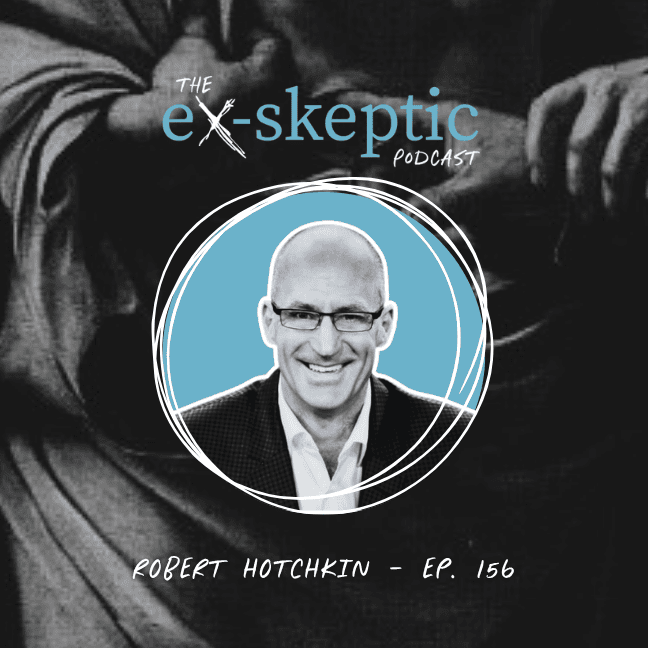
Dr. Jana Harmon sits down with Robert Hotchkin, a former skeptic and spiritual seeker, whose journey took him far beyond traditional religion. Raised in a loving but largely non-religious home, Robert eventually embraced a worldview marked by cynicism, intellectualism, and deep disappointment. Determined to find meaning and transcendence, he explored the New Age movement, Eastern philosophies, meditation, altered states of consciousness, and countless spiritual practices.
Yet no experience could satisfy the longing that remained.
Then, in the solitude of the Montana mountains, after years of searching and a lifetime of hidden pain, Robert encountered something he could neither explain away nor forget, the overwhelming love of God. Listen to learn how Robert explored the goodness and truth of God.
🎙️ Love the show? Support the mission and explore eX-skeptic merch here: https://ex-skeptic-shop.fourthwall.com/
Guest Bio:
Robert Hotchkin is an author, speaker, and ministry leader dedicated to helping believers walk in the supernatural realities of life in Christ. With more than twenty years in full-time ministry, Robert focuses on equipping Christians to experience the fruit, gifts, and power of the Holy Spirit in everyday life.
Based in Arizona with his wife, Robert ministers internationally through teaching, media, and discipleship, encouraging believers to reveal the reality of Jesus to the world around them.
Resources Mentioned:
- eX-skeptic Guides: https://exskeptic.org/bookstore/
- Website: Robert Hotchkin Ministries: www.roberthotchkin.com
- YouTube channel: https://www.youtube.com/@RobertHotchkin
Chapters:
00:00 – Introduction: A Skeptic’s Encounter with God
00:17 – Meet Robert Hotchkin: From Skeptic to Ministry
03:11 – Growing Up Without a Personal Faith
06:12 – How Rejection and Disappointment Shaped His Beliefs
08:20 – Why He Stopped Believing in Anything
12:02 – Finding Safety in Intellect and Reason
15:45 – Why Robert Rejected Christianity
17:57 – Searching for Truth in New Age Spirituality
21:16 – Exploring Altered States of Consciousness
25:45 – Why Spiritual Experiences Never Satisfied
29:40 – The Book That Opened a Door to Christianity
31:00 – Praying to Jesus Without Realizing It
34:43 – Searching for Meaning in Montana
37:13 – The Mysterious Encounter in the Snow
40:18 – God’s Unexpected Words: I Refuse Not to Love You
44:26 – The Second Encounter That Led Him to Jesus
48:57 – How Following Jesus Transformed His Life
54:27 – Why God Said He Refused Not to Love Him
01:01:33 – Robert’s Advice to Skeptics Seeking God
01:04:15 – Experiencing God’s Love and Sharing It with Others
Connect with eX-skeptic:
Website: https://exskeptic.org/
Facebook: http://www.facebook.com/exskeptic
Instagram: http://www.instagram.com/exskeptic
Twitter: http://x.com/exskeptic
YouTube: https://www.youtube.com/@exskeptic
Email info: info@exskeptic.org
eX-skeptic Transcript
Ep. 155
October 23, 2026
Introduction: A Skeptic’s Encounter with God
ROBERT HOTCHKIN: I came up off that floor, Jana. And that’s exactly what I did. I went aaahh, and I filled my lungs with breath, and what came out of my mouth surprised me. I said, Lord Jesus, if you’re as real as you felt in the woods yesterday, I don’t want to do this by myself anymore. I need your help. And he came flooding into me in that moment, and that’s how I got saved.
And you can say, but Robert, how do you know it was Jesus? You had dismissed it the night before. And my honest answer is, I’m not sure. I just knew in that moment that was Jesus, my Lord, my Savior, my King, my God, the lover of my soul. The one place I fit in like no other. And I didn’t want to do it by myself anymore.
I knew I didn’t deserve it, but I knew somehow, he loved me no matter what. I asked for his help, and he came flooding into me.
JANA HARMON: One of the reasons you don’t believe in God isn’t because there’s no evidence, but because you’ve been disappointed too many times to trust anything at all. Welcome to eX-skeptic, where we explore unlikely stories of belief from former atheists and skeptics.
I’m your host, Jana Harmon.
Meet Robert Hotchkin: From Skeptic to Ministry
My guest today wasn’t just indifferent to faith. He rejected it, not because he had carefully reasoned his way out of Christianity, but because somewhere along the way, belief itself no longer felt trustworthy. So, he went searching elsewhere, through intellect, through experience, even through altered states of consciousness, looking for something real, something lasting, but nothing held until one moment changed everything.
This is a different kind of story, not about arguments that convince the mind, but about an encounter that confronted everything he thought he knew. I hope you’ll come along and listen. To Robert Hotchkin’s extraordinary story.
Welcome to eX-skeptic, Robert. It’s so great to have you with me today.
ROBERT HOTCHKIN: Thank you. Jana, it’s great to be here.
JANA HARMON: Wonderful. As we’re getting started, Robert, I’d love for the listeners to know a bit about you, the kind of work and ministry you’re involved in and the things you’re passionate about.
ROBERT HOTCHKIN: Yeah. So, I’ve been I’ve been very fortunate to be in full time ministry for, my goodness, over 20 years now. My wife and I live in Scottsdale, Arizona, and I have a small ministry center down in Maricopa, Arizona, where our little studio is, where I’m joining you from.
And I’ve been in over all the years I’ve been serving the Lord. I’ve done all sorts of things all over the world, but what he has me doing right now is a lot of my focus is on discipling the church in the supernatural aspects of their faith. That’s a lot of what we’re doing right now.
JANA HARMON: Well, that sounds extraordinary. And for those of you who he just piqued your interest, and you want to know more, we are including his, all of his data is his links, his website, his YouTube channel, all of that in our show notes so that you can find out more about who he is and what he’s doing in his ministry.
Growing Up Without a Personal Faith
You weren’t always on board with all of this. Uh, there were times in your life that I know that you were really distancing yourself from any kind of faith or Christianity or that kind of supernatural talk. So, let’s start back in your story. Let’s start at the beginning and talk with us about your childhood home, your childhood faith, if any, any faith of your family.
How did that look for you in your world growing up?
ROBERT HOTCHKIN: Yeah, that’s a great question. I grew up in a wonderful family. Upper middle class family. Um, and we were a very, uh, very nice family. A very proper family. Um, but we didn’t really talk about, uh, Jesus or Christianity. We did go to church on Easter and Christmas.
So I used to say I didn’t go to church growing up, and my mother wonderfully reached out to me and said, son, that’s not true. We went to church. I was like, you’re right, mom. We went on Easter. We went on Christmas. A better way to say it is I didn’t really grow up in an atmosphere where even on the occasions we went to church, we talked about it or dug into it or and, and I had wonderful parents and a wonderful family.
And I was born in 1964. I’m 61 years old. I grew up in the late 60s, and a lot of my formative years were in the early 70s, and we it just wasn’t a big focus in our family, but it was a good family. I believe we had good values, good morals, but we didn’t really talk much about God. And I don’t remember even doing things like saying grace around the table or any of that.
And again, not finding any fault with my parents or my family. But that’s the type of atmosphere I grew up in, a good family. Um, but we weren’t really focused on the Bible. Church. What does this mean? Who is Jesus Christ? What do we have in Christ? What did Christ do for us? None of that really was a part of my upbringing that I have any recollection of.
I do remember I went to Sunday school a few times, and I’ll tell you a little aside, um, I got in trouble at Sunday school because I think I was like 6 or 7 years old, and the Sunday school teacher was talking about Pontius Pilate. And I raised my little hand and said, “Well, my Uncle John’s a pilot.” And the poor Sunday school teacher thought I was being difficult or making fun.
And so, my early experiences of the few times I went to church was it was just something you did. It’s not something you got anything out of; it’s something you did. But, um, we didn’t really talk much about God or Jesus or the Bible or the Holy Spirit or any of that.
JANA HARMON: Mm. Mhm. Well, it sounds like you were really blessed with a good, solid, you know, moral, cohesive family. And it was a good life, I guess, growing up. And, uh, that again, it didn’t sound like obviously an important part. It was a small part of your life. Yeah. An activity that you did no animosity towards faith or Christians or anything at that early stage in your life.
How Rejection and Disappointment Shaped His Beliefs
So then walk us from there. In terms of your growing up, when did you become aware of what religion was and whether or not you moved forward towards it or you kind of rejected it or just it just kind of fell by the wayside?
ROBERT HOTCHKIN: I had a very blessed upbringing. And yet I for some reason, I never felt like I fit in. I always felt like an oddball. I never, and it was because I tended to be interested in things that other people weren’t interested in, or I wasn’t a very athletic kid. And where I grew up, that was important. So, I had my own little interest.
I lived in a world of my imagination, like when I was a little kid, I loved to go outside and climb trees and read Edgar Rice Burroughs novels and pretend I was Tarzan. And we had woods behind us in the house we grew up in. And so, I would run around in the woods pretending I was. So, I lived in this world of my imagination.
I’d send my G.I. Joe, played with him in my room, and send them back in time, or build Lego things and fly them around my room. And, but I loved living in this world of my imagination. And my favorite thing growing up was comic books. I loved superhero comic books, and so I’m living in this world of my imagination, and no one else seemed all that interested in it.
So, way down deep, I felt like what I’m interested in, I’m not supposed to be interested in, I don’t fit in. I better learn to hide my interest and pretend to be someone I’m not. And I can’t blame anybody for that. I can’t point to a single moment that that happened. It’s just kind of how I felt. And so, I think that started informing me because I don’t.
I know by the time I was a teenager; I was pretty rebellious once I got to being a teenager and. And Jana, it’s weird. I can’t even point to a certain moment and say, this is when I got rebellious. But it was like this culmination of feeling like I didn’t fit in this culmination of feeling like the things that mattered to me weren’t supposed to matter what I’m interested in, I’m not supposed to be interested in.
And there was a culmination of disappointments, and I’m fairly introverted by nature, so I just withdrew more and more and more and more and more.
Why He Stopped Believing in Anything
And by the time I was in my teens, and then especially once I got to university, I had built a safe place of intellect. And I’m not, like, the most brilliant guy in the world. It’s not like I have a genius intellect, but I have a good mind, and I have a curious mind, and I like digging into things and thinking about things. And so that was my safe place was thinking and intellect and somehow in there I became a devout and dedicated unbeliever.
And again, I can’t even point to what. But I used to call myself a postmodern, nihilistic deconstructionist. And that was just a bunch. Yeah, yeah, a bunch of self-important language to make me feel special. But what it really was, was just sort of bitter cynicism and the challenge. I look back on that now and think, how did I get there? And with the help of the Holy Spirit, I’ve realized the way I got there, Jana, was I had been so disappointed by so many things.
I had so often felt like I didn’t fit in, or so often felt rejected or denied in my interest. That I got to a point that for some reason, I didn’t want to believe in anything because I didn’t want to be disappointed again. I didn’t want to believe in friendship. I didn’t want to believe in romance. I didn’t want to believe in God.
I didn’t want I didn’t want to believe in anything. So that’s like that postmodern, you know, sort of cynicism, uh, postmodern, nihilistic, deconstructionist. Like, don’t believe in anything. But it was uglier than that. I was deeply wounded by a certain age so that I not only didn’t want to believe in anything because I didn’t want to be disappointed again.
But if you believed in something, I felt this almost pathological need to deconstruct and destroy what you believed in because you believing in something and it could be anything would. It could be that the sky is blue. It’s a sunny day and isn’t that nice? And I would feel a need to deconstruct and destroy what you believed in.
And it was just it was ugly. I just got to this point where I didn’t want to believe in anything. I didn’t want you to believe in anything, I just, I yeah, that’s that that’s the best I can answer that. And I know it’s not a very clear this happened and it caused this.
JANA HARMON: No, I think it for most people it is a process over time our belief formation, right? How we perceive ourselves, how we perceive others, the things that we believe. And honestly, I can see how that would happen, especially if you feel isolated and alienated and that is hurtful. And a lot of our beliefs are formed out of pain.
But yet here you are, this, this intellectual guy, and you love to read even the terms you use postmodern, deconstructionist, you know, nihilism, those kinds of things were they were really in that moment talking about you can’t believe there is no absolute truth, you know, uh, and, and there’s, there’s nothing to hold on to and, and nihilism that there’s even for your life, you know, there’s no purpose, meaning, value all of those things.
And so, you’re pushing all of these things away that are, that are really essential to our human person and, and to our deepest human longings, you know, to belong, to know what’s real and what’s true. And if you reject one form of belief, you’re actually embracing another. Did you think, did you think clearly about that at all? Okay, I’m not believing that. I’m not believing God. I’m not believing absolute truth. What do I believe?
Finding Safety in Intellect and Reason
ROBERT HOTCHKIN: Early on, no, because as even as we’re talking about this, I can say one of the biggest things I can look back and realize I was doing it. At the time. I didn’t realize it was over many, many years I was trying. I talked about how intellect became my safe place because I was a really deep feeler, like, I remember being a really little boy and just experiencing so much joy over so many things.
Like sitting in the backyard and just loving the sunlight through the, the, the, the leaves in the summertime, or laying in the hammock reading a comic book with an iced tea and swaying in the breeze and just thinking, this is the best, this is the best.
And I remember just loving things so much and so deeply and being filled with so much joy over so many things that were simple. And yet there was this subtle message to me that you shouldn’t feel things, you know you shouldn’t have emotions at this level. And again, I’m not pointing fingers at anybody. I’m not blaming anybody.
But especially when I grew up, there was this male archetype of, you should be strong and you should be silent, and you should be solid and you and not feel things and like I say, like one moment I remember clearly and it came up even in my salvation. Well, we’ll get to that later was when I was eight years old on the playground, and I got made fun of for feeling and getting choked up and crying and said, I’ll never cry again.
I think that started this process in me that continued slowly, gradually building up of I don’t want to feel feelings and the culture. I grew up and you didn’t talk about feelings. You if you had them, you had the decency of not talking about them. So that was sort of the process. Janet is growing up in that atmosphere with all its blessing and benefits.
For a sensitive little kid who felt things deeply. I tried really hard to train myself to either not feel or shut my feelings down, so I wasn’t really thinking so much about I believe this. I don’t believe that. It was more like. I think that’s why I felt like I never fit in or never really got to. I never allowed myself to be who I truly was.
So, I was trying to find who can I be? Well, I can be this thinker. And then, because it’s intellect, I wanted everything to be something you could think about. You could figure out, you could rationalize, you could realize, okay, this is safe. But what’s interesting is all along the way, I was also a seeker, so I don’t know how and when exactly I got so dead set against Christianity.
But I know that I was seeking most of my life. Like as a kid, I’d read, you know, books about Lord of the Rings or the The Hobbit and The Lord of the rings, and I’d be like, oh, wow, I’m really interested in the Wizards. Or I’d read other stuff and get in, and I, something in me knew there was something, quote unquote, “behind the veil”.
And I wanted to know what it was. I wanted to know what the point of all of this is, what’s really going on. It’s one of the reasons I loved I think it’s one of the reasons I love superhero comics so much. It was like, there is this potential inside all of us. And how do we activate it? Is it the bite of a radioactive spider?
Is it gamma rays? Is it whatever it is? You know, I love superheroes and their origin stories because it was like this sense of, I know there’s something inside of all of us. We just have to figure out how to access it. And that’s why I became a seeker. And we can talk about that because I was seeking in so many ways as a as a young adult, and even when I was in my professional life on the creative side of big budget advertising, I was always seeking, I just completely dismissed Christianity in the church as a place to seek.
Why Robert Rejected Christianity
JANA HARMON: Yeah. Now let’s go there for a minute before we go all the places you, you sought, uh, or you were seeking. So why do you think the animosity or the resistance or the rebellion against Christianity, what was Christianity to you who were Christians? Why? Why that? Why push back against that?
It’s not like you had had a negative experience, except for that little Sunday school moment. So, it wasn’t like that, really. So, what was it?
ROBERT HOTCHKIN: I think it wasn’t pushing back so much as simply seeing nothing to grab hold of. And, um, and, you know, because the little bit of church I had, they were they were decent services, but, you know, it was a good message. I was a little boy, and I was like, drawing, you know, when the handful of times he went to church, you’d sit in the pews and there was the pew, the back of the pew in front of you had, like, the offering envelopes and the little pencils to fill out the offering envelopes.
And you’d get the bulletin when you came in the church for Christmas Eve service, I’d just take that little pencil and draw in the margins of everything. I wasn’t paying attention, so there were probably wonderful, empowering messages that I never listened to or never heard. And so, I just didn’t see anything to embrace.
But I also think part of it was, and it was to some degree, the culture of the times. In that day, this was the dawning of the New Age movement and the human potential movement. It was all about how do we empower ourselves. Ultimately, I look back on it now and the message is, how do we become better gods of our own life, where Christianity ultimately would be about receiving the one true God into your life for blessings and benefits beyond anything you can imagine.
I wasn’t having that conscious a thought of it. I just think because of all the disappointments, because of wanting to shut down anything other than, you know, rational understanding, even what I was seeking it was about how do I empower me? Because I only trust me, and I may not even trust me, but I know I don’t trust this world because I don’t fit in it. And it hasn’t been as nice to me as I wanted it to.
Searching for Truth in New Age Spirituality
JANA HARMON: That makes sense. Makes real sense to me. And so, you started seeking. You’re a seeker. Yeah. So, in which direction were you going? The new age direction. Is that where you went first? Is that. Yeah
ROBERT HOTCHKIN: Yeah, I probably started getting interested in it. Like I said, is a like I think when I was 13. So that would have been 1977, I was 12 or 13. So 76, 77. I’m still very much reading superhero comics, but I’m also reading things like the Lord of the Rings and science fiction fantasy books. I was very into anything that was like I say, that was the world of the imagination.
Um, and I started looking into and I want to be I want to be very transparent here, casually looking into, um, I don’t know that I had the discipline to look at it into anything deeply, so I’d scratch the surface at first of things, but I looked into like, you know, wizards and druidry and no, no, no real big studying of it.
But that’s probably where I thought, yeah, maybe there is something even in, you know, imagination and science fiction and fantasy. There’s this indication of people who can become something more. That’s what I’m interested in. And then as I started to get older, into my teen years, I did look into things like, um, what we would now call the New Age movement, the human potential movement.
And that really accelerated once I was in my 20s, especially once I was in my professional career, because one of the things I had, the culture I grew up in, had taught me was that the only thing you can really count on is success. And the more successful you are, the more safe you are, the more. The more finances you have, the more you have the right house and the right neighborhood. Drive the right car.
The more people look at what you have or what you do and think highly of you. The more status and wealth that you have, that’s your safe place. And let’s get real, there’s some truth to that. In the world of the more the more you have, the easier certain things can be. But I had this in my culture that I grew up, and that was kind of the underlying message.
And so, what was surprising to me is once I did get into my professional career and my first career was in the creative side of big budget advertising, where I was the guy who came up with the ideas for print, radio and TV commercials. And I was good at it, and I made a real good living at it. But I wasn’t happy, I wasn’t satisfied, I wasn’t passionate about what I did.
I was just good at it and was well rewarded for it. But what was interesting is this tension started to happen in me of, wait, I’m doing what I told I was told would make me happy, successful and secure. And I’m doing okay, but I don’t feel happy. Happiness is like this roller coaster ride that sometimes there and sometimes isn’t.
You know, go out on a good date. Hey, I’m happy I’m dating this great woman. And. And for as long as it’s good, it’s going to be great. Oh, I got a bonus at work today or. Oh, my, the big new account that we won. It was my idea. And I’m the hero and wow, I’m happy. But then, you know, there was this there was this instability in all of that.
The next days, there could be clouds of depression that I would give place to. So, I’m trying to find something. And that’s when I started really looking at the New Age movement, the human potential movement. I started studying things like the Dao and Tai chi. I looked into hallucinogenic drugs, but I didn’t use them casually, like I would use them intentionally, like trying to see behind the veil.
Exploring Altered States of Consciousness
And we can go down that road if you want to. But I did things like Holy tropic breathing. And I’d go to retreats and anything that I thought could give me a glimpse behind the veil of what’s really going on. What are we really here for? How do we get some level of, uh, security and, and a solid sense of safety in our lives because I’m doing what I was told would be success, would make would have that make that happen.
And I’m still as up and down and all over the place as I’ve ever been.
JANA HARMON: So, when you when you looked behind the veil or tried to intentionally move in that direction, what did you find, though? You had mentioned there were some really big questions you were trying to answer about yourself, about reality, about, um, you know, your own reasons for being even. What did you find behind the veil?
Did you find any kind of a spiritual world? Was it dark? Was it revealing? I mean, I’m just curious what you started finding.
ROBERT HOTCHKIN: How weird do you want me to get, Jana?
Because I say that to say that, I say that laughingly. But I had some very trippy experiences, um, both on hallucinogenic drugs and not some of the New Age experiences I had. I can remember one time where it felt like the entire universe opened up to me, and I was connected to every living thing in all of reality from like, I was I was doing, uh, I was studying tai chi at the time, and I remember this one time and going through that, and that’s called meditation and motion.
I had tried all sorts of meditation, and none of them worked for me because I get fidgety. I’d get bored. I couldn’t sit still, I couldn’t empty my mind, and I was terrible at all the traditional forms of I like chanting, meditation, and I go to different places and try different practices, and none of it worked.
But I liked tai chi because it’s meditation and motion and I, I liked learning the movements. And then I could focus on the movements enough to, like, steal my mind enough. And I can remember this one instance where all of a sudden in in the fluid motion of what I was doing, and I was at this weeklong retreat and I think, I don’t know what day.
I don’t want to exaggerate or, but I think it was like day three or day four of this retreat. I don’t really remember. But all of a sudden, as I extended myself with the certain motion, I could feel myself extend out into the universe and the universe grab hold of me. And we were in this huge room filled with light, with these massive windows.
And I remember as my head rotated around, I could see out this one window, and it was in a beautiful area of Illinois. And the trees, these huge old trees were moving in the wind, and the sunlight was coming through the leaves. And it was almost like those moments when I was a really little boy in our backyard, and I experienced this moment of almost bliss and connectedness.
But it wasn’t just while that’s pretty, I felt connected. It was like I was part of those leaves on the trees and the sunlight coming through those leaves and then the roots. I could feel everything for an instant, and then it disappeared. And that was my experience with all the New Age, all the human potential, all everything is.
I would have these experiences like I remember I’m walking through the woods in Montana, and we can get to my years in Montana. When I had kind of retired from my career in advertising and was living up in the mountains of Montana. But I remember walking through the, the, the woods, I’d go on. I’d spend tons of time outside and was really feeling this connection with nature.
But sometimes I’d do different drugs, and I can remember times the trees would grow faces and talk to me. I can remember times these little gray dudes would come and talk to me about space and time. And I don’t want to go too far down that road because it’s all an imitation. None of it’s really real, but I had a lot of trippy experiences that were beyond just a moment of peace.
And there’s nothing wrong with the moment of peace. But even my moments of peace, let alone these really trippy experiences. The thing that I can I look back on now, none of them lasted, none of them satisfied, none of them resonated that it actually created this sense of urgency, of I’ve got to figure out how to get back to that place.
I got to learn more. I got to do more. I got to study more. I got to get.
Why Spiritual Experiences Never Satisfied
Because here’s ultimately what, for me, I realized way down the road the lie of all of that, the New Age, the human potential movement, all of it, where we’re doing anything in our own power, it’s all religion, and it will never last or satisfy, because what we’re trying to do is become better, more empowered, wiser gods of our own lives.
And I was even in meetings where they were telling us, that’s the goal is you are a god and you can become a god of your own life and control things. And the truth is, we’re already gods of our own lives. But what we need is a God bigger than us and better in us, and more kind than us, and more loving than us and wiser than us, who loves us enough to meet us exactly where we are as we are, and do something so beyond our ability to do for ourselves, or even fully understand, whoa that pierces the veil.
All of my experience in the mystic, the occult, the New Age, the human potential, hallucinogenic drugs, holy tropic breathing, all the disciplines I studied in practice, whether I scratched the surface or tried really hard at it, I had moments, but no moment lasted, no moment fulfilled and no moment satisfied.
JANA HARMON: That’s powerful and telling. I mean, especially as someone who had personally encountered whatever world that was. You. You know, you say it’s not real. I would imagine some people are thinking, well, it’s a spiritual reality. You’re talking about spiritual realities. There’s forces of good, forces of not so good.
You know, I’m sure all kinds of thoughts are being generated. And people out there who may have even also experienced something beyond this physical world that that it’s hard to explain. But to your point, though, it wasn’t ultimately satisfying. They were transient. They were fleeting.
ROBERT HOTCHKIN: That’s what I meant. And thank you, because I actually did misspoke. I shouldn’t have said none of that’s real. It is real. It just it’s, um, what’s the word? I, I don’t know if I’m using this word correctly. It’s ephemeral. It’s fleeting. It’s like you can’t, you can’t keep holding on to it.
So, thank you for what you said because I did misspoke that that world is real. And those things were real and they did happen. But I meant real in the sense, like none of it really fed me. None of it really satisfied me. But you are correct. I shouldn’t have said it’s not real. So, thank you for that.
JANA HARMON: Oh no. No, I know if anybody understands the reality of a spiritual life and world, uh, it’s you. So, um. But anyway. So, what happened then?
ROBERT HOTCHKIN: Well, I can look back on the path now and marvel at it, but at the time, I wasn’t aware of it. So, as I’m seeking, um, I’m, I’m also taking, uh, I was working for different ad agencies in the Chicago area, and as I said, I was on the creative side of advertising. And so, I was also taking classes at the Jung Institute in Evanston, which is just north of Chicago.
So, I’m like studying Jungian theory, Jungian archetype. I’m trying to go into it really deeply because I find it fascinating. And he Jung and I’m no expert. So, any of you out there who are young experts, please feel free to correct me. And this is this is almost 30 years ago, but, um, I. But what I liked about it is Jung to me was this combination of spirit and intellect, you know.
Um, he combined these things and then the archetypal theories that he came up with made sense to me. Um, and they, they, they plugged into all of my love of, you know, the archetypes of when I was a kid, superhero characters or, uh, characters from literature. So, I’m really getting into all of this. But what’s interesting is even in that I just kept seeking, seeking, seeking.
The Book That Opened a Door to Christianity
And then I don’t even remember how this happened. But I got a book given to me called Seven Story Mountain by Thomas Merton. And Thomas Merton was a Trappist monk, I think, in the 50s and 60s and maybe 70s. But it’s his, as I recall, it’s his biography or autobiography, and I read it, and it was like one of the first things I ever read that had to do with, like, church and God and Christianity.
This is what jumped out at me. I back then I loved and I still like it, but I love jazz music and um, especially like the, the, the jazz of like the, the 50s of, like Greenwich Village type that era of jazz and Thomas Merton in his. I think it’s an autobiography in this book that I think he wrote about himself.
Um, he talked about, like sneaking out of the monastery to go into Greenwich Village and listen to jazz at, like, the Blue Note and some of these famous, iconic clubs. And I thought, that’s pretty cool, man. If like, if, like, somebody is willing to, like, dig jazz and be into all this spirit stuff, I don’t get the whole Christian Catholic thing, but I’ll give it a try.
What the heck? If you know what spoke to me the most in that book, is that he snuck out of the monastery to go to jazz clubs, and I was like, I dig this guy. I want to check this out.
Praying to Jesus Without Realizing It
So, I went to a Catholic church somewhere in Chicago when I was living there. They had a table at the back of the church, and when I got to the back of the church, there was this thing called, I don’t know if that’ll focus on it, the Miracle prayer.
And I won’t go into the whole detail. But there was something that basically said, if you pray this prayer every day, when you get to a point where you really mean it, miracles will happen in your life. And I wanted miracles, man. I wanted the supernatural I want. So, I thought, okay, I’ll give this a try.
And I also like the fact that, you know, I could I could take it home with me. So, I, I said this prayer almost every night of my life from that point until I had my encounter with God, and I had no idea what I was doing. I just wanted miracles in my life. And I was used to disciplines, and I was used to whether it was a chant or a mantra or you name it.
So, I’m like, okay, I’ll say this prayer and I can’t do it by heart anymore because it’s been so long. But way back then, and we’re going back 23, 20, almost 30 years ago, because I did it for years and years and years. Almost every night when I’d get in bed, I’d say this prayer, and I’m not proud of this, but the only times I didn’t is if I was too drunk or too high and just passed out.
But it’s basically a prayer of salvation, and I didn’t know it. And the miracle they’re talking about is God will come into your life and change your life. So, Jana, here’s the amazing thing. Here I am, this devout, unbeliever like dedicated unbeliever.
I’ll just read you the first few lines. Lord Jesus, I come before you just as I am. I am sorry for my sins. I repent of my sins. Please forgive me in your name. I forgive all others for what they have done against me. I renounce Satan, the evil spirits and all their works. I give you my entire self, Lord Jesus, now and forever I invite you into my life. Jesus, I accept you as my Lord, God and Savior. Heal me, change me, strengthen me in body, soul and spirit.
And so, I had memorized this prayer, and I’m saying it all the time, and this is what I marvel at. God is so brilliant, so personal and so kind and so patient that I’m basically praying the salvation prayer. But because of all the things I’d been involved in, he even knew he had to find a way to get me to say, I renounce Satan and all of the occultic realm, because if you had told me at the time, you need to do that because you’ve been involved in some crazy stuff and open some wrong doors, I would have been like, don’t mess with me, man. I don’t believe in this nonsense. But I don’t remember exactly how old I was when I got that.
But I know it was for several years, at least a year, at least a year before I moved to Montana. And I was in Montana for five years before I had my encounter with God. So, for anywhere from 5 to 7 years, probably 300 nights a year minimum, I’m going to bed praying this as my mantra, as my chant, having no idea what I’m doing, that I’m actually inviting Jesus into my life.
And one day he decided this is the day I’m showing up, and I know he was at work all along the way. And this is one of those things that’s so hard to get your head around. God’s timing is so perfect, and we can talk about that later on if you want. Because I did have multiple times. I asked him like, what you did was so amazing when I was almost 39, why didn’t you do it when I was seven?
And I’ve just come to learn that he’s really good. He’s really God and he’s really good at being God. And I simply rest in the mystery of you knew the exact right time in all of the eternal invading the temporal. You knew the exact moment in the temporal to reveal yourself to me.
Searching for Meaning in Montana
JANA HARMON: So now you have my curiosity. So, okay, so you’ve moved to Montana. You’ve been there 5 or 6 years. You’ve been saying this prayer every night, and then you’re inferring that that’s something extraordinary happened there? Yeah. Why don’t you tell us about that?
ROBERT HOTCHKIN: So, I told you I’d been involved in the creative side of big budget advertising and had a fairly, fairly successful career, and I was in a position, I wasn’t married or have children at the time because I didn’t believe. And I had I had so many. I had so many commitment issues. It’s hard to even go into it. But I was in a position where I could kind of semi-retired because I was good at what I did, and I was well paid for what I did, but I didn’t have any passion for what I did, and I was I was feeling burnout.
And I threw an interesting series of events. Had taken a vacation up in near Bigfork, Montana. Something being in the woods, being in the mountains, being in the Rockies. Something stirred in me. So, it was over the course of about two years, I had arranged things to semi-retire, do some freelance work, because I’d made enough of a name of myself in that career, in my niche, and enough connections that I could go live up in Montana, and I lived with a woman that I had met for the first year, but things didn’t work out.
So, then I moved into a cabin and I had five years. And this was this was sort of the last straw. Jana, I, I told you how my entire life I never felt like I fit in. I never lived anywhere that felt like home. Nothing ever felt like home to me in any way. Montana, especially that northwest corner. Bigfork was the first place I ever felt “home”.
I ever felt like I fit in, and I made wonderful friends. I had a wonderful life. I worked, I freelanced part time for ad agencies around the country, doing what I was good at and coming up with these ideas. But I did tons of fly fishing and hiking and kayaking, and I was outdoors, and I was up in the mountains, and I would have the most kind of sense of place and belonging I’d ever had.
And yet I was still going through some hard things. So, I get this difficult phone call. I have this difficult conversation. I slam the phone down. And remember, for over 30 years now, I’ve been training myself not to feel my feelings. So, I don’t want to feel my feelings in that moment. So, I go outside and I’m going to split wood, and I’d usually split, you know, at least at least one, two, maybe three wheelbarrows full of wood and keep just piling it up for the winter.
The Mysterious Encounter in the Snow
And this is what I remember, Jana, is I split wood and I don’t want to exaggerate, not to the point of exhaustion where I was going to drop, but I split wood to like where my muscles were so tired. I remember bringing the ax down the last time and my grip was sloppy and I wasn’t focused, and the ax had hit the big log at the wrong angle and jumped off that. And it kind of came off.
And the way the ax came off, I lost hold of it and it flew down. And I remember staring down at my foot, thinking the ax almost went into my foot, and I thought, “Whoa, I gotta stop splitting wood. I’m to the point of where I’m going to be a danger to myself.” So, it was early November. We’d already were into winter.
We had some snow. I kind of just step backwards until there was this snowbank, and I kind of just plopped down in the snowbank like it was a big, easy chair. And I’m like just trying to make my mind go blank because I don’t want to think, I don’t want to feel, I don’t want anything. And the next thing I know, and I’ll describe it as best I can.
The next thing I know, it was like I realized it was incredibly quiet, like I lived up in the foothills. It was always quiet, especially in the winter because tourist season was over. Everybody had gone home. But you could still occasionally like out on highway 35. If I recall, it was highway 35. This is so many years ago, you’d hear you’d hear trucks or log trucks go by just because it would echo through the valley.
But I heard nothing. And then it started to snow. and this is going to sound crazy, but I to this day I believe it. I remember it got so quiet. The first thing I noticed was that I didn’t hear my own thoughts. And that was very rare for me because since I was a kid, I had a constant stream of consciousness of my imagination, and I had trained that stream of consciousness as a young guy who had been a writer. But then going into advertising, I had trained my mind to constantly be chattering and wandering until it found the right headline or the right tagline or the right whatever.
So, I trained my mind to constantly be, you know, chattering stream of consciousness, consciousness, consciousness, saying, sorry, I’m making up a word and can’t pronounce it.
Um, and all of a sudden, I had this thought of my thoughts aren’t churning. And then I heard this sound and the best way I can describe it, it was so tiny and so faint, but I could hear it. And the best way I can describe it as almost like when a tiny bit of water hits a hot skillet, and I’m exaggerating, but it was like “tsst, tsst, tsst”, and that’s too loud.
But I was hearing this sound, and my thought was this what the heck is that? And I don’t know that this is right, but this is the thought that came into my mind just before what happened, happened. The thought that came into my mind was, I think that’s the sound of the snowflakes hitting the snow. How can it be this quiet?
And then the next thing I know.
God’s Unexpected Words: I Refuse Not to Love You
ROBERT HOTCHKIN: This presence manifests. I didn’t I want to be really careful. I don’t want to exaggerate anything. I saw nothing with my eyes. But I felt like I was in this dome of supernatural silence. And in this dome of supernatural silence. I could point to where it was, but I couldn’t see it. I knew there was this presence
And heart to heart. No, nothing out loud. It was complete. It was more silent than the most silent silence I’d ever experienced. Even in the remotest parts of the Rocky Mountains. Um. It was. It was supernaturally silent, and I’m not even hearing the “tsst, tsst” anymore. All I can hear is right into my heart. Someone is saying.
“I refuse not to love you.”
And I remember my heart, like, sort of opening a little bit. And. And again, it’s so hard to describe because it’s like all of this happened inside this bubble of God’s. I am awe-city. Like, time didn’t pass, but things occurred. And I remember somehow, my heart opening up just enough so that I could bring out every wicked, selfish, arrogant, mean, hurtful, hateful thing I ever did.
It’s not like it was one thought at a time, but it was almost like I knew every awful, horrible thought, action, choice, every mean thing. And that was a lot of them that I’d ever done came before this Presence. And all the Presence would say to every single one of them was, I refuse not to love you.
And I just sat in for the first time ever. I was so I don’t know the word not unsettling, the exact opposite of unsettling, but to my thoughts, unsettling. Because for the first time ever, I felt completely seen, completely loved, completely accepted. I didn’t have to hide anything. I didn’t have to pretend to be anyone I, I, it sounds silly, but it’s like I finally found home and it was this absolute love and acceptance that I knew I completely didn’t deserve but was overwhelmed by.
And this went on for however long it went on. If I had to put a number to it, I would guess something like 15 or 20 minutes, but it also could have been three seconds. It was that kind of weird all at once. But as I, as I as I try to unpack it, it felt like it happened over time, but it didn’t. It happened inside of the Eternal One. So, there was no time. But what I remember is that it’s like that dome dissipated.
That dome of silence dissipated, the presence dissipated, the dome that I was under dissipated. And then I had this thought, and I’ll clean it up while my rear end is getting wet because I’m in blue jeans, sitting in a snowbank, and I didn’t know how long I’d been there, but I knew my rear end was my. My thighs and my rear end were getting wet.
And I realized, wait, I got a t shirt and a sweatshirt. I am not dressed for sitting in a snowbank. I have all the right gear, and this is none of it. I just came out here to split wood, so I thought I better get up, and I better go in and better stand by the woodstove. So, I did that.
Here’s what’s interesting, Jana. And please, if you want, if you want to interrupt and ask questions, do. But this is one of the things I find interesting. By that evening, I knew something had happened, but by that evening I had just chalked it up as another trippy encounter with the universe.
So, I wasn’t like, oh, I imagine that nothing happened. I knew something had happened, but I just decided, hey, it’s just like, you know, those other times that I had trippy experiences and there weren’t millions of them, but they were enough that I was like.
The Second Encounter That Led Him to Jesus
So, the next day I get another phone call. It’s another difficult conversation. Not proud of this, but I slam the phone down again and this was my thought, you know? It was like, all right, I’m done with this. And I. And my unconscious thought was, I don’t want to think my thoughts. I don’t want to feel my feelings. I need to do something.
So, I thought, I’m going to do the dishes, but. So, I turn around and the sink is right there. But I live by myself in a cabin in the woods. There’s like one bowl, one spoon and one mug. So, I do the dishes in like I’m, I don’t know, 20s something like that. And then I turn around from the sink, and I think, you know, it’s not a big cabin at all, but I, I think, you know, it’s 4 or 5 steps across the cabin.
I think I’m going to turn on the stereo and I’m going to turn it on really loud because I don’t want to think my thoughts and I don’t want to feel my feelings. I don’t remember if it was 1 or 2 steps, but what I do know is I think it was like a step or so. I physically felt a jolt of electricity hit me in the stomach. I felt something pop out of my mouth, but I didn’t see anything.
But it was. I felt something pop out of my mouth so much that I looked but didn’t see anything. I fell to my knees and I began weeping. And for the better part of three hours, I was on the floor weeping so uncontrollably that I actually at first thought I was having a nervous breakdown. And for the better part of three hours, I wept and wept and wept.
And here’s what happened. At one point after, like I say, somewhere between 2 and 3 hours, I at that point I was not just on my knees, I was on my face and there really was a puddle of tears. There was a puddle of snot. Please forgive me for being so graphic, but. And I came up off the floor and the best way I can describe what it felt like is when I was a kid and we’d go on vacation if we stayed someplace with a hotel that had a pool, I’d love to swim the on the pool completely underneath the water, pretending I was Tarzan. Like sneaking up on somebody, you know, and I’d come up out of the water, and I’d try to be silent and try to be like Tarzan. I did this all the time as a kid, but when the pools were really big, if I made it, I wouldn’t be able to be silent because I’d come up out of the water and be like, oh, because I needed a breath.
Yes. I came up off that floor, Jana. And that’s exactly what I did. I went air, and I filled my lungs with breath, and what came out of my mouth surprised me. I said, Lord Jesus, if you’re as real as you felt in the woods yesterday, I don’t want to do this by myself anymore. I need your help. And he came flooding into me in that moment, and that’s how I got saved.
And you can say, but Robert, how do you know it was Jesus? You had dismissed it the night before. And my honest answer is, I’m not sure. I just knew in that moment that was Jesus, my Lord, my Savior, my King, my God, the lover of my soul, the one place I fit in like no other. And I didn’t want to do it by myself anymore.
I knew I didn’t deserve it, but I knew somehow, he loved me no matter what. I asked for his help, and he came flooding into me.
JANA HARMON: Yeah, his love is so great, isn’t it? While we were yet sinners. He died for us. His love is so great. And I’ve heard. I mean, that’s an extraordinary story. And you are a beautiful teller of your story. I think anyone who’s listening could sense and feel a bit, I mean, just a tiny bit of what you must have been experiencing. I’ve heard from other encounters that when you encounter the love you encounter, when you encounter Christ, you encounter this extraordinary, pure holiness so that that mirror comes against you with all of your sin. Like you said, you felt every bit of your unholiness in that moment, but yet you also felt this extraordinary outpouring of love, in spite of all of your sin, that he loved you so much that that’s why he came. He presented himself to you.
You had for years said that prayer of welcome. It took a minute for him to answer that prayer, but once he did. Wow, what a powerful and extraordinary and undeniable way. Um, he made himself known to you. And it’s clear that that was a life transforming moment. Um.
How Following Jesus Transformed His Life
How did your life change from that moment on?
ROBERT HOTCHKIN: Radically. I mean, the simplest way to put it is with no natural explanation. But I fell head over heels in love with Jesus Christ. I knew he loved me, and I just loved him so much I let go of, do I deserve this? Are you sure? Because, you know, I look back at that first encounter and, you know, I let my heart bleed out all the grossness in it.
But it wasn’t even like a conscious thing in me. I think I was having some thought of. Are you sure you’re talking to the right guy? You sure I’m the one you refuse not to love, and I don’t want to make fun. And it wasn’t that conscious. But I look back on that, and there’s something that happened. Oh, I’ll tell you.
This was. This was a while later. But once I was saved and that first year, especially just me and him and my Bible and the Holy Spirit in the woods, I went into such a depth of relationship with him, and he was so real to me. And I was so hungry for the Word of God, and I would devour the Word of God. And I’d spend so much time in prayer.
And I used to climb up the hill behind my cabin to this place I renamed Prayer Rock. And I would sit and I would just talk to God for, you know, half hours and hours. It wasn’t always up there for hours, but for extended periods of time. I just pour my heart out and I’d ask him so many questions.
And when I was a kid, I was very curious and I asked a lot of questions, and I got shut down a lot for all my questions. And one of the first things I remember with the Lord is he never got tired of my questions. And I want to be clear, it wasn’t like an open, an audible voice conversation. I would just pour out my heart, pour out my heart, pour out my heart, ask all these questions, and then sit and sit in his presence. And sometimes answers would bubble up and sometimes they wouldn’t. But I just loved spending time with him.
And somewhere in there I remember asking him this Lord, that second encounter, when that that that jolt of electricity hit me, something popped out of my mouth. But I didn’t see what it was, what was it? And he told me this, Jana. This came the still, small voice. I never want to exaggerate. It was a still small voice, but I knew because it came so quickly and it landed so fully, he said. That was the vow you made when you were eight years old to never cry again. And those tears that were released were 30 years of tears that you had stuffed away. And I wanted you to know you were safe. And he started to teach me how to feel feelings again.
And because he was showing me. You shut your feelings off. Our God is a God of joy. He’s a God of feelings that we’re made in his image. And we’re meant to feel. We’re meant to feel deeply. But we also have to learn how to navigate. Just like we take wrong thoughts captive, we take wrong emotions captive.
And it’s taken me, my gosh, I’ve been walking with Jesus for what is it, almost 20. It’ll be 23.5 years, and I’m still learning how to do all that. But he’s so personal and he’s so good that he even was like, one of the first things we had to do was get 30 years of tears out of the way.
JANA HARMON: Yes. And I presume you had tried all these other paths as a seeker. But the but the experiences were transient, ephemeral. You couldn’t hold on to them. With Christ it sounds as if for 27 years you found something, someone to hang on to, who will never leave you or forsake you, that you are abiding, I think it’s the word with him and he is steady and solid.
ROBERT HOTCHKIN: And I’m learning. I’m learning.
JANA HARMON: Yeah, right. I mean, is that. Is that what. Is that what you have found?
ROBERT HOTCHKIN: Yes. The thing I’ll say in many ways, there’s so many ways I can answer how my life has changed. I have a I now have a true lens to view everything through that even will catch me up on my false lenses. So, when I read the Word of God and I realize I’m thinking about this differently, I now have this lens to go. And what good does it do to think of that that way? Let’s think.
But the biggest thing that has changed is I now have truly; I have a rock. I have a foundation in my life that never wavers, never disappears, never goes away. Now I want to be careful because some people can hear that and go, oh, so for 23.5 years, everything’s just been great. I’ve had many, many challenges, many battles, many difficulties.
I’m sometimes I have no idea where God is or what God is up to, but I know that I know that I know that I know that I know this. He’s there, he cares, and he’s good, and he’s working things to the good. And there’s such a depth to that conversation alone. But the easiest thing to answer is to say yes, the thing that that changed most in my life is finally, I realize there’s something behind the veil.
(A)I’m not in charge of, (B) I can’t control, but (C) there’s incredible peace in that because it is the one thing I’ve ever experienced that is beyond and above and bigger than this world but is the exact opposite of fading and ephemeral. It’s complete, it’s rock solid and always there.
Why God Said He Refused Not to Love Him
And I’ve probably been a Christian about six years at this point. And I said, Lord, I’m just thinking this now. When you showed up, why didn’t you say I love you? Why did you keep saying, I refuse not to love you? And instantly that still small voice and again, it’s impossible to dismiss. Even though it’s so hard to describe because it was it was so true and it landed, so resonatingly I knew it was him when I said, “Why? Why didn’t you just say I love you? Why did you say, “I refuse not to love you?” And he said, “Because you’d been told I love you many, many, many times in your life. And your experience was people who said that loved you until they didn’t. And so, I love you was nothing you could trust.
Because whether it was friends, teachers, bosses, girlfriends, family members, all of these people had said, I love you, and they did until they didn’t. And way down deep that informs something in you that you did something wrong so that they no longer love you. And I want you to know my promise to you is I refuse not to love you.”
And I share that story to say this God is so personal, and he knows us so well, and he knows our history so well. And he said something so fully and so perfectly that ministered to me so deeply. It took me six years to even ask the question about it, to realize, well, you’re right. Everyone who ever told me I love you did until they didn’t.
So, you said something different because your love is different. You said, I refuse not to love you no matter what. Even everything you thought you were bringing before me going. Well, this should discount me. This should. This should cause your love to be taken away. And every single time his answer was, I refuse not to love you.
That’s how personal God is. That’s how well he knows each of us and our histories and our hurts, and how he doesn’t hold any of it against us. His favorite place, Jesus’s favorite place to meet us is exactly where we are, exactly as we are. And that’s one of the most amazing things about our God.
JANA HARMON: That’s so beautiful. What a word. And speaking of personal, I, I’m thinking about your story and just even your. This might be a strange question. Was that even in your story as a child, and you became engrossed in the comic book world and the tropes of the comics and of course, within that is the story of the hero and the superman and, and that narrative is always the hero sacrificing himself for the greater good for humanity.
And I wonder if he plays, you know, you love the Lord of the Rings, you know, and Eragon and you know, these, these characters, these, these people that are speaking of archetypes, you know, tying it all together in a Jungian way. Um, you were presented with these archetypes growing up and then even studying it, uh, archetypes.
And, uh, ala Jordan Peterson makes me think of Christ as the archetype. But anyway. But it was kind of leading you, even from a child, um, to when you, you finally came to this place when you were 39 going, you were the hero who gave your life not only for me in a powerful way and presented himself in an extraordinary way, but for all of humanity.
And that’s what the narrative that you’re carrying forward, that you are, you are part of this grand narrative in the sense that you are part of humanity who has experienced this incredible love of a sacrificial Savior, our hero, our God, the one who loves us in spite of ourselves. And that you’ve. You know, I just I love that little thread that kind of has been woven.
And now you’re the storyteller, um, of the one, the one who is not only for you, but for all. I don’t know if you’ve ever thought of that, but it just for me, it seems apparent through your story that he was weaving your story in such a beautiful and personal way in that regard.
ROBERT HOTCHKIN: He knows. I mean, there’s so many places we can go from that and so many things he’s done with me, even how he’s used comic book imagery with me at times to speak to me. But, um, he knows us so well and so personally, and all he asks is that we receive him as Lord and Savior so we can receive everything that he’s done, and then he’ll work with us and through us to not only help us come fully alive in him, in all that we truly are, to be more satisfied and fulfilled than we could possibly imagine.
But even in that, then he’s not like it, I’m the hero. He lets us go out into the world and be the hero representing him. He gets all the glory, he gets all the honor, he gets all the credit. But he’s just thrilled to work with us. Our God is a God of relationship. Everything he’s done has been for relationship.
And when we say yes to him, it doesn’t all of a sudden become cold and religious and formulaic. It’s this doorway into this depth of ever deepening, ever increasing, ever more intimate, ever more fulfilling relationship with him. And that one other thing I want to say is I’ve shared my testimony sometimes, and I’ve had people come up and say, man, I wish I had a testimony like yours.
And I like to tell everybody: You do. Every single person has a profoundly supernatural testimony if they believe in Jesus Christ because the world, the devil culture is constantly telling us he’s not there. He’s not real, he’s a myth. He’s a fairy tale. He’s a con. And I used to be the one who believed all those things.
But what I’m saying is, if you got saved through a tract, if you got saved because somebody knocked on your door, if I found out my sister got saved when she was seven, after watching a David and Goliath cartoon on Sunday morning, and I guess they did an altar call afterwards, I had no idea. She gave her heart to the Lord.
No matter how you, if you grew up in a Christian house and you decided at a certain age, he’s my God too, I’m saved. That is just as supernatural a testimony as what happened to me, because Jesus and his love for you found a way to make himself real to you so that you could say yes. I was just so hardheaded, such a devout unbeliever, and such an intellectual and emotional bully to anybody who tried to share the gospel with me.
I think Jesus and His love, not just for me but for them, was like, stand down, I’m taking care of this one. He’s a real head case, but I can get to him. But everybody has a profoundly supernatural testimony because all of the enemy, all of his minions and most of culture in the world is trying to convince us Jesus is not there. Jesus doesn’t care. Jesus isn’t real. And somehow, he either has made a way to be real to you or he’s getting ready to.
Robert’s Advice to Skeptics Seeking God
JANA HARMON: I think that there are probably some skeptics, some nonbelievers, some seekers, some curious, who are listening to your story and going, wow, um, it may be worth searching. It may be worth asking. It may be worth opening myself to the possibility of a God who loves me that much, um, who is so personal, who. Who probably sees me, too. Um, how could somebody or how, you know.
For you, it did seem like you had that beautiful little Thomas Merton prayer book, and that was your kind of way into to kind of focus on God. And if he’s possibly there, that agnostics prayer even inviting him in. Um, how would you recommend somebody out there who is a searcher, a seeker? Uh, what should they be doing? I mean, I’m sure that they would love to experience the kind of love and grace and foundation in life that you now know.
ROBERT HOTCHKIN: Well, one thing know that God is incredibly patient. And I’ll tell you something. Maybe a little embarrassing, but I don’t mind being transparent. Janet, it took me years and years and years into my salvation to even realize that I had been praying an invitation prayer because people would always be like somebody had to be praying for you.
And I’d be like, yeah, I don’t know. I guess somebody was. And then years into it, it’s like Holy Spirit and I’m exaggerating because this didn’t actually happen. But it’s like he tapped me on the shoulder and said, bro, we got you praying for you for all those years you were praying for you. So that’s how patient God is.
I didn’t even realize the connection to that until years into my testimony. But to answer your question more directly, this is what I’d say God is a big God. Challenge him and challenge him in two ways. One. Like for me, I used to say, I just want to know the truth. I just want to know the truth. I just want to know the truth.
And for most of that seeking at that time, I thought the truth was discipline, practice, a something, a book, a set of rules I just want. I didn’t realize when I was saying, I just want to know the truth, that there is truth, but it’s not a, it’s not a set of thoughts, it’s a Person. So, say, God, I want to know the truth.
Show me the truth. But even more I would say this challenge him and say, God, if you’re real, find a way to show yourself to me that I’ll know it. That’s how big our God is.
Experiencing God’s Love and Sharing It with Others
JANA HARMON: You obviously are in ministry. Uh, you are a gifted speaker, orator, communicator of the gospel of the love of God. Uh, there are a lot of Christians out there who would love for others to know this love of God, but they don’t. There. Maybe it’s not as easy for them. Uh, but you, I want to say, um, that you’re very, uh, just the way that you talk about Jesus. It’s just so infectious. It’s so passionate.
And I’m sure just the way you talk about Jesus makes other people interested and they want what they that that is, they want to find that thing that never leaves. the person, the person who loves them so. Who refuses not to love them. Um, but sometimes Christians, believers, followers of Jesus have a harder time communicating that even though they want that for their friend, their neighbor, their loved one. Uh, do you have any suggestions for those who really want to impact the world for Christ?
ROBERT HOTCHKIN: Yeah. And I’m still learning this, you know, I know his love. I’m still learning to operate in his love. I’m still learning how to be patient and kind and loving. And some days I’m really good at it, and other days I’m absolutely horrible at it. And I have a flash moment or a flash day and I’m like, ah.
But you know, in a weird way, I’m not making any excuses for when I blow it, but in a weird way, it makes me realize how much Jesus loves us. Because even when he has to get my attention and be like, son, what were you doing there? He usually says something like, son, we both know that’s not what you really like, and I’ll think I’m not. Why did I why did I make that choice? Why did I overreact there? Why did I get impatient there? Why did I speak that way to that person? I’m still learning.
But I will say, I think the fruit of the Spirit is as important as the power of the Spirit. And I always am wanting to grow in the fruit of the Spirit. I want to grow in love and kindness and patience and compassion.
I desperately want to grow more. I want to reflect him more in those ways. But I have found the more we operate in the fruit, the easier it is for the power to flow. And we could, I could show you that biblically, but we don’t have time for that. So, but we also can’t give away what we don’t have. So, I could easily, we could do a whole nother hour on me telling you about all my shortcomings and all the times I’ve fallen short, and all the times I’ve broken my heart because I didn’t look and sound like Jesus in that moment.
But what I’ve learned is, as long as we’re willing to go on the walk with him and we’re willing to receive his love because he says, freely give what you freely received. And too often we try to give away what we don’t have, and the more of we realize that we have the fullness of his love, we just need help experiencing it and knowing.
And that’s not selfish and that’s not narcissistic. It’s transformative. It’s the only thing that truly transforms. That’s who our God is. That’s who your God is. If you know him, you’re getting like me. you’re getting glimpses of that and being transformed by that. If you don’t know him yet, that’s what he wants to share with you.
And all you have to do is say, Jesus, I want to know you like that. Be my Lord, be my Savior. I receive you into my heart and into my life. Amen. It can be that simple. Hmm.
JANA HARMON: That is amazing. I think Robert, our conversation today has truly been extraordinary. I think what you have probably helped people to do, whether they’re skeptics, whether they’re seekers, whether they’re nonbelievers, whether they’re Christians, I think you’ve helped paint a bigger picture, a bigger vision of the of who God is and his grand love for us, but also a bigger and grander picture of who we can be in Christ, how we can live in Christ, how we can love in and through Christ, in his power of His Spirit, and how we can affect others, uh, by opening ourselves to the beauty and love and grandness of Christ in and through our own lives.
So, I just want to thank you. I think this conversation really is I keep using the word extraordinary because it really is extra ordinary in all the right ways, in all the supernatural ways. Um, you have given us a gift. Thank you so much for coming and sharing your personal story. Yes, it is amazing that, like you say, God has something extraordinary for everyone.
So, thank you for reminding us of that today.
ROBERT HOTCHKIN: You’re so welcome. And I’m living proof. God can save anybody and God can work through anybody. Truly living proof of that. So, thanks so much for letting me share and God bless you.
JANA HARMON: Thank you. Robert’s story reminds us that not every path to believe begins with an argument. Sometimes it begins with a moment we didn’t expect and can’t explain away. But whoever you are, wherever you are, the question still lingers. If God is real, how would you recognize him and would you be open to it? If you’re exploring questions like these, we’ve created tools to help.
You can visit eX-skeptic and try our conversational AI, designed to help you find stories, answers, and resources tailored to your specific questions. And if you believe in what we’re doing, sharing thoughtful, credible stories that invite people to consider faith, you can support eX-skeptic through a donation or by checking out our merch. Every bit helps us continue reaching those who are searching.
eX-skeptic is a podcast of the C.S. Lewis Institute Network and is produced by our wonderful producer, Ashley Kelfer. Thanks for listening and I hope you’ll join us again next time where we’ll hear another unlikely story of belief.